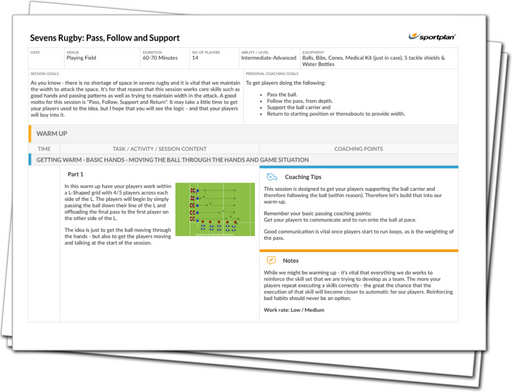
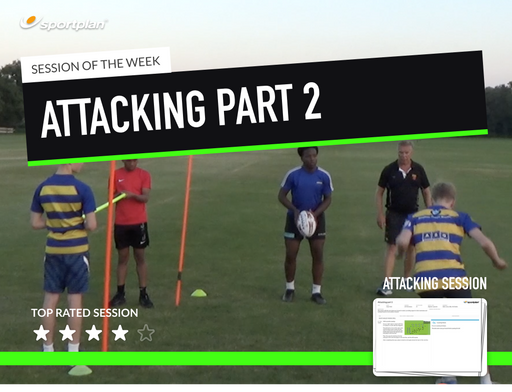
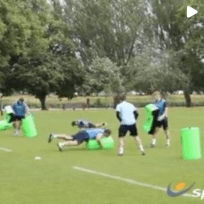
This Sportplan session works on maintaining the width to help your players attack the space as well as promoting core skills such as good hands and passing patterns.
There is no doubt that you must spend a great deal of time working on hands, and core skills. That said, you must also have patterns of play that will allow your players to have support in place to either ruck over a ball carrier that has been caught up in contact, provide deep running support, and to provide a second line of attack. While in Sevens Rugby we have lots of space to attack, we don't have lots of players to attack the space, so not only is it vital that the ball carrier is intelligent with respect to their decision making, it is also vital that other players think about what they can to do off the ball.
To get your team playing intelligent rugby, drawing in the opposition and offering deep running support to provide a second line of attack this session works on maintaining the width in the attack, promoting the message: Pass, Follow, Support and Return!
"Many international players refined their game on the Sevens circuit including all-time greats such as Jonah Lomu." Former Wales international and current pundit John Taylor, 2010.
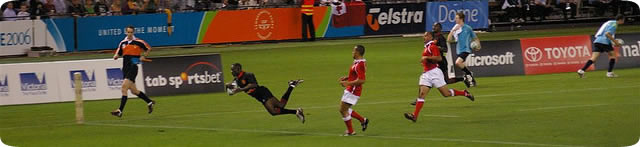 Try time - Uganda score a try versus Tonga during the 2006 Commonwealth Games. Photo by claytonjayscott.com on Flickr.com
in more ways than one
 sportplan_netball
in more ways than one
sportplan_rugby

Tacklers are aiming lower, so carriers who dip late put heads at risk. Teach footwork, a strong early body height and leg drive to win the collision safely.
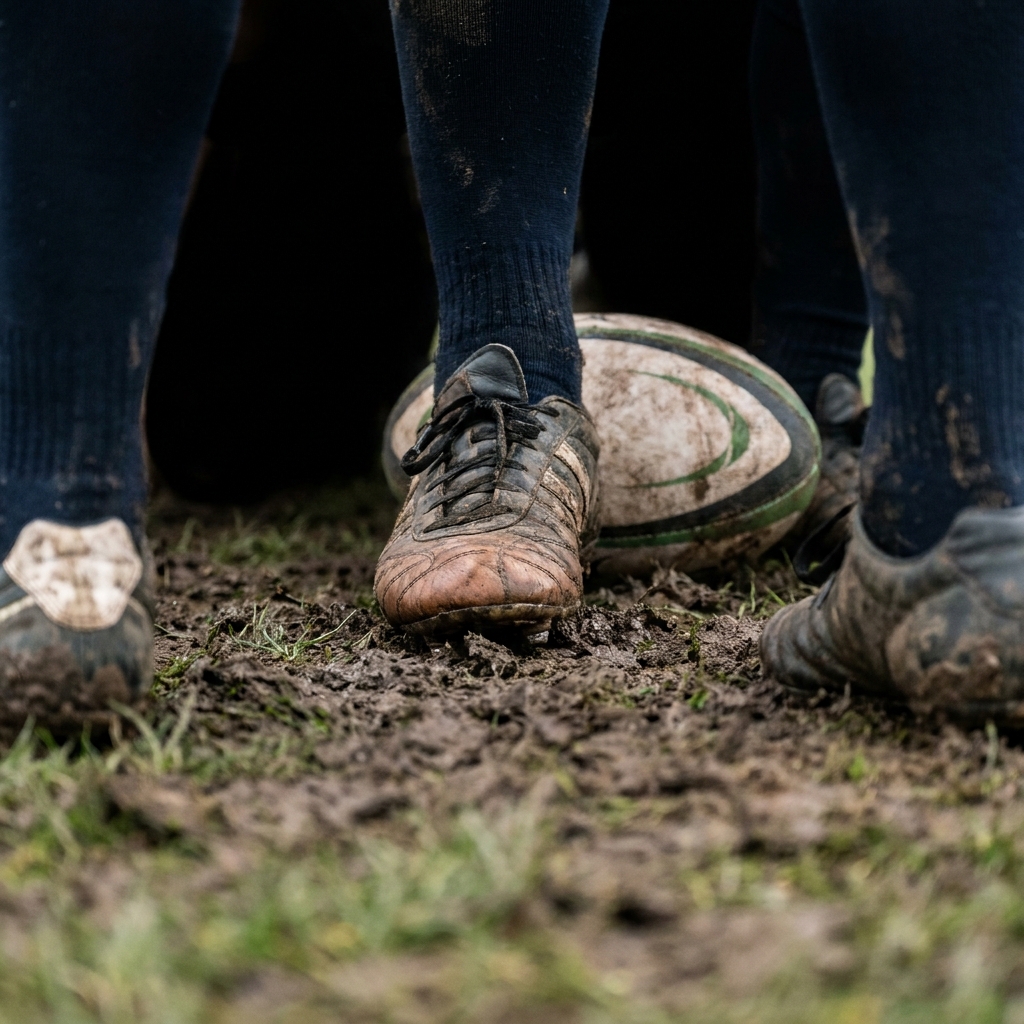
The hooker's brake foot moved from trial into full law in July 2026. Here is how to coach it so your front row stays stable, legal and safe.
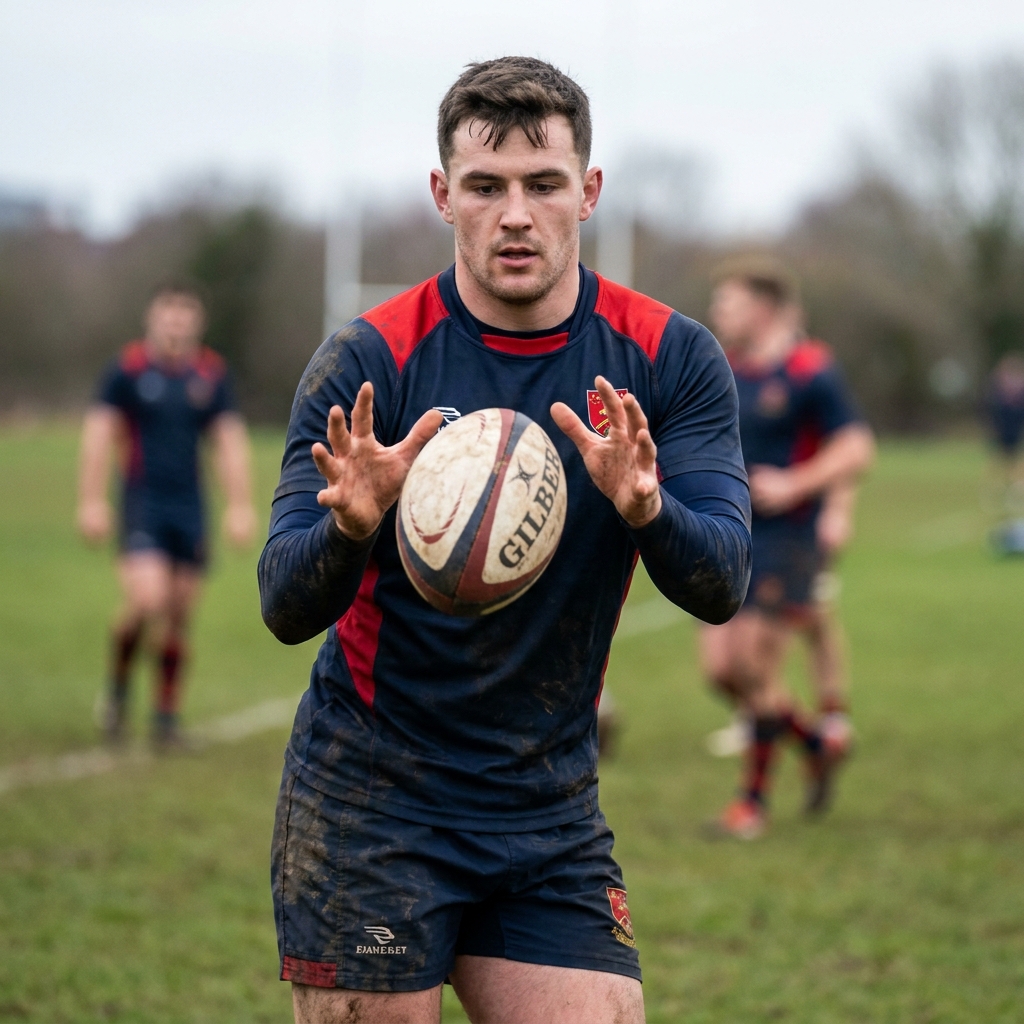
Your players can pass beautifully in a warm-up grid. Then a defender closes, their lungs are burning, and the ball goes to ground. Here is how to build catch-pass skills that hold up when it matters.