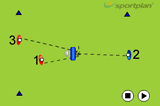
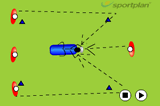
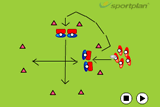
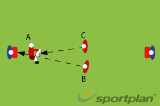
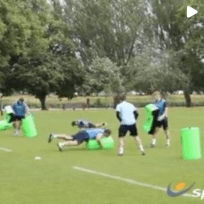
Players work in groups of four against two defenders (holding tackle bags) who are stood inside the channel.
The attackers run around the furthest cone into the channel and ruck to push back the first defender stood over the ball.
Once the ball has been gathered the attackers run towards the second defender and form another ruck (ball carrier should turn before contact is made).
Once the bag holder has been forced back players carry the ball over the line.
Clear out players should adopt a low body angle on approach and drive the defender up and away (hence knees bent, shuffle footwork, eyes on target and head up
Drive the player up and off the ball with strong leg drive with short steps.

in more ways than one
 sportplan_netball
in more ways than one
sportplan_rugby
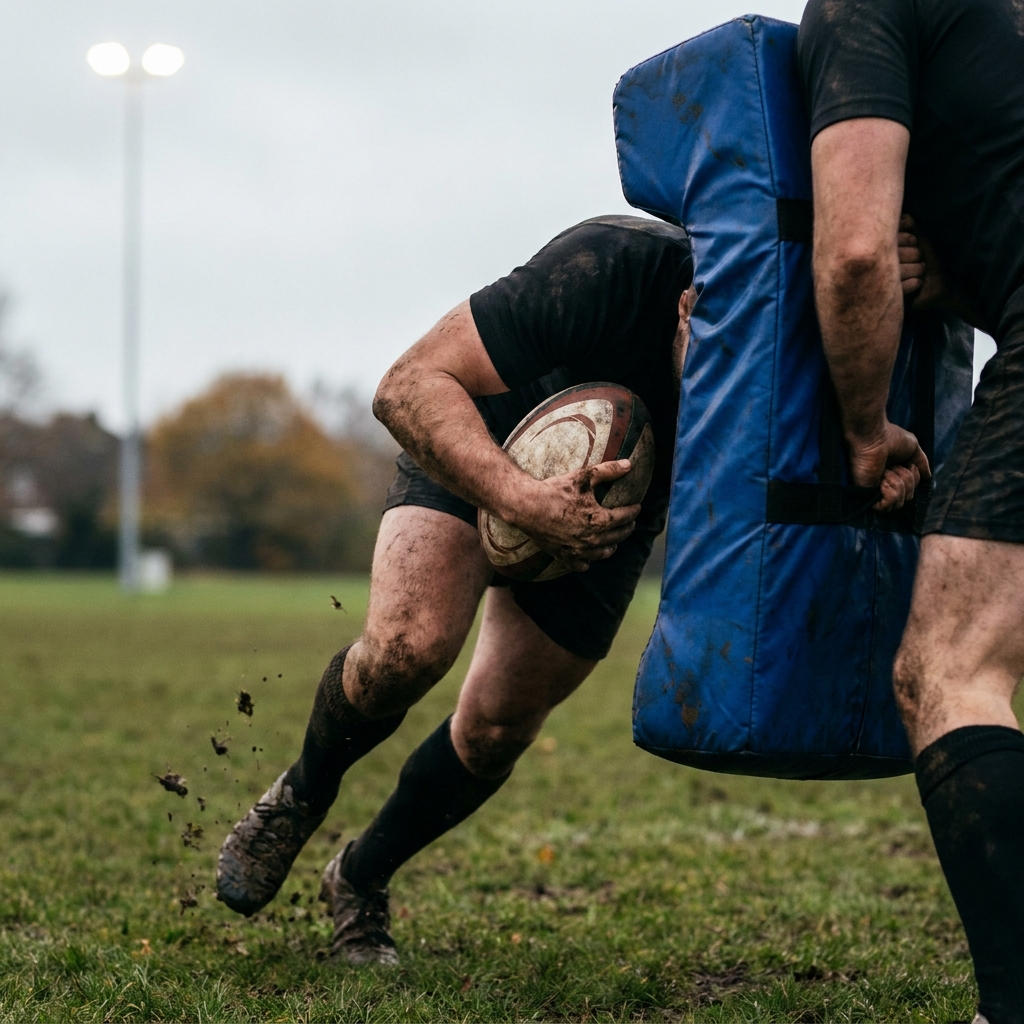
Tacklers are aiming lower, so carriers who dip late put heads at risk. Teach footwork, a strong early body height and leg drive to win the collision safely.
The hooker's brake foot moved from trial into full law in July 2026. Here is how to coach it so your front row stays stable, legal and safe.
Your players can pass beautifully in a warm-up grid. Then a defender closes, their lungs are burning, and the ball goes to ground. Here is how to build catch-pass skills that hold up when it matters.