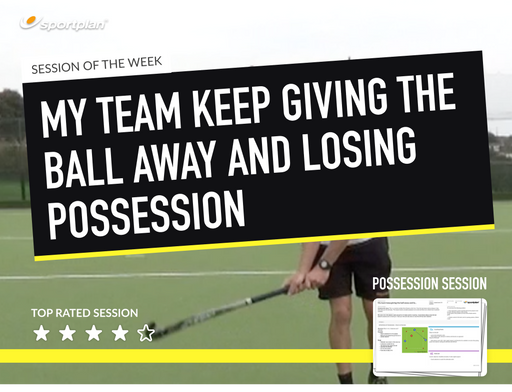
| Our players pass the ball too slowly and as a result their passes are intercepted. |  |
If this sounds familiar then this session is for you!
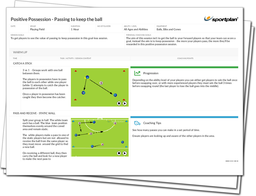
To beef up your players passing this session improves their technique (transfer of weight etc) to push pass with greater power so their passes reach their target, even under match-conditions.
Why this works
Pushing is faster over short distances as there is no backswing. Your players may have also become aware in previous sessions of the opportunity to disguise passes. Disguise causes players to run (or place their weight) in the wrong direction and ultimately leads to hesitation in defenders reactions because they uncertain of which way the pass is going.
Slapping (slinging) is an essential technique for retaining possession but should be used as a cross field pass (eg. passing at the back) as means of transferring the ball from a crowded zone to space. Slapping in crowded zones is poor technique: it is too slow in terms of preparation and backswing which is why coaching the push pass is so important.

in more ways than one
 sportplan_netball



in more ways than one
sportplan_hockey

A few weeks into the league season, poor first touches are costing teams the ball. Coach body shape, scanning and receiving on the move to keep possession.

Pre-season fitness fades fast once the league starts. Build conditioning into ball work and use rolling subs well to keep your squad sharp all season.

The first weeks of the season decide whether a junior or new player sticks with adult hockey. Here is how to keep them safe, give them a clear job and build their confidence from the very first bully.