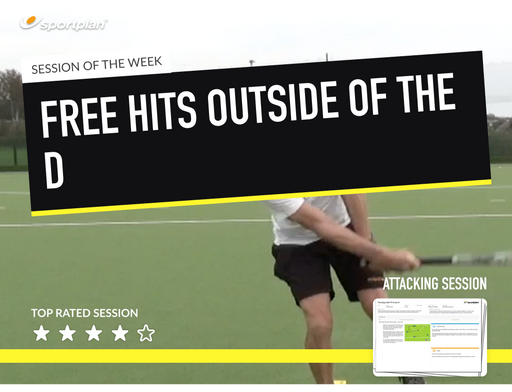
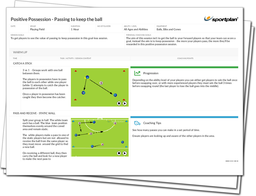
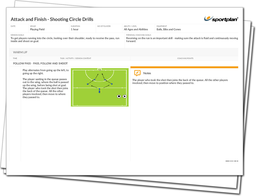
Quite often players can be fooled by the name Free Hit and waste these opportunities to score by blindly smashing the ball into the D. To eliminate this common mistake in your side this session works on creating space inside the D, drawing defenders out of position by moving to meet the pass or to create a diversion for the hit taker to make a self-pass.
To create new habits when it comes to free hits around the D, this session demonstrates to your players through drills and conditioned games, that they can create more space and time on the ball around the D by looking to create a receiving zone outside the D.
By running out to meet the pass the opposition's defenders will have to come further away from their goal. This will in turn create more space in the centre of the D for the pass to find a player moving into the centre and to have a shot on goal.

in more ways than one
 sportplan_netball



in more ways than one
sportplan_hockey

A few weeks into the league season, poor first touches are costing teams the ball. Coach body shape, scanning and receiving on the move to keep possession.

Pre-season fitness fades fast once the league starts. Build conditioning into ball work and use rolling subs well to keep your squad sharp all season.

The first weeks of the season decide whether a junior or new player sticks with adult hockey. Here is how to keep them safe, give them a clear job and build their confidence from the very first bully.