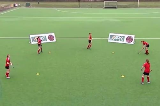
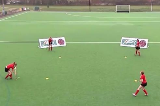
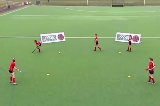
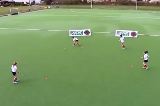
Set up a small grid (10 yards max)
- 4 players
- Players must stay on their cones
- Avoid too much wandering off the cones
- Head should be up as much as possible
- The ball should be passed to the front foot
- Players should let the ball roll across the body straight into the playing position
- Maximum of 3 touch
- Players must make a connection before passing (shouldn't presume the player is in the same place)
- Make into a 2 touch drill
- Increase ball pace, requiring even softer hands while trapping the ball
- Ask for prescanning before each trap

in more ways than one
 sportplan_netball



in more ways than one
sportplan_hockey

A few weeks into the league season, poor first touches are costing teams the ball. Coach body shape, scanning and receiving on the move to keep possession.

Pre-season fitness fades fast once the league starts. Build conditioning into ball work and use rolling subs well to keep your squad sharp all season.

The first weeks of the season decide whether a junior or new player sticks with adult hockey. Here is how to keep them safe, give them a clear job and build their confidence from the very first bully.