*** AUDIO DESCRIPTION ON ***
Coaches Objective:
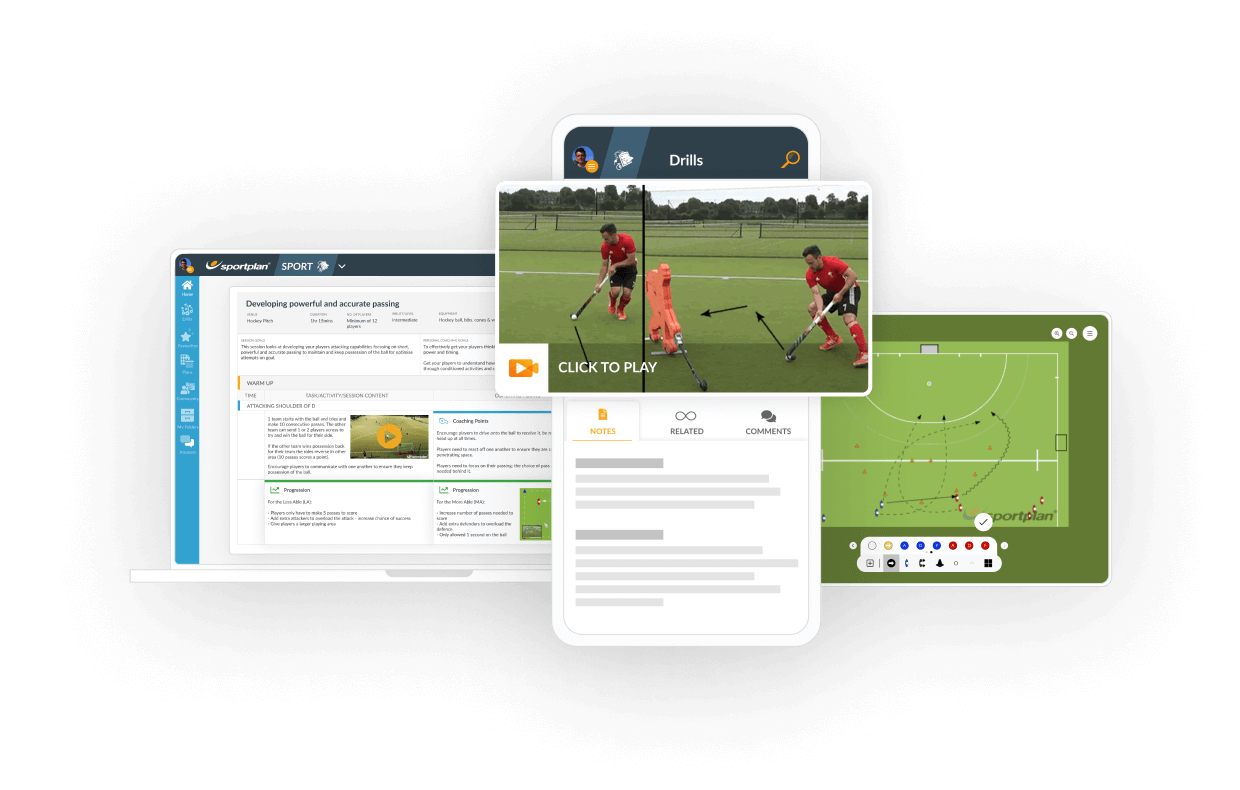
To teach the attacker to eliminate the defender at speed by enticing the defender into making a challenge before moving the ball at speed away from them.
Purpose:
By beating the defender at high speed, it will set up fast counter attacks or create goal scoring opportunities by eliminating in and around the circle.
The approach line is at the defender (to "stand him up" to force a tackle)
The ball is held at 1 o'clock on the forehand side and the attacker approaches the defender with the body positioned in a way that they can either pass or drag the ball either way, creating indecision in the defenders mind.
The ball is moved relatively slowly right to the reverse stick side of the defender to commit them to one side and encourage them to try and jump in to attempt to make a tackle.
The ball is then moved rapidly across the defender, over to the reverse stick side with the next touch taking it past the defender on their open stick side. This change of tempo defeats the defender’s reaction time therefore the drag to the defender's open side doesn’t have to be too wide.
in more ways than one
The best hockey players in the world do not just react faster; they scan more frequently and process information before the ball arrives. This article explores the science behind scanning, how to coach spatial awareness as a habit, and practical drills that force players to lift their heads and read the game.
In hockey, you can only score from inside the circle. Getting the ball into the D with purpose and creating genuine shooting chances is the hardest part of attack. This article examines the different types of circle entry, why entry angle determines shot quality, and how to train your team to penetrate the most congested area on the pitch.
The best teams don't just press - they press at the right moment. Here's how to train your players to read the cues.