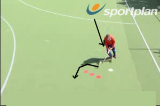
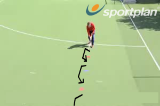
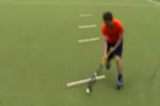
- Performing the squeeze movement over 2D markers
- Should have a single marker to indicate where the movement should be performed
- A line of markers should also be used to indicate where the ball needs to travel past
- 2D markers are used to the introductory nature of this drill, allowing players to practice the squeeze itself without knocking equipment over etc.
- If players are struggling to lift the ball, have them slow the initial run down
- Move the ball further across to the right hand side, using the momentum off the ball to assist with the lift
- Players should try and move their body as well as the ball around the markers (as you can't run through a player in a game)
- Introduce 3D obstacles, requiring the distance off the ground to be greater
- Use a passive defender to better recreate a game situation

in more ways than one
 sportplan_netball



in more ways than one
sportplan_hockey

A few weeks into the league season, poor first touches are costing teams the ball. Coach body shape, scanning and receiving on the move to keep possession.

Pre-season fitness fades fast once the league starts. Build conditioning into ball work and use rolling subs well to keep your squad sharp all season.

The first weeks of the season decide whether a junior or new player sticks with adult hockey. Here is how to keep them safe, give them a clear job and build their confidence from the very first bully.