Community | Pancake progression

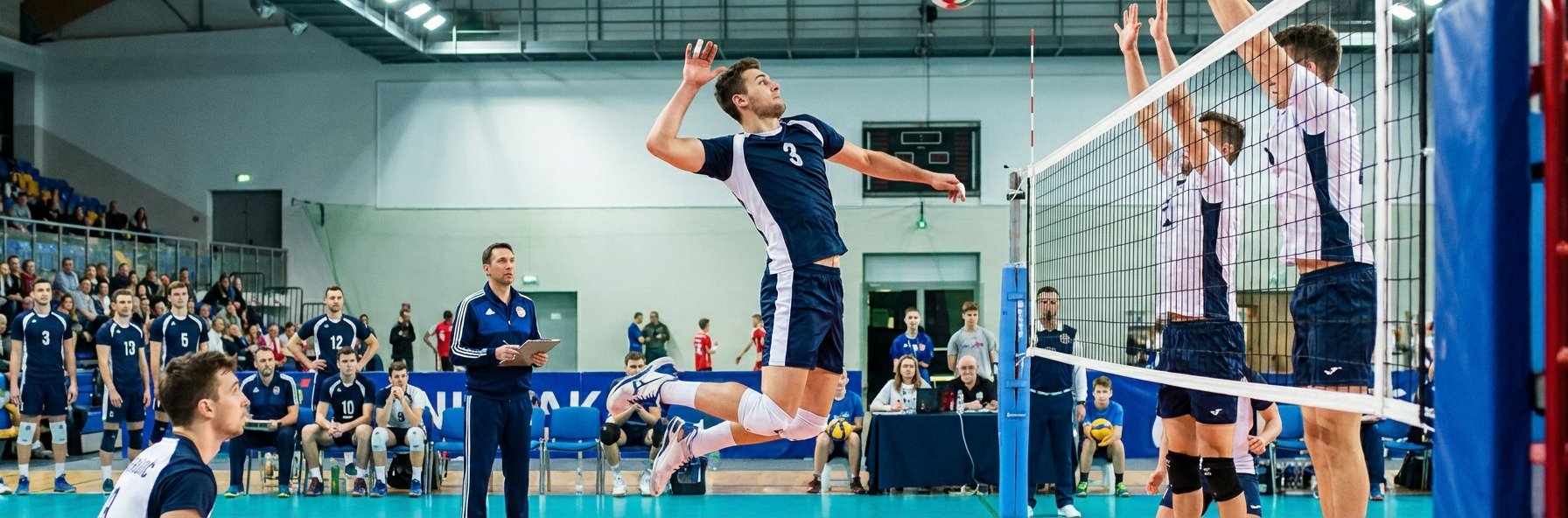
Attacking efficiency measures kills minus errors divided by attempts. Top attackers maintain high efficiency by varying their shots, reading blocks, and selecting appropriate attacks for each situation. Power alone doesn't create elite attackers.

Shot Arsenal

Versatile attackers have multiple options:

Line shot: Down the sideline, often against cross-court blocking.

Cross-court: The high-percentage angle shot to the opposite corner.

Cut shot: Sharp angle shot that lands short in the court.

Tip: Soft placement over or around the block.

Roll shot: Controlled placement with topspin to open areas.

Reading the Block

Block position: See where hands are and hit where they're not.

Timing: Late blockers can be hit through or around.

Single vs double: One blocker offers more options than two.

Tool shots: Use the block - hitting off hands for kills.

Decision Making

Set quality: Tight sets limit options - adjust expectations.

Approach angle: Your angle determines available shots.

Game situation: When ahead, be aggressive. When behind, reduce errors.

Opponent tendencies: Know where defenders are and hit elsewhere.

Technical Foundation

Approach consistency: Same approach for all shots hides intention.

Arm swing variety: Adjust contact point and wrist action for different shots.

Late decision: Read the block in the air before committing to a shot.

Contact point: High contact gives more angles and power.

Key Coaching Points

  • Shot variety is as important as power
  • Reading the block determines shot selection
  • Same approach for all shots maintains deception
  • Situational awareness improves decision making
  • Practice all shots, not just the comfortable ones
Drills for Attack Development

VIEW ALL ATTACK DRILLS

JOIN SPORTPLAN FOR FREE

  • search our library of 300+ volleyball drills
  • create your own professional coaching plans
  • or access our tried and tested plans
Simon Lüdeking-Madsen Coach, Denmark

DESCRIPTION

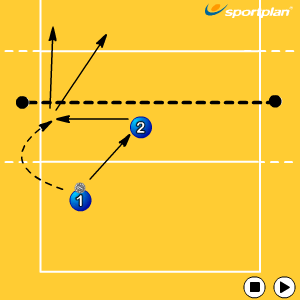
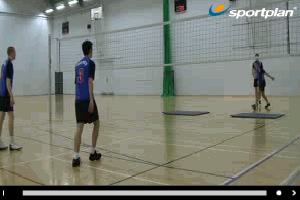
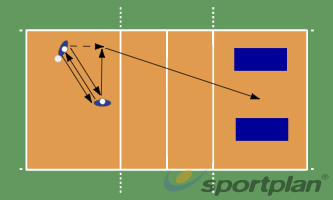
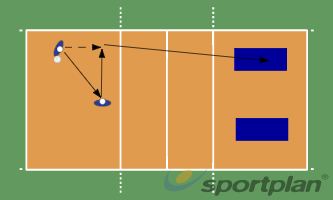
1. Have players get with a partner. One partner stands while the other lays on the floor with their arm outstretched and hand flat to the ground. The standing player drops the ball on the hand of the other player 10 times so that the player on the ground understands how to form their hand in order to get the best bounce. Switch places. 2. To progress, have one player stand and one lay on the ground, just as before. Only this time, instead of dropping the ball on the player’s hand, the standing player will toss the ball from a short distance and the player on the ground will work on tracking the ball. This progression helps the player understand where to put their hand based on the ball’s trajectory. Additionally, they learn how to move from hand in the air to hand flat on the floor. Do this 10 times each before switching. 3. Next, have one player on the ground start on their hands and knees. Now the tosser will make the player begin work on diving to the ball, but with less risk as they are already on the ground. Remember, have them push through the dive, not fall and catch themselves. 4. The next progression starts with the player on the ground on their knees, diving forward or to the side to get the ball. After 10 times, switch. 5. Finally, have the tosser tossing to a player who is in ready position and low to the ground. Make sure each group has enough space and is not diving towards poles, walls, benches/bleachers, or other groups (seems like common sense, but young teams do not always have this in abundance). This should go a little slower, with the passer instructing the tosser on when she is ready.

COACHING POINTS

Have all players bring an extra pair of long socks to practice (should go above their elbow). You can continue this progression and add rolls to side dives, or have the tosser toss to different areas to have the passer adjust to the direction of the ball instead of knowing where it is going ahead of times. Make sure to run a drill next in practice which provides the opportunity to test out their pancake skills. Maybe a slower game of Tip and Chip or even a full scrimmage can provide a chance. Do not, however, move into serving or hitting lines which cause the girls to forget everything they just learned. Pancaking a volleyball is rare, and you may not see the rewards of this training for quite some time. But if you remind players of this skill often and encourage it, you will be pleasantly surprised when your girls finally pull one off.

This practice has no coaching points

PROGRESSION

This practice has no progressions

READ MORE
READ LESS

JOIN SPORTPLAN FOR FREE

  • search our library of 300+ Volleyball drills
  • create your own professional coaching plans
  • or access our tried and tested plans

JOIN SPORTPLAN FOR FREE

  • search our library of 300+ volleyball drills
  • create your own professional coaching plans
  • or access our tried and tested plans
;

Sportplan App

Give it a try - it's better in the app

X
YOUR SESSION IS STARTING SOON... Join the growing community of volleyball coaches plus 300+ drills and pro tools to make coaching easy.
LET'S DO IT