







Excellent drills, very detailed videos. Useful site for my U15 boys team.

My team just can't seem to find the back of the net even when we outshoot our opponents. What can I do to help them take more effective shots? ie shoot to score.

Hi, I want to add people to My Team. do they need to be site members also or can i add all my players and send on details to them

How do I set up my team on this site?
My team are constantly allowing oppositions to score from penalty corners we do 1st runner 2nd runner amp; 2 players on the post, what can I do.
I train a school team in India, it is under-16 team. My forwards are good in skills and defenders are good at tackling. But at the last 15 mins of match(35-5-35 mins.), my whole team gets tired and starts making unforced errors. Even skills are as good as other Indian players but when it comes to strength and stamina they lack. Please suggest something that my players are capable fast matches? We play hockey on grass only.
I have been working on deflection with my team, but it seems to be getting repetitive. Does anyone have any deflection drills that will best prepare my team for the game?
Would anybody like to give me a diagram of 3/4 press and half court please ?

I really have a big problem with my u/15 girls. They just can't play as a team. Any advice please. There's always a fight between someone. Mariette
I am coaching my first season as head coach. I am confident that my team has improved on alot of skills (mostly due to sportplan.net, thank you!). The only thing that is driving me crazy that my team has not improved on is the over committing block tackle. When an opponent is coming down the field on a breakway, my defense runs up and block tackles, and the opponent shoots right past them. This will happen two or three times in a row, one defender after the other. I've told them to keep their feet moving and to keep off their toes, keeping their momentum with the opponent. I don't know how to practice this with them. We only have 9 players (this is a high school varsity team) so we can't scrimmage full field during practice. Please help! I'm desperate for a solution.
My U13 Girls play really well in the first half but drop of badly in the second half - this has caused us too many draws. How do I get consistency for the whole game?

we started the season 5-1 and now mid-way it seems we are fading? we have lost our last 3 games - what are some good drills to get them focused again and pumped for the rest of the season and to get them over the hump -to the next level. thanks
I've got some girls aged 11-14, basically made up from two different clubs. We're playing 7 a side and have a squad of 12. One club dominates in terms of numbers (75% of the squad) and although they are not doing anything 'wrong' at all, the 9 players are accustomed to their own company and there's a bit of a divide that has emerged. I can't understand why the players aren't just getting on with things but I'm getting some reactionary behaviour from some players, because of this 2 camp scenario. Any tips?Thanks.

How can "my Team" see what is in my folders.thank you

Hi all,I coach a school boys teams, ages 12-18.Late last season after a disappointing loss, one of the younger boys made the comment 'Its all xxxx's fault that we lost'. This was made at the end of the game while I was packing away our gear and most, but not all, of the boys had already departed. XXXX wasn't there to hear the comment. Being dumbfounded by this comment, I let it go at the time and have stewed on it during the our off season. I'm of the opinion that this type of comment is unacceptable and should result in disciplinary action of some kind. My thinking at the moment is that I would be remove the player from the game ( if made during the game, even if it leaves us short), pass them on to the school for whatever punishment is deemed appropriate with a request to remove them from the team. Am I being too harsh or unreasonable in my thinking? Are there any strategies that I could employ to stop this kind of commentary? I'm going to discuss it with the school when we get back together before the season starts.
Hi,I perhaps naively, expected to have most of our team from last year carry over and only have a few new comers to integrate and get up to speed with the rest. However meeting the team at our first practice last night i find I have five players still at school from last year and the rest all new comers, most of whom had not held a hockey stick at all till practice.This being only my second season coaching (year 9 to year 13 boys) has left me feeling a little blindsided, and feeling quite unsure how to prepare practices that target both groups of boys. Do i lump them both groups together, keep them separate? What drills/exercises to best bring the new comers up to speed.I don't want to neglect either group, keep practice worthwhile for the experienced boys, but also bringing the new comers up to a level were they can mix in with the others and learn organically from them while practicing as a team. David

in more ways than one
 sportplan_hockey




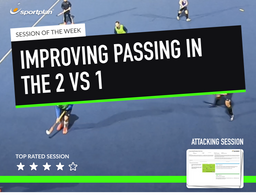
A few weeks into the league season, poor first touches are costing teams the ball. Coach body shape, scanning and receiving on the move to keep possession.

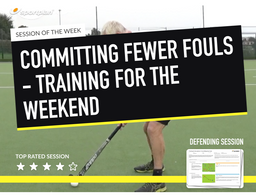
Pre-season fitness fades fast once the league starts. Build conditioning into ball work and use rolling subs well to keep your squad sharp all season.

The first weeks of the season decide whether a junior or new player sticks with adult hockey. Here is how to keep them safe, give them a clear job and build their confidence from the very first bully.
Coaches from around the world look to Sportplan for coaching confidence.
Excellent drills, very detailed videos. Useful site for my U15 boys team.

I love using Sportplan. It's been a great help for co-ordinating hockey practice and being able to help tweak skills and getting the most out of my players!

Great site. An absolute must for coaches who are willing to change and learn new drills. Superb, simply superb.

Wow what a great website, I have found sportplan an important tool for me when planning my netball sessions with my netball team. There are alot of very helpful tips/ideas/skills that I can learn and teach to my team. Thank you sportplan I hope to continue to use your helpful tips and to learn more about improving my teams netball skills. Thanks again....keep it up....

I have been using Sportplan now for 3 years and can honestly say that I have never repeated the same session twice. My girls are always focused and are improving every year. Thanks Sportplan.
What a fantastic tool. The Chalkboard and session tools make an unbelievable difference in making training plans in both time and organization. I will be instructing all of my assistant coaches that this tool must be used for all sessions during the season, so that we may build a club coaching resource library.
I can't get enough of the Sportplan, It has given me back the enthusiasm i was starting to lose. My girls are so keen and are ready at 14 to take the next up in their game. Sportplan will help no end.



