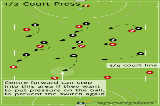
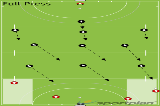
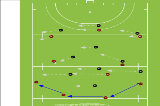
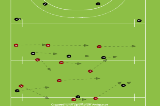
The difference between the Full Press, which puts pressure on the specific areas on the pitch (wide areas in the opposition's 23m area) and the Full Court Press is that pressure is apllied on all areas around the pitch. Each player marks their man tightly and looks to step in front of their man.
When to use:
When you want to keep the opposition as far away from your goal, and to prevent the opposition's backline from playing the ball around (ideal when the opposition's backline are skilled at passing the ball out).
Limitations:
The Full Press can only be played for short periods of time as it requires a high level of fitness from all your players.
It also needs your team to be very disciplined because if one player decides not to join in, or dives in, the press tends to break down and results in a break opportunity for the opposition.
The final thing to remember with the Full Press is that a lot of energy is used to win back the ball and once it has been won your team needs to still have some energy left in the tank to use for their own fast break.

in more ways than one
 sportplan_netball



in more ways than one
sportplan_hockey

A few weeks into the league season, poor first touches are costing teams the ball. Coach body shape, scanning and receiving on the move to keep possession.

Pre-season fitness fades fast once the league starts. Build conditioning into ball work and use rolling subs well to keep your squad sharp all season.

The first weeks of the season decide whether a junior or new player sticks with adult hockey. Here is how to keep them safe, give them a clear job and build their confidence from the very first bully.