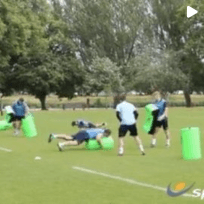
Set up a grid with 5 channels with each channel 1.5m apart. The two attackers (red)face away from the defenders. The coach will tell the attackers which channel to keep empty on each go (vary this) THe coach shouts "Go" and the attackers have to turn to face the defence, at the same time the defenders can start to close down the attackers. SO very quickly the atacker with the ball has to scan for where the space is and decide to run himself and risk being tackled or communicate with his support player to get into that channel and pass it them. To demonstrate i would run through this with the defenders static initially to get them focussed on finding and identifying the space. then increase the pressure to enhance the skill by llowing the defenders to walk up initially and then run.
This practice has no coaching points
This practice has no progressions

in more ways than one
 sportplan_rugby


Greasy balls and soft pitches turn tidy handling into a lottery. Here is how to coach your players to keep hold of the ball when November conditions bite.
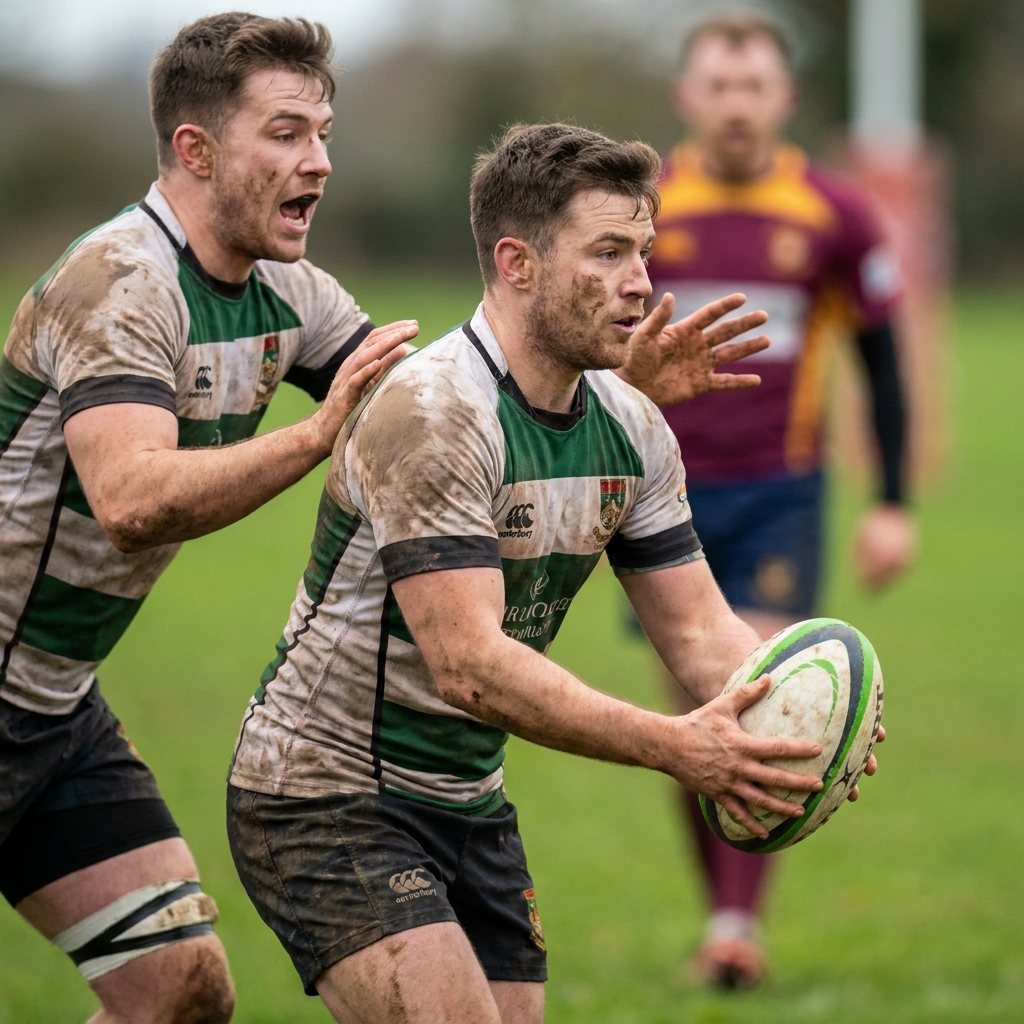
Most line breaks are made by support runners, not ball carriers. Teach the angles, depth and timing that get them there.

The isolated ball carrier is rugby's spookiest turnover. Here is the five-step fix, plus drills that rebuild support lines fast.