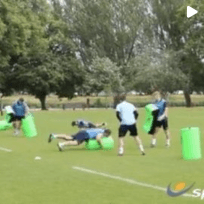
BALL CARRIER AND TACKLER RUN TO THE BLUE CONES AT THE SAME TIME. WHEN BALL CARRIER REACHES CONES THEY CAN TURN AND RUN TOWARDS EITHER OF THE RED CONES DEFENDER GIVES CHASE AND MAKE TACKLE BEFORE RED CONES
BALL CARRIER GOOD LINES SPEED TO BLUE CONES FACE FORWARD UNTIL REACHING BLUE CONES THEN TURN. TURNING TO EARLY MAY GIVE AWAY WHICH DIRECTION YOU PLAN TO GO. DONT STOP AT BLUE CONES KEEP MOVING, PUT A STEP IN TO CONFUSE DEFENDER DEFENDER CUT DOWN SPACE PADDLE FEET ON REACHING CONES, KEEP ON YOUR TOES STRONG STEP AND SPEED TO MAKE TACKLE BEFORE RED CONES TRY AND MAKE BALL CARRIER MOVE THE WAY YOU WANT BY TARGETING A SHOULDER
This practice has no coaching points
This practice has no progressions
in more ways than one
 sportplan_rugby
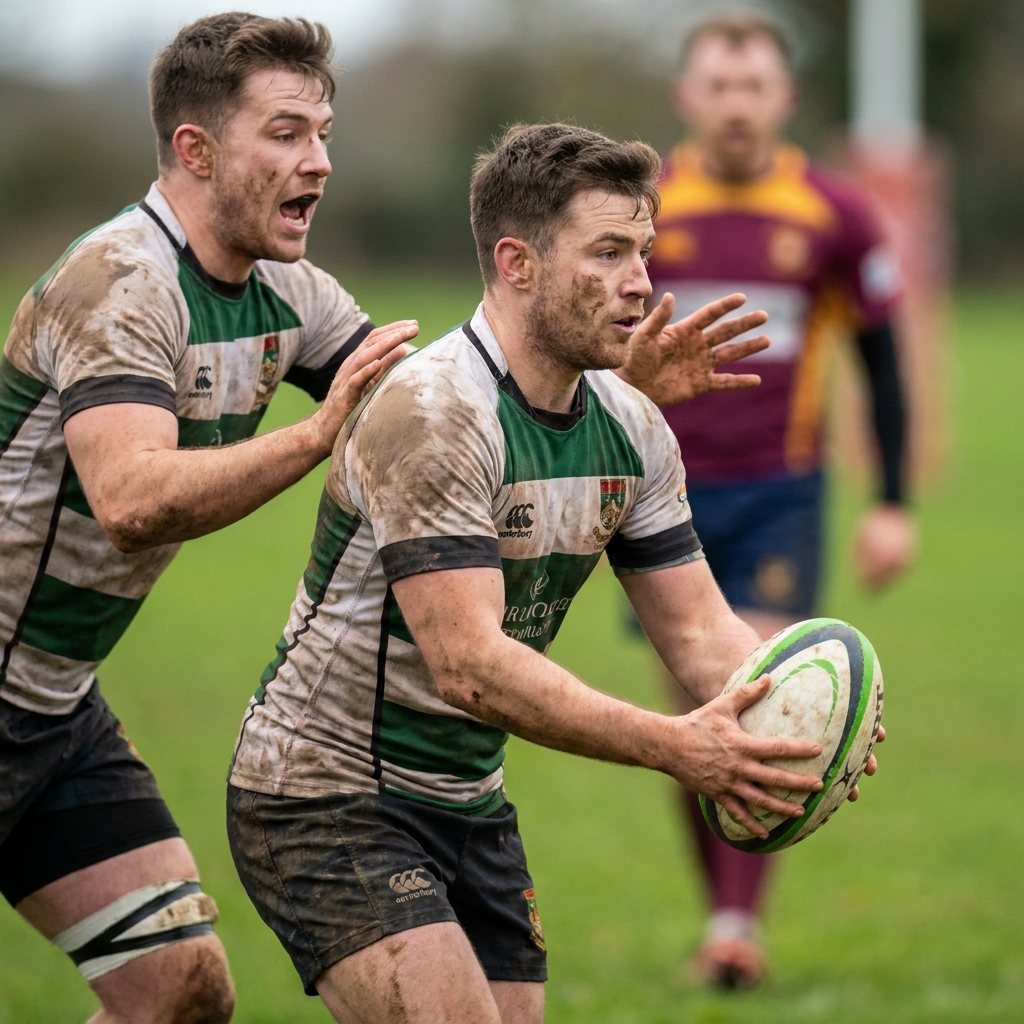
Most line breaks are made by support runners, not ball carriers. Teach the angles, depth and timing that get them there.
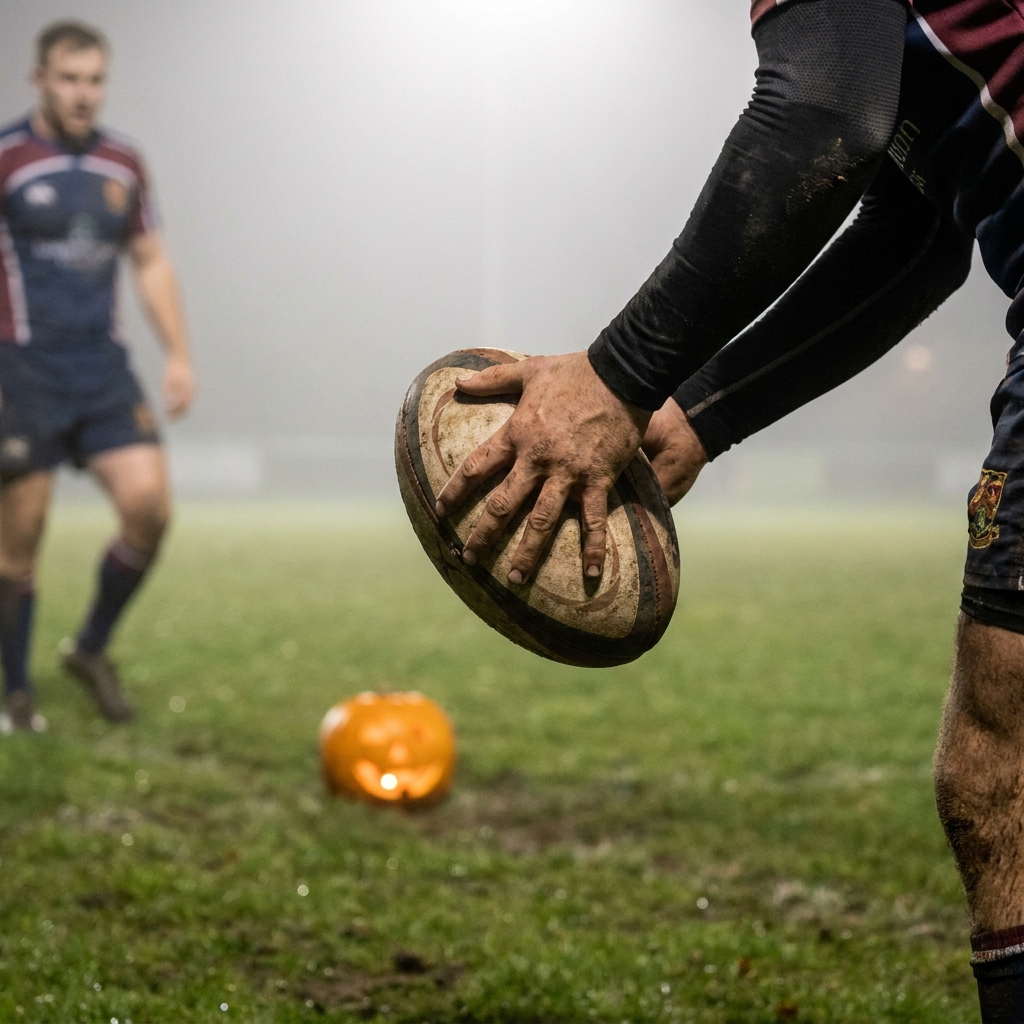
The isolated ball carrier is rugby's spookiest turnover. Here is the five-step fix, plus drills that rebuild support lines fast.
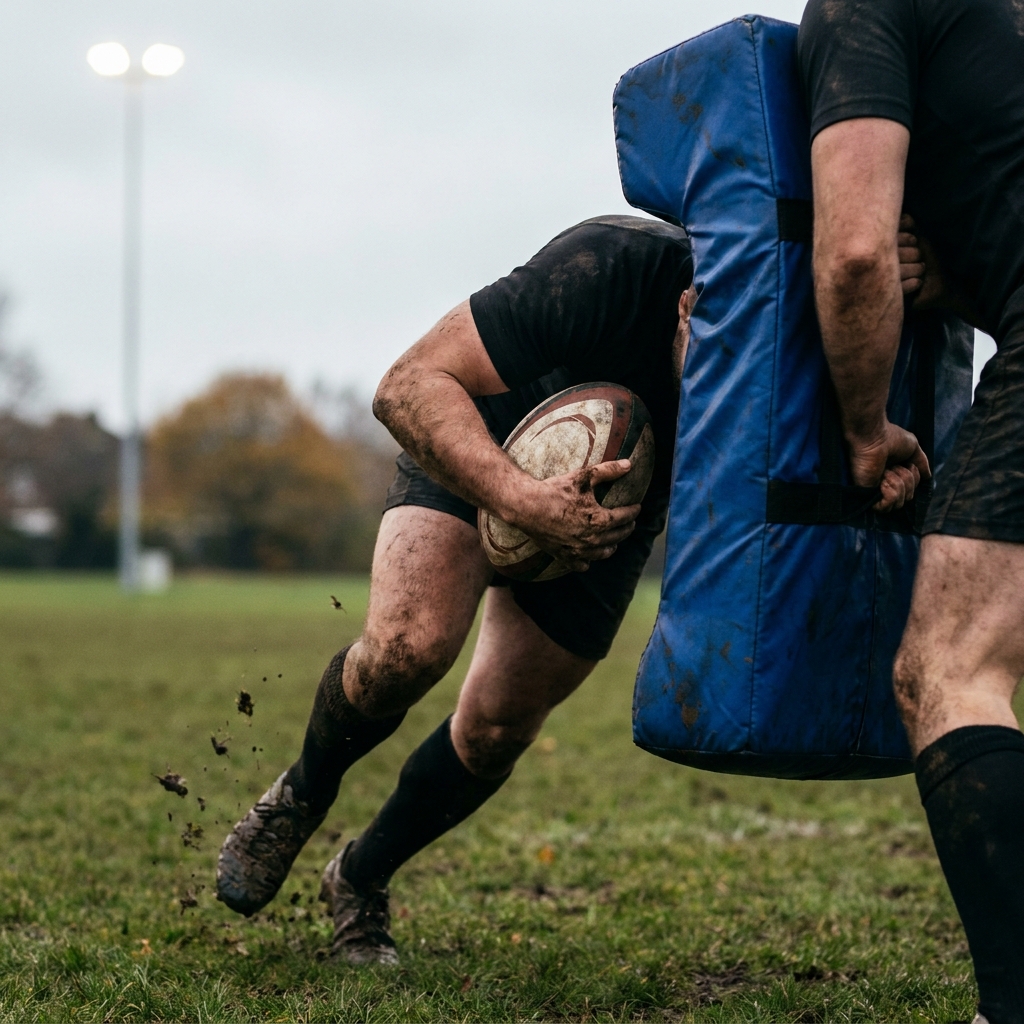
Tacklers are aiming lower, so carriers who dip late put heads at risk. Teach footwork, a strong early body height and leg drive to win the collision safely.