

-Players are in pairs and must pass the ball to one another.
-Players will control the ball then pass
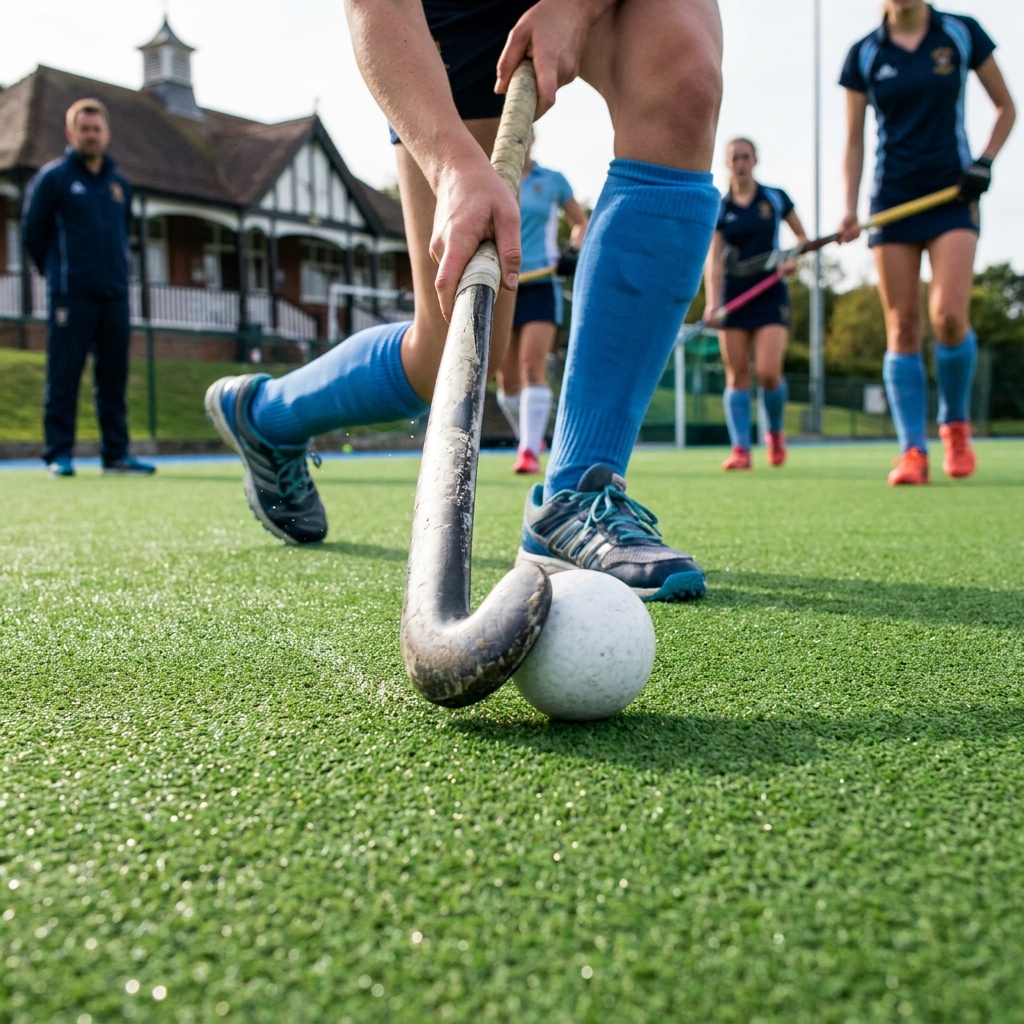
1. Firstly, make sure the ball is on the right side of your body and on the bottom of your stick.
2. Position your body such that you are facing your target, in this case, your teammate.
3. If you’re attempting a push pass, place the ball behind your back foot in order to give your pass more power. But if you’re attempting a slap and hit, position the ball in the middle of your feet.
4. Sweep your stick forward fluidly while shifting the weight of your body from the back foot to the front.
5. Make sure that your stick and body is still facing the target after you release the ball.
-Always remember that you should have your eyes on your target and not on the ball when you’re making a pass. Once you’ve learnt how to execute a normal forehand pass, you might want to focus on mastering the push pass.
-A push pass is used to move the ball speedily over shorter distances. Because it gives you the most control over the ball, it is the best pass to use in short distances and it gives you more accuracy. Your stick will stay in contact with the ball until it is released for the pass.

in more ways than one
 sportplan_netball



in more ways than one
sportplan_hockey

The first weeks of the season decide whether a junior or new player sticks with adult hockey. Here is how to keep them safe, give them a clear job and build their confidence from the very first bully.
Most tackles are lost before the stick goes down. Teach your defenders to channel, wait and choose the right tackle, and you will win more ball and give away fewer cards.

England Hockey's rule guidance for 2026/27 takes effect from 1 September. Here are the changes that will actually alter how you coach, and how to brief your squad in one pre-season session.









