Basketball: session plans

May 2026

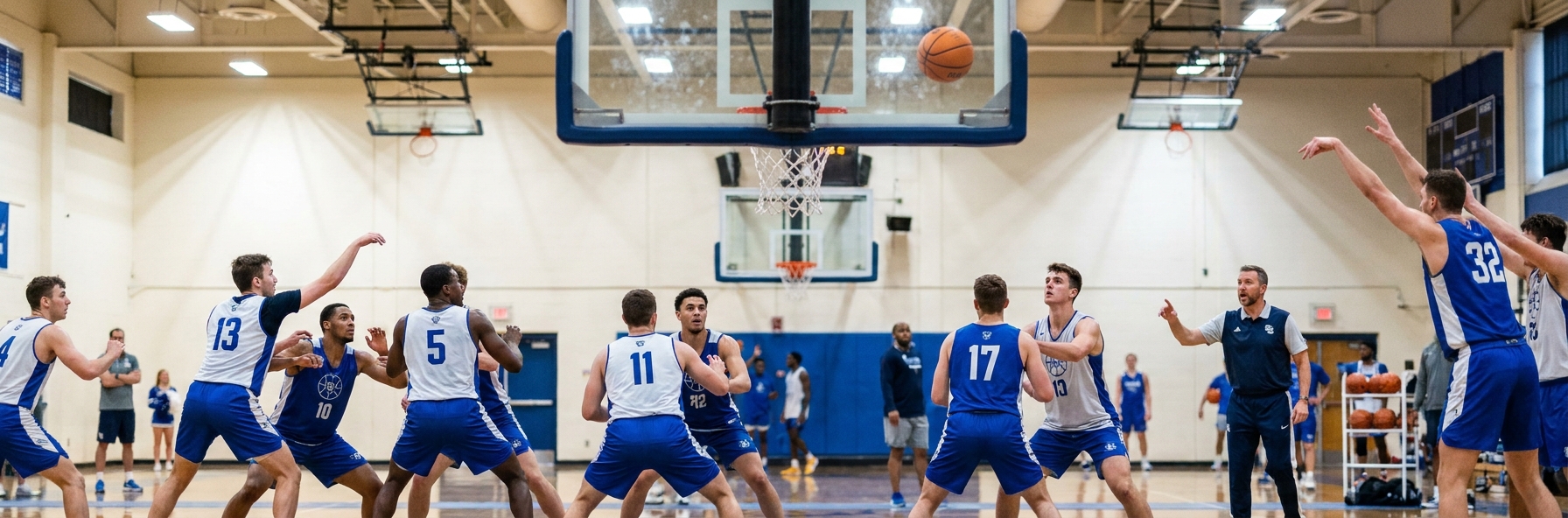
The closeout has become the most repeated defensive action in basketball. Every kick-out, every skip pass, every drive-and-dish forces a defender to sprint from help position back to a shooter. With teams now taking 35 or more three-point attempts per game at the professional level, and youth and amateur teams following suit, the quality of your team's closeouts will decide more games than any set play in your playbook.

The challenge is that closeouts are full of trade-offs. Close out too hard and the shooter rips through for a layup. Close out too soft and you concede an open three. Reach for the shot and the whistle blows. The 2025-26 NBA season has seen fouls per game increase measurably, particularly on perimeter closeouts where defenders are flying at shooters with hands down or feet crossed. The coaches who solve the closeout puzzle will produce defences that hold up in pressure situations.

Why Closeouts Are Harder Than Ever

The modern game has changed the closeout problem in three ways. First, the shooting threat now extends to almost every player on the floor. Centres are stepping out to the arc, and even traditional bigs are shooting confidently from three. The days of leaving a defender to dig and recover are over because almost every player can punish you for it.

Second, drivers are more skilled than ever. The same player who can shoot a 38 per cent three can also rip through, take two power dribbles, and finish through contact. A defender who over-commits to the shooter is dead in the water against a modern wing.

Third, officiating has tightened around landing space and verticality. A defender who jumps forward into the shooter's space, even slightly, is now far more likely to give up three free throws. This is the single biggest swing in expected points: a contested three is worth roughly 1.05 points on average, but a shooting foul on a three-point attempt is worth around 2.25 points. Bad closeouts now cost your team double.

The key insight: A closeout is not one action. It is a sequence of decisions that change based on distance, the shooter's tendencies, the location on the floor, and where help defence lives.

The Mechanics: How to Coach the Closeout

Break the closeout into three phases and rehearse each phase in isolation before combining them. This is how good defensive teams build muscle memory.

Phase One - Sprint: The defender must close the first two thirds of the distance at full sprint. Walking or jogging here is the most common mistake at youth and amateur level. The legs that should be sprinting are often saved for the slide, which is the wrong way round. Sprint when there is no threat, then break down when the threat appears.

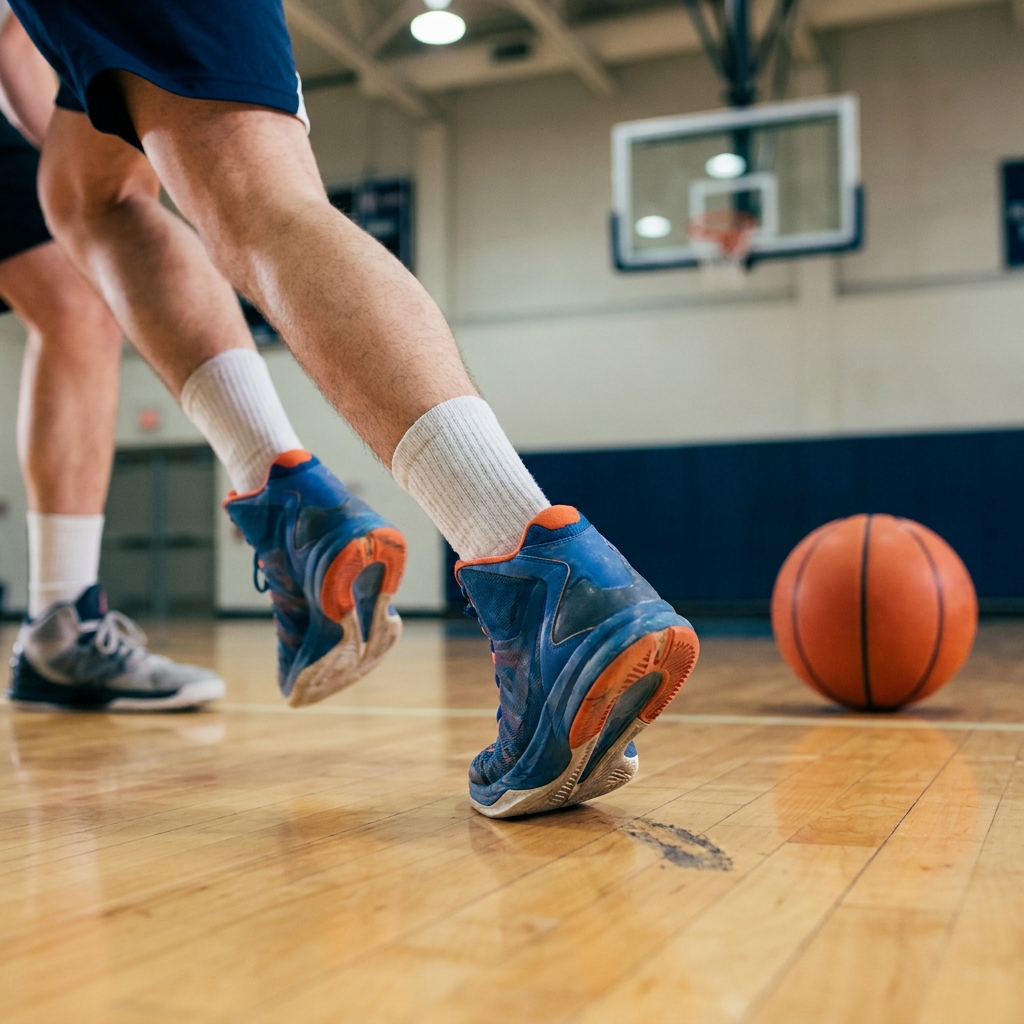
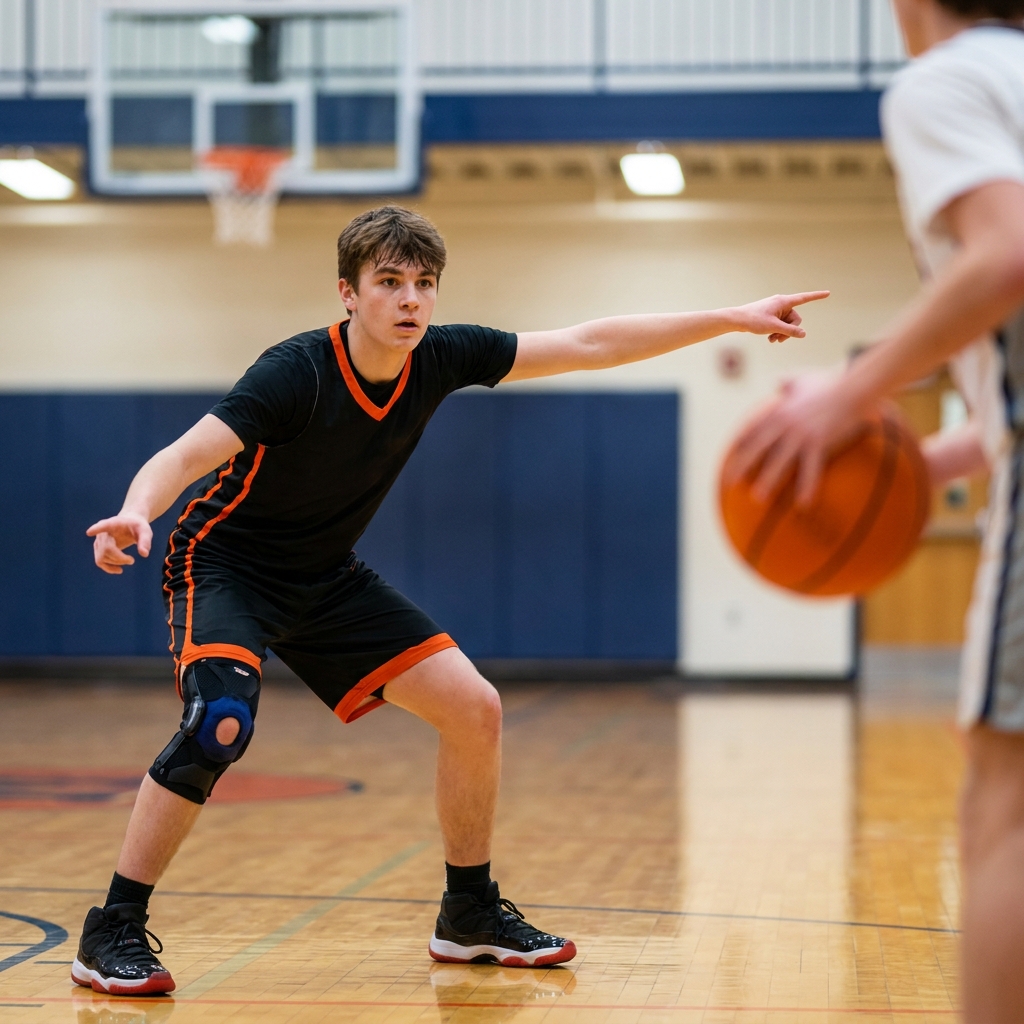
Phase Two - Chop: In the last third of the distance, the defender shortens their stride and drops their hips. This is the "chop step" - small, choppy steps that allow the defender to change direction. The hands come up. The chest stays square. The head stays on a line with the shooter's chest, not their ball.

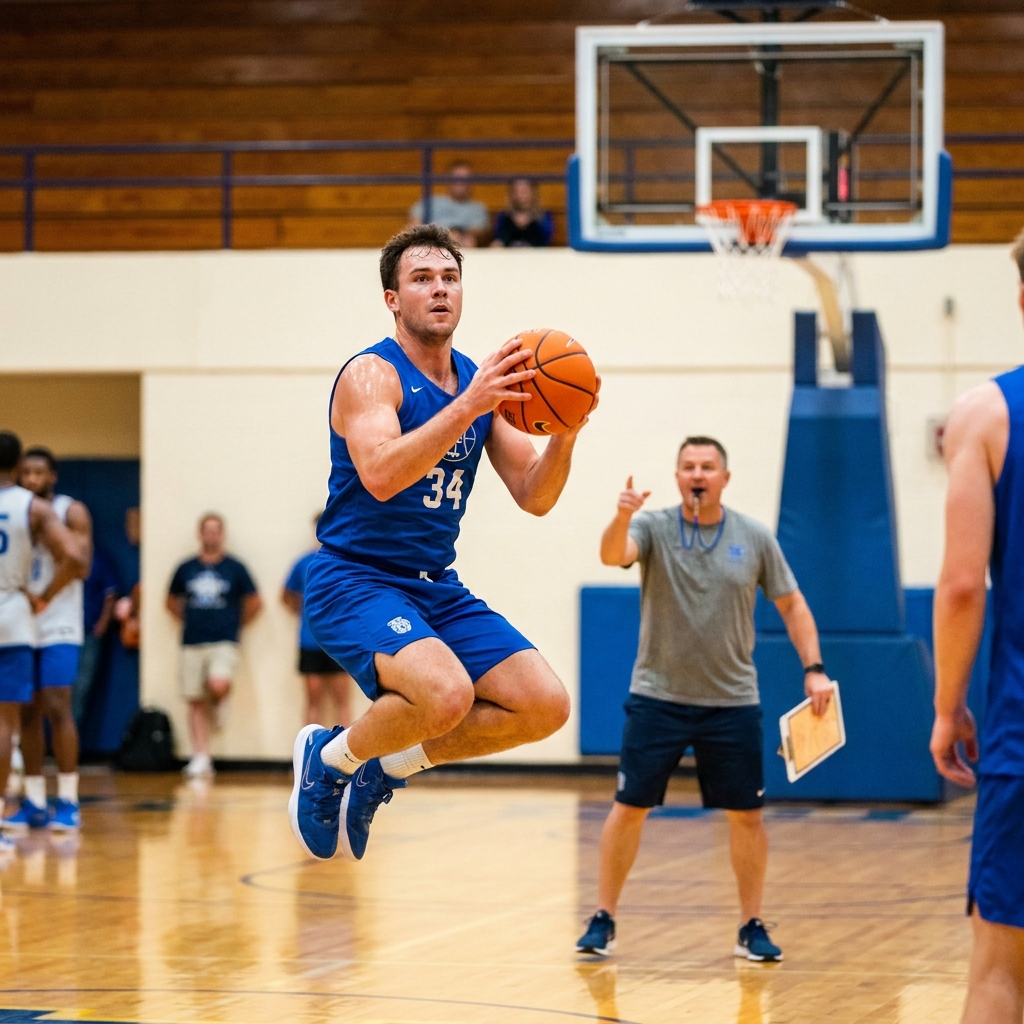
Phase Three - Contest: The contest itself is the smallest movement of the three. A vertical hand, a contested eye line, and a short hop to the side the shooter is most likely to drive. The defender does not jump forward. The defender does not leave their feet unless the shooter is already in their shooting motion. Verticality is the legal protection of the modern defender, and it must be taught explicitly.

Assignment Closeouts: Teaching the Reads

The smartest defensive teams have moved beyond a single closeout technique to assignment-based closeouts. Each shooter on the opposing team is profiled before the game, and defenders close out differently based on the matchup.

If the player you are guarding is a 40 per cent three-point shooter who is below average off the dribble, close out long. Run them off the line, contest hard with a high hand, and live with what happens on the drive because help will be there. If the player is a shaky shooter but a dynamic driver, close out short. Stop two feet shy of the shooter, sit on the dribble drive, and dare them to shoot the three. If the player can do both, close out under control with a high hand and active feet, ready to react to either choice.

This sounds complex, but young players can learn it. The trick is to label the closeouts in practice. We use "long," "short," and "mirror" as the three calls. When players hear the call from the bench or a teammate, they know exactly what is expected.

Common Mistakes and How to Fix Them

The closeouts that lose games are remarkably consistent. Fix these and your team will improve immediately.

Hand down, man down: Defenders who close out with hands at their sides give up clean releases. The hand goes up on the sprint, not at the contest. Teach players to raise the hand as they begin the run, not as an afterthought at the end.

Crossing the feet: When a defender is sliding sideways to contest, crossing the feet means they cannot change direction. The shooter rips through and there is nothing the defender can do. Teach the chop step until it is automatic.

Closing out flat: A defender who closes out square to the shooter has no angle to take away. Better defenders close out with their inside foot forward, taking away the shooter's strong-hand drive and forcing them weak.

Jumping at the shot fake: A modern shooter will pump fake and drive every time a defender bites. Teach players that a contested shot from a vertical defender is a win, and a foul on a shot fake is a disaster.

Key Coaching Points

  • Sprint two thirds of the distance, chop the last third, contest with verticality
  • Hands up on the sprint, not at the contest - it is too late by then
  • Assignment closeouts: long for shooters, short for drivers, mirror for two-way threats
  • Never cross the feet and never jump forward into landing space
  • A contested miss is a win - a shooting foul on the arc costs over two points

Recommended Drills

VIEW ALL DEFENCE DRILLS

session plans DRILLS
View All
Unfortunately there were no results for your search! Please try again
session plans ANSWERS
View All

Finding Drills used in weekly session plans

Been looking over some of the weekly sessions and would like to use some of the drills they use in my session planner but can`t find them when I search for them in the Drill section. Any ideas

Stephen Coach, Scotland

Sharing session plans

hi,How do I make my finished session plans public?

Volda Fotball Coach, England

How do I upload a Youtube Video to my session plans?

How do I upload a Youtube Video to my session plans?

Nick Gall-Tomassen Coach, England

How do I make my session plans private?

How do I make my session plans private? or do they stay private unless i share them?

Kane Wintersgill Coach, New Zealand

Does it cost me anything to be a member for this website?

Does it cost me anything to be a member for this website?

Kim Gadwood Coach, United Arab Emirates

Can't see my sessions on the iPad

I create my session plans on a desktop. For some reason, when I log into Sportplan on my tablet, it doesn't appear to update so my plans are not visible there so I cannot deliver the sessions "interactively" and have to rely on printing the session out and delivering it via paper form. Can you advise why it doesn't appear to be updating?

Gemma Braga Coach, England

How do I save and print my Session Plans?

Steven Portplan Coach, England

Adding team members

I am looking to add an assistant coach to my team. Will they be able to assist with creating coaching plans with this access, or do they have to have their own membership? We are trying to keep all of our videos and practice plans in a centralized profile, so it would be helpful if they coudl create from my profile as a team member.

Jesse Dominguez Coach, United States of America

SESSION PLANS

How can I access session plans as only some are avaiable to view

niki Coach, Wales

change sports

hi l like to get rugby league as my sport my account seems to be logged onto rugby union how do l change it to rugby league

Michael Allard Coach, Australia

membership

what does premium membership mean

caroline grindrod Coach, England

Create Session Plans on Tablet?

Hi there,Does this app work on tablet devices, and can you create drills and sessions plans on said devices please?As I cannot do this on my iPhone.Thanks

Ben Ledger Coach, England

cancelling membership

Hello,If I cancel my memebership will I still have access to the drills etc I have saved?Thank-you,Lee .

Lee Edwards Coach, Australia

Lost session plan

I've just done a whole session plan and was looking how to forward it on and noticed the "stop editing" option so pressed that and the session disappeared and hasn't even been auto saved. Is that normal?

Gill Walker Coach, England

Session plans

How do. I add a drill to a session plan

Andy Kerr Coach, England

Book marking session plans

How do I mark a session plan as a favourite so I can easily find it?

Melissa Arkinstall Coach, Australia

JOIN SPORTPLAN FOR FREE

  • search our library of 650+ basketball drills
  • create your own professional coaching plans
  • or access our tried and tested plans

Sportplan App

Give it a try - it's better in the app

YOUR SESSION IS STARTING SOON... Join the growing community of basketball coaches plus 650+ drills and pro tools to make coaching easy.
LET'S DO IT