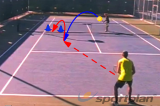
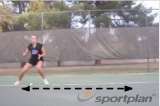
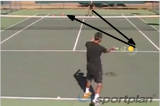
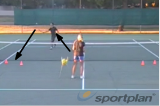
The coach feeds the ball to the forehand side, and the player responds with forehand volley. The coach hits the ball with lob to the backhand side, and the player runs back and save the point with backhand slice.
Responding to the lob is not a skill that players spend a lot of time on. Reacting quickly, sprinting back and controlling the shot are 3 parts that have to be combined to guarantee effective result. Fighting can win many points for players so coach should implement this factor into many training drills.
In this exercise, the player works on responding to the lob with backhand slice. Endurance, speed, deceleration and control of the slice are just few skills that are included into the same action. Coach should make this drill more tactical by showing different possiblities with slice (high to get time for recovery, agressive to surprise opponent who is coming in).
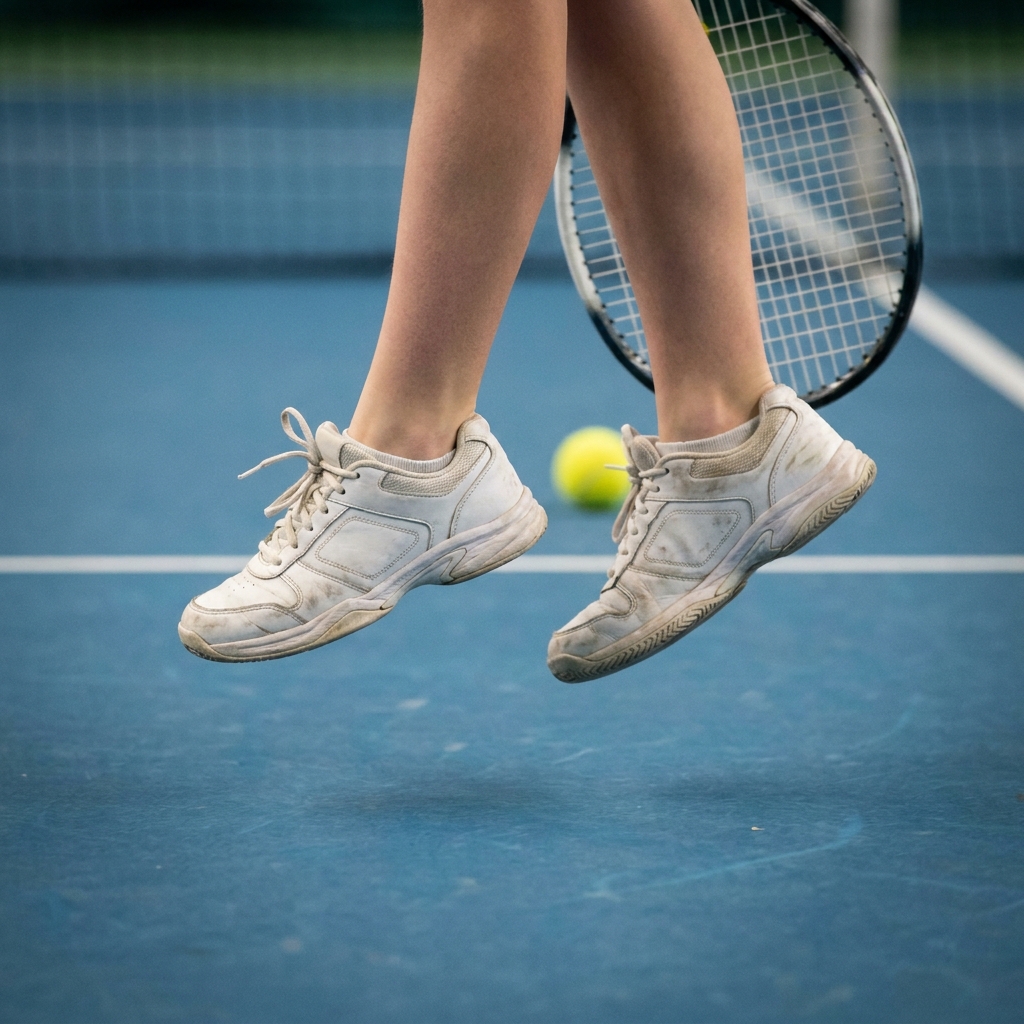
Indoor courts give players less time and less room. Help them sharpen their split step, shorten their swing and stay calm, and winter becomes a season of real progress.
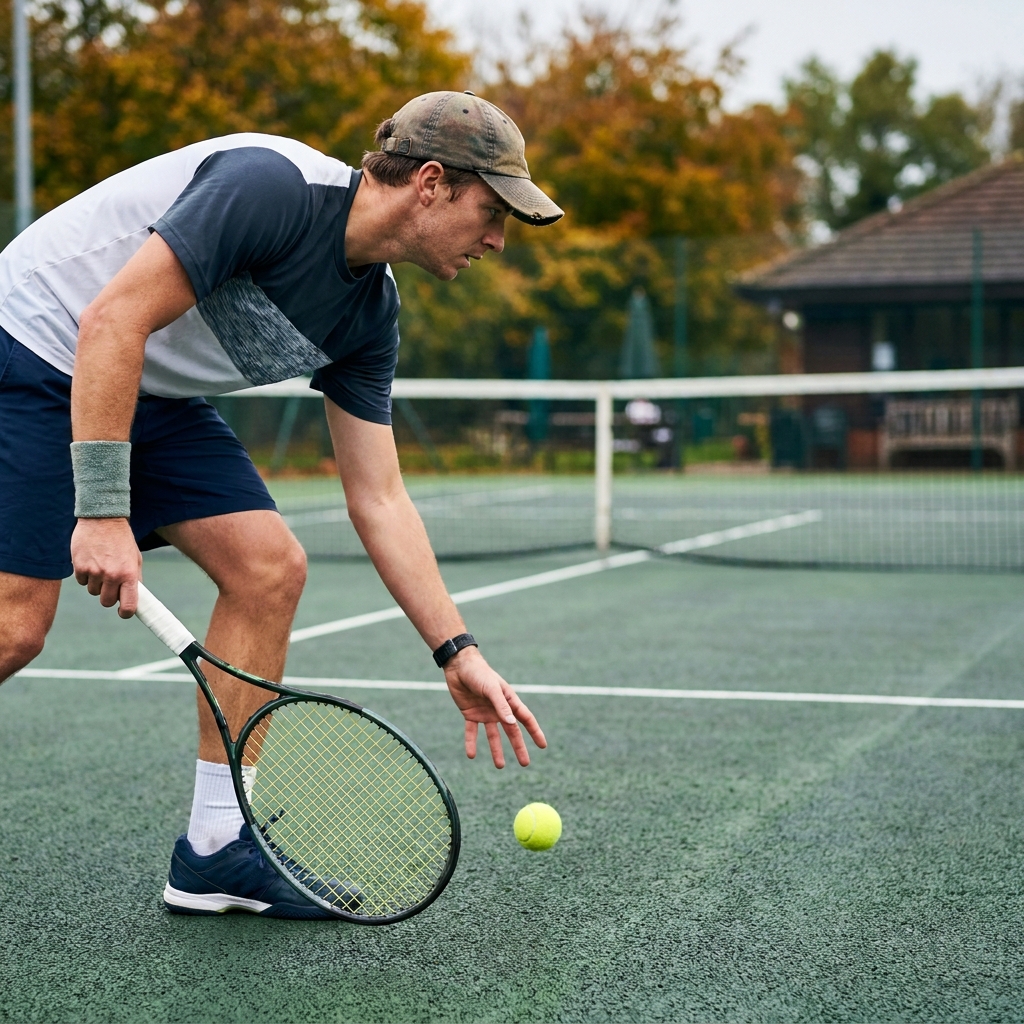
A tiebreak is a short sprint where every point is worth the same as a break of serve. The players who win them are rarely the ones who hit hardest. Here is how to coach the patterns, habits and scoreboard thinking that win the big points.
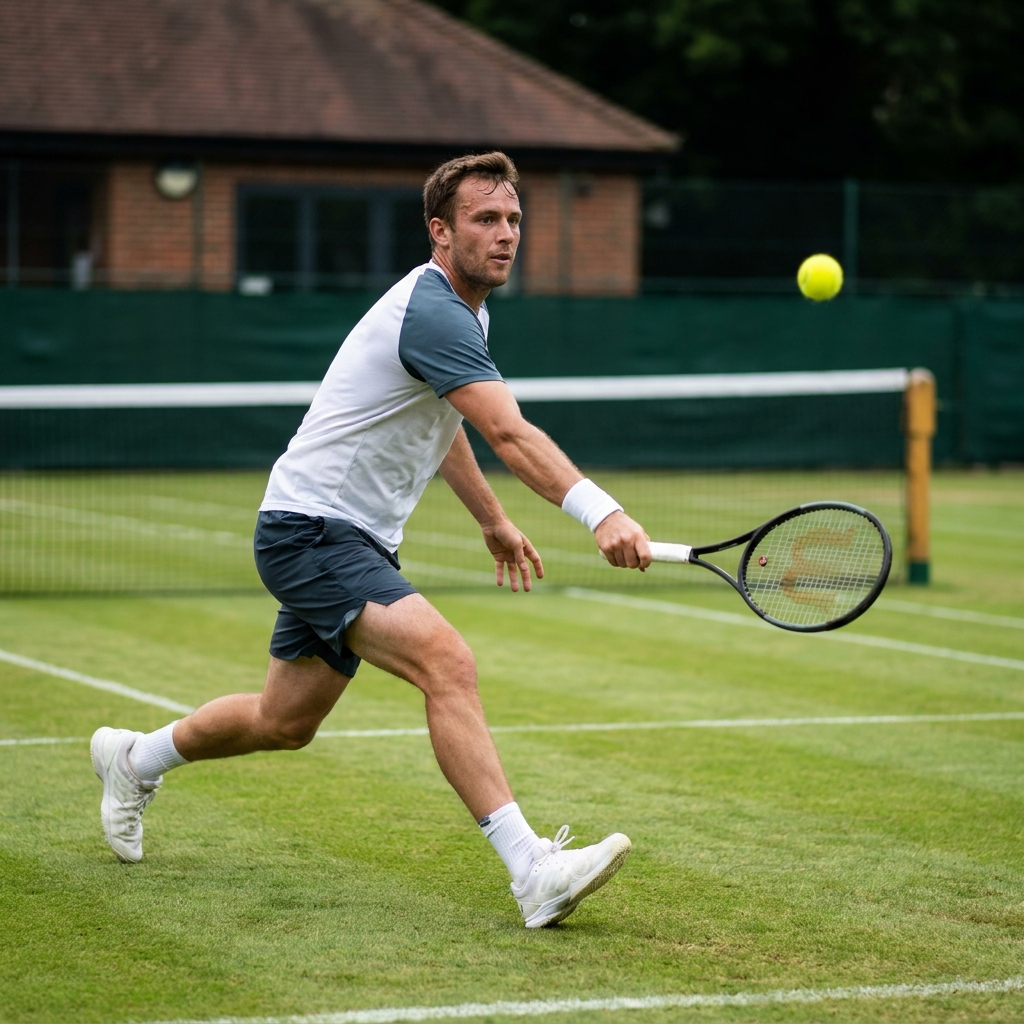
Most club players practise the serve on its own and then have no idea what to do with the ball that comes back. Serve plus one is the pattern that turns a good serve into a won point.


Register for FREE and get coaching tips, top drills, session and more every week!