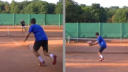
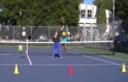
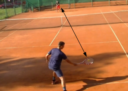
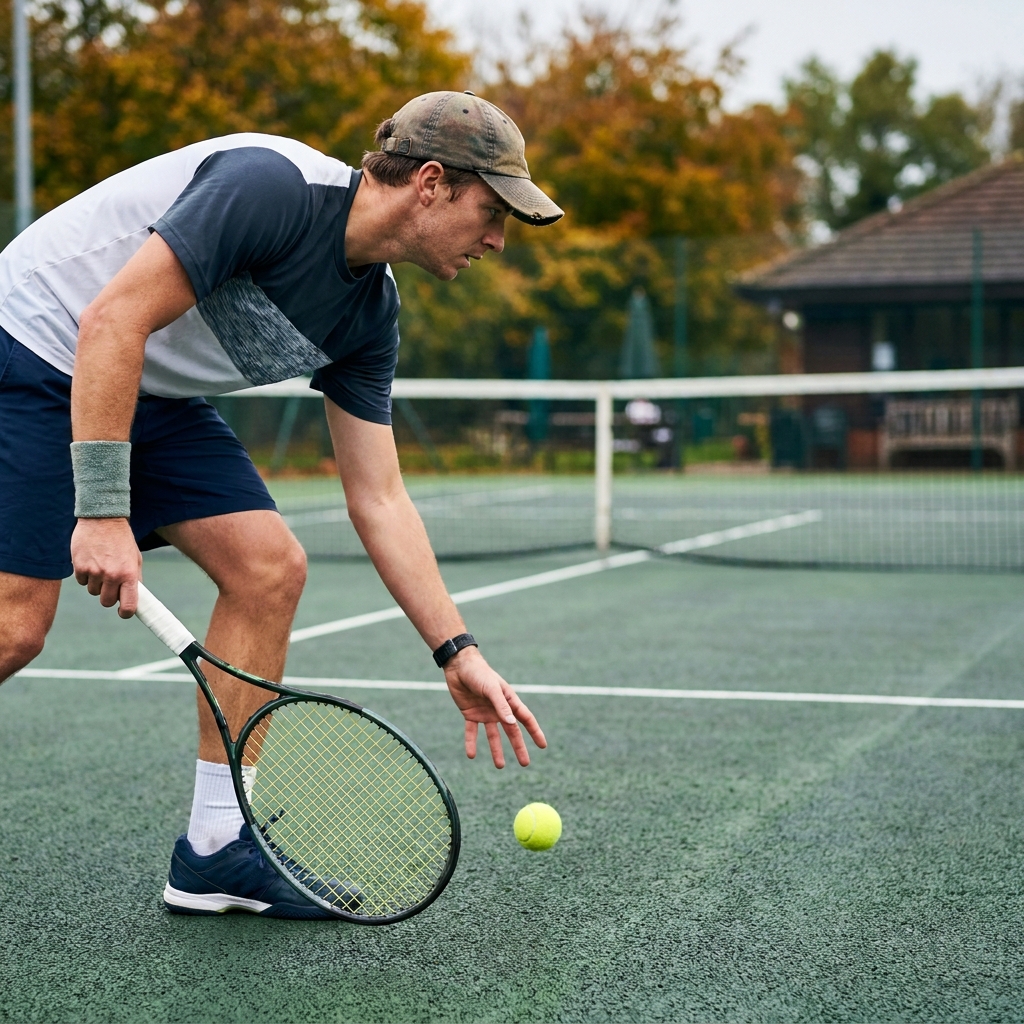
The coach stands in front of the player and feeds low balls to the backhand. The player hits backhand over the net.
Tennis is an unpredictable game so our rivals can use the same tactic against us that we try to apply by ourselves. That is why it is important to work not only on sending skills but also on receiving ones to make sure that players are ready for all situations. Being aware of difficulties related to slice balls is the first step to develop effective answers.
In this drill, the player develops ability to deal with low balls from the backhand side. Playing against rivals who hits the slice, we have to be ready to know how to confidently hit the ball back. Because of the low bounce, the player has to really bend their knees and stay there longer than usual, to achieve proper control. Additionally it is important to apply more spin to this shot because a lack of spin is the major reason why balls land in the net. The coach should remind players that if the ball is difficult, they should aim to the centre or cross-court but when the ball is easy, they can confidently look for offensive down the line shot.
A tiebreak is a short sprint where every point is worth the same as a break of serve. The players who win them are rarely the ones who hit hardest. Here is how to coach the patterns, habits and scoreboard thinking that win the big points.
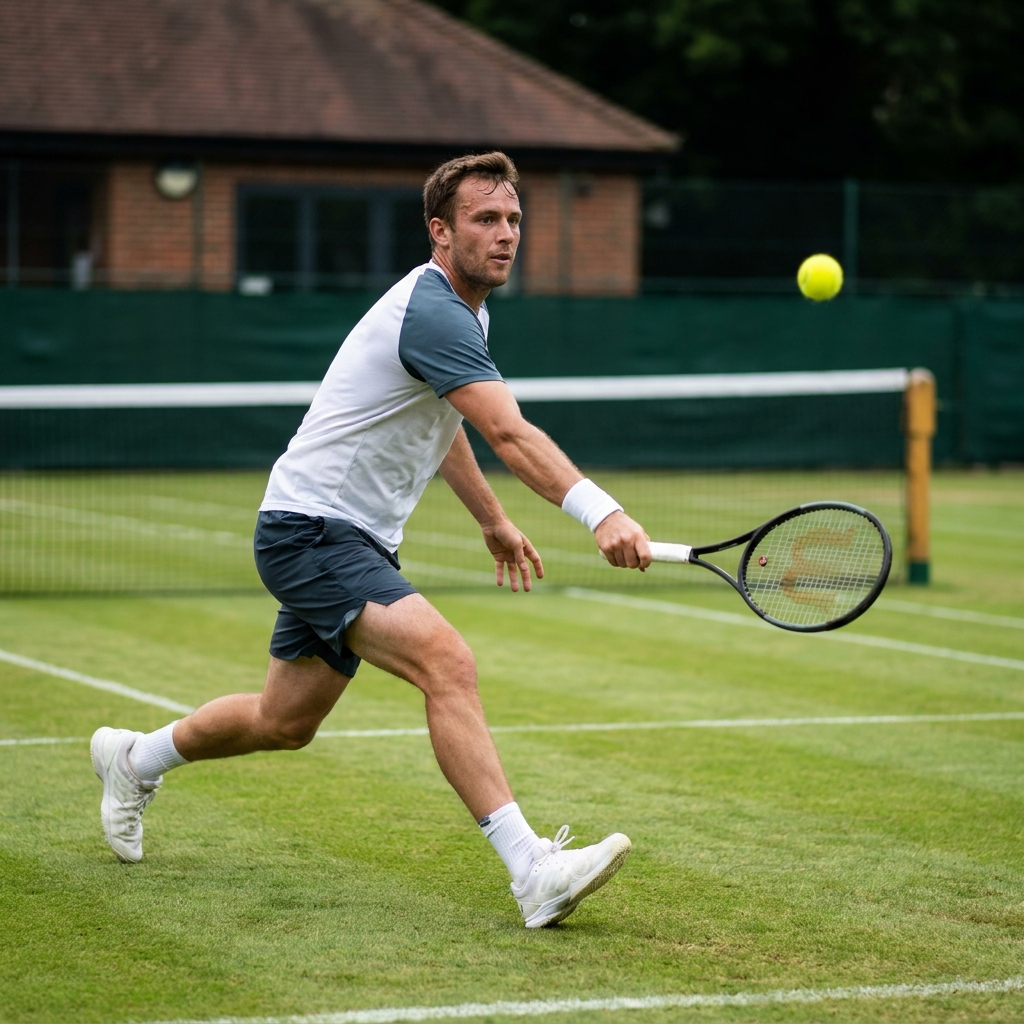
Most club players practise the serve on its own and then have no idea what to do with the ball that comes back. Serve plus one is the pattern that turns a good serve into a won point.
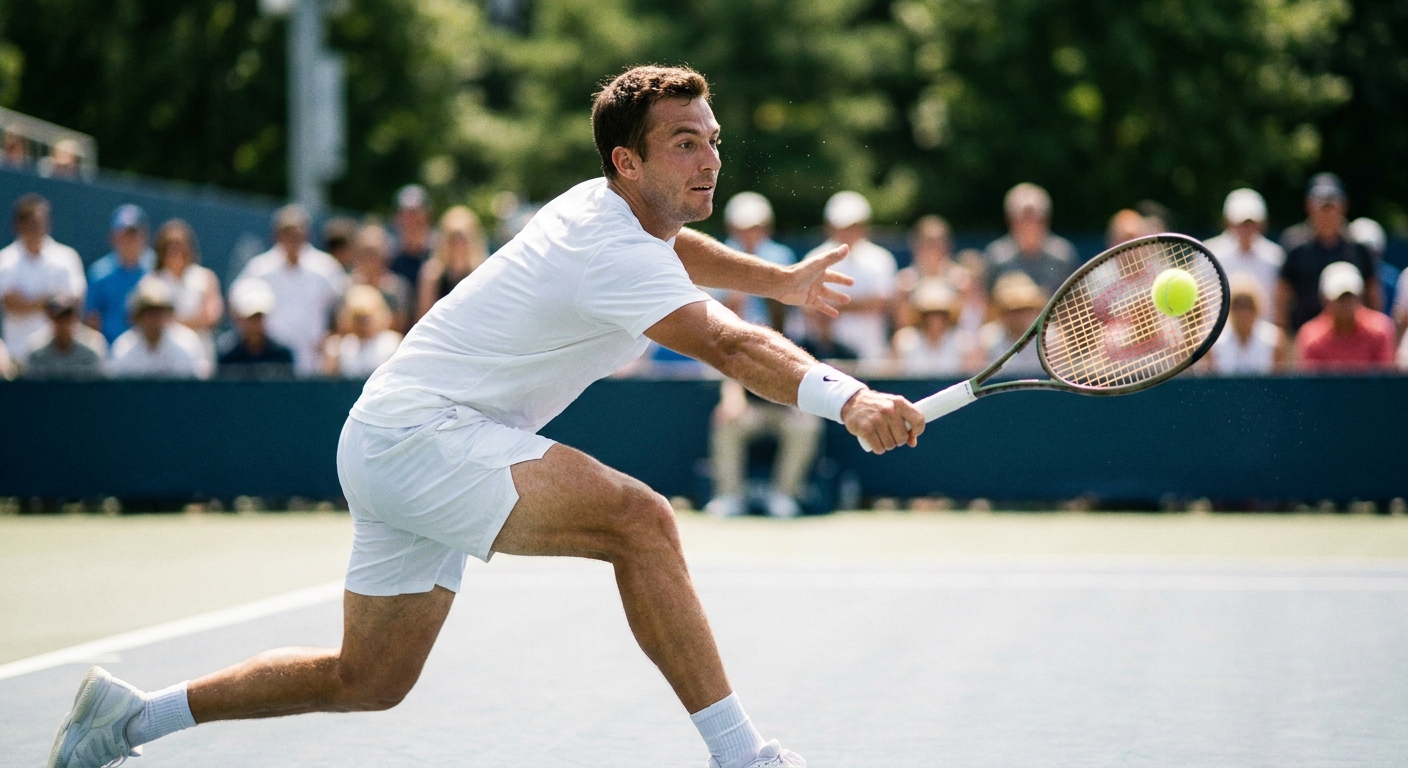
Wimbledon has just crowned another champion, and if you watched closely you saw the same thing every year: the best returners quietly won the tournament. Here is how to coach a return that pressures the server rather than just surviving it.


Register for FREE and get coaching tips, top drills, session and more every week!