The lineout is rugby's most technical set piece. It requires precision throwing, coordinated lifting, perfect timing, and tactical awareness - all under opposition pressure. When it works, it's a platform for attacking rugby. When it fails, it hands territory and momentum to the opposition.
Professional matches average around 70 lineouts. Even a small improvement in success rate translates to significant territory advantage over 80 minutes.
The Throw: Where It All Begins
Throwing accuracy is the foundation of lineout success. The ball must arrive at the jumper's hands at full extension - approximately 3 to 3.5 metres off the ground - over distances from 5 to 18 metres.
Key throwing principles:
- Consistent starting position and stance
- Relaxed upper body - tension reduces accuracy
- Smooth release, not a punch or flick
- Follow-through toward the target
The hooker's mental preparation matters as much as technique. Most poor throws come from mental pressure, not technical failure. Establish a pre-throw routine and trust it under pressure.
Training throws: Quality over quantity. Twenty focused throws with feedback beats a hundred reps without attention. Film throws, review trajectory, and make specific adjustments.
Lifting: The Technical Partnership
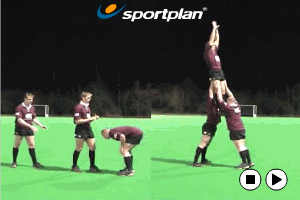
Lifting was legalised in 1999 and has transformed the lineout. The jumper can now reach heights impossible alone, but this requires coordinated technique from the lifting pod.
Front lifter position:
- Hands placed just above the jumper's knees
- Squat position with flat back before the lift
- Drive through the legs as you lift
- Guide the jumper up, don't throw them
Back lifter position:
- Hands high on the back of the jumper's thighs
- Provide the main lifting power
- Control the jumper's stability at the top
- Guide down safely after the catch
Timing the lift: The lift begins as the ball leaves the thrower's hands. Too early and the jumper reaches peak before the ball arrives. Too late and the jumper is still rising during the catch. Practice until the timing is automatic.
The Jumper's Role
Jumpers must combine athleticism with game intelligence. They need to reach maximum height, catch cleanly, and make instant decisions about ball delivery.
Before the throw:
- Stay relaxed and balanced
- Watch the ball from the hooker's hands
- Time your jump with the lifters' movement
At the top:
- Eyes on the ball throughout
- Two hands to the ball
- Core tight to maintain stability
- Decide: bring down, tap back, or drive into maul
Tactical Variation
A predictable lineout is a vulnerable lineout. Opposition will read patterns and disrupt. Variation keeps defenders guessing.
Length variation:
- Front throws (5-7m) - quick ball, less setup time
- Middle throws (10-12m) - traditional target, driving maul option
- Back throws (15-18m) - space for backs moves, harder to defend
Movement variation:
- Jump on the spot - traditional
- Jump and drive forward - creates momentum
- Jump from movement - harder to predict target
Numbers variation: Vary between 4-man, 5-man, 6-man, and 7-man lineouts. Different numbers create different spaces and different threats.
Reading the Opposition
Elite lineout callers read the opposition setup and adjust in real-time. What are they showing? Where are their jumpers positioned? Can we exploit space they're leaving?
What to look for:
- Opposition jumper positions - where's the gap?
- Who's competing in the air vs supporting?
- Do they commit to defending the front or back?
- Are they setting up for a counter-drive?
Give your lineout caller authority to change calls at the last moment based on what they see. This requires trust and extensive practice.
Under Pressure
Lineouts in your own 22, or in the final minutes defending a lead, carry extra pressure. This is where routines and trust become essential.
High-pressure principles:
- Go to your highest-percentage option
- Simple execution over elaborate moves
- Trust the routine - don't overthink
- Hooker controls the tempo
Key Coaching Points
- Throwing accuracy decides lineout success
- Lifting requires precise technique and timing
- Variation prevents opposition reading your patterns
- Give the caller authority to adjust
- Under pressure, go simple and trust your routine




 sportplan_rugby