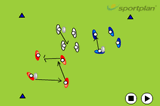
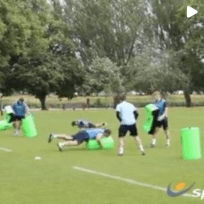
Once an attacker is touched they must offload within one second.
You can start the game so that players have to pass the ball in front of defenders and then later progress the drill and ask them to pass from behind the defence, by taking two steps past the defender, before offloading.
Question players on what they consider to be the most effective option when attacking?
This drill highlights the importance of getting behind the defenders to make more ground in the attack and to keep possession alive.
Support is key for keeping possession
alive with the touched player having to pass within 1 second.
Key Points:
Change of speed and direction to beat the defender.
Support runner attacking the ball
Good body position whilst entering a potential contact area.
The importance of getting behind defenders.

in more ways than one
 sportplan_netball
in more ways than one
sportplan_rugby
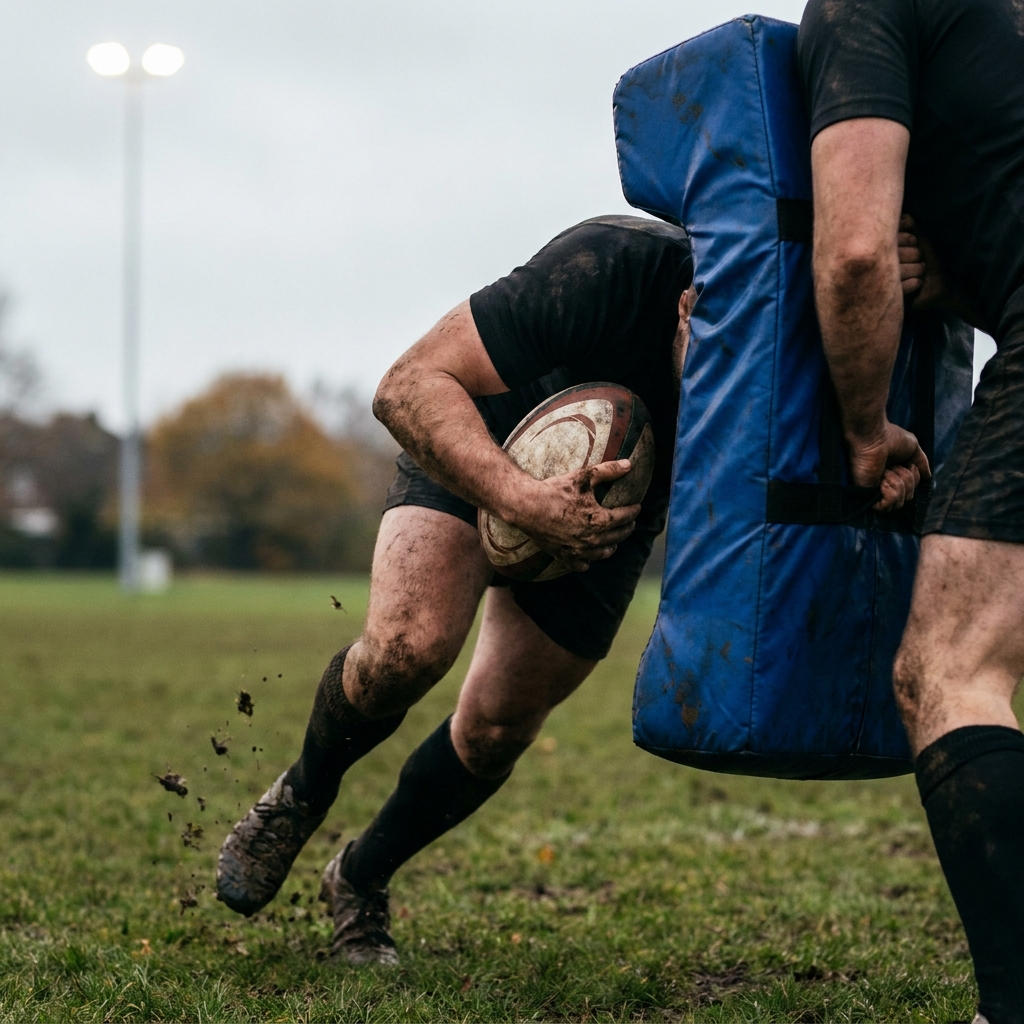
Tacklers are aiming lower, so carriers who dip late put heads at risk. Teach footwork, a strong early body height and leg drive to win the collision safely.
The hooker's brake foot moved from trial into full law in July 2026. Here is how to coach it so your front row stays stable, legal and safe.
Your players can pass beautifully in a warm-up grid. Then a defender closes, their lungs are burning, and the ball goes to ground. Here is how to build catch-pass skills that hold up when it matters.