







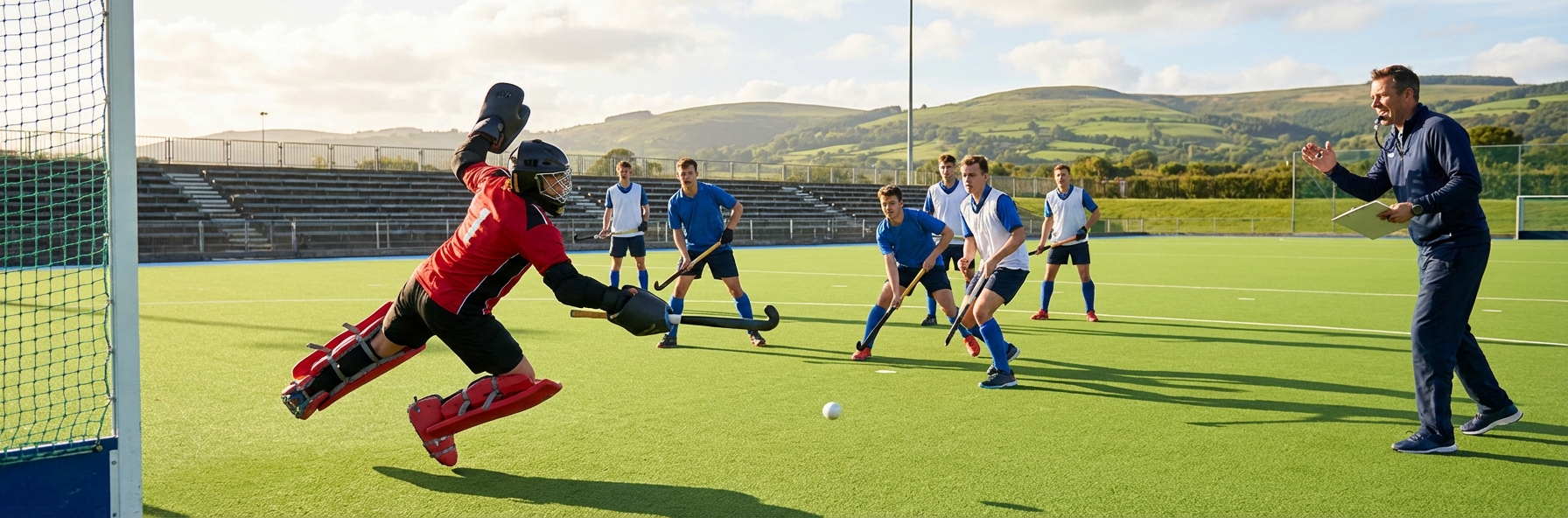
The drag flick changed everything for goalkeepers. What was once a relatively predictable hit from the top of the circle became a weapon that could be directed anywhere in the goal at speeds approaching 150 km/h. The old techniques of logging and diving were suddenly inadequate.
Modern goalkeeper training has evolved in response. The best keepers today combine anticipation, positioning, and explosive movement in ways that would have seemed impossible a generation ago. Here's how to develop these skills.
Understanding the Drag Flick
The drag flick creates unique challenges for goalkeepers. Unlike a hit, where the backswing provides early information about direction, the drag flick's release point is much later. The ball can be directed to any part of the goal from the same set-up position. And the speed is devastating.
This means goalkeepers can't just react. They need to read cues, position optimally, and make decisions based on probabilities rather than certainties.
The Reading Phase
Elite goalkeepers start processing information the moment the injection leaves the pusher's stick. They're looking at:
The approach angle: Where is the flicker approaching from? A wider angle typically means a shot toward the far post. A straighter approach often indicates near post or body shots.
Body position: Is the flicker's weight forward or back? Are their shoulders open or closed? These subtle cues can indicate likely direction.
Historical patterns: What has this flicker done before? Most flickers have tendencies - favourite corners, go-to shots under pressure. Know them.
Positioning Fundamentals
Starting position is critical. Too deep and you give the flicker too much goal to aim at. Too far forward and you can't cover the angles. The optimal position depends on several factors:
The flicker's known range: Against a flicker who only shoots low, you can start in a lower stance. Against one who lifts consistently, you need to be more upright.
The set-up routine: Some teams run variations off their corners. Your positioning might need to adjust based on what you're reading from their set-up.
Your own strengths: If you're quicker going left than right, you might shade your starting position slightly. Play to your strengths.
The Save Techniques
The Barrier Save
For low shots, creating a barrier with your body and equipment. Legs together, stick down, body behind the ball. The goal is to block, not catch. Don't try to be clever - just be big.
The Dive
For wider shots, explosive movement across the goal. The key is getting your body behind the line of the ball, not just reaching with your stick. Lead with your shoulder, follow with your legs.
The React Save
For the very best flickers, sometimes all you can do is react. Train your reflexes with rapid-fire shooting drills, varying heights and angles. The more shots you face, the faster your reactions become.
Training Drills
Progression 1: Controlled Flicks
Start with flickers shooting at known targets. The goalkeeper knows where it's going but must still execute the save. This builds technique without the added pressure of reading.
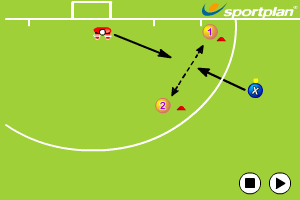
Progression 2: Either/Or
The flicker chooses between two pre-agreed areas. The goalkeeper must read and react. This introduces decision-making while limiting the options.
Progression 3: Full Range
No restrictions. The flicker can go anywhere. This is the closest to match conditions and should form the bulk of training once fundamentals are solid.
Progression 4: Variation Integration
Add corner variations - deflections, second phase shots, reverse stick options. The goalkeeper must now read whether it's a flick or something else.
Mental Preparation
Facing drag flicks requires mental resilience. You will concede goals. Even perfect technique doesn't guarantee saves against elite flickers. What matters is your response.
Teach your goalkeepers to reset immediately after a goal. The next shot matters, not the last one. Dwelling on conceded goals creates tension that slows reactions.
Visualisation is powerful. Before facing corners, goalkeepers should mentally rehearse successful saves. See the flick, read it early, make the save. This primes the brain for positive outcomes.
The Team Dimension
Goalkeepers don't face corners alone. Their teammates at the posts, on the line, and rushing from the 23 all play a role. Communication is essential - who's covering which zone, what variations are expected, when to leave it for the keeper.
Train corners as a unit, not just goalkeeper versus flicker. The best saves often come from good team structure that narrows the flicker's options.
Key Coaching Points
- Read cues early - approach angle, body position, patterns
- Position optimally for the specific flicker
- Technique over athleticism - be big, be behind the ball
- Train progressively from controlled to chaotic
- Build mental resilience for inevitable conceded goals

 sportplan_hockey









