







The FIH has been trialling significant changes to the overhead ball rule, and these changes have major implications for how hockey is played. Understanding the rule and adapting your tactics accordingly could give your team a competitive edge.
The Rule Change
The trial rule states that players must not approach within 5 metres of an opponent receiving a falling raised ball until it has been touched by the receiver. However - and this is crucial - the ball may be intercepted within 5 metres provided it is done safely and outside of playing distance.
This is a significant shift from previous interpretations and creates both opportunities and challenges for attacking and defending teams.
Implications for Attacking Teams
More Protection for Receivers
Under the new rule, players receiving overhead passes have more protection. Defenders can't simply crowd them as the ball arrives. This gives receivers time to control the ball and make their next decision.
Tactical opportunity: Overhead passes into space become more viable. If your team has players with good aerial control, you can use overheads to bypass pressing teams and create attacking opportunities in advanced positions.
Changing Press-Breaking Options
Teams facing a high press now have an additional weapon. An overhead ball over the pressing line, landing at the feet of a midfielder, is harder to contest under the new rule. This may reduce the effectiveness of ultra-aggressive pressing systems.
Risk Assessment
However, the interception clause is important. If your overhead ball is poorly weighted or poorly directed, defenders can still intercept it provided they do so safely. The rule protects the receiver, not poor execution.
Implications for Defending Teams
Adjusting Your Press
If you play a high press, you need to consider how overheads might be used against you. Position players to deter the overhead or to deal with it when it lands. Don't leave your midfield exposed to simple bypass balls.
Reading the Play
Defenders must read when an overhead is coming and position accordingly. Getting goal-side of the dropping ball, while respecting the 5-metre rule, allows you to deal with the receiver after they've controlled.
The Interception Opportunity
The rule still allows interception if done safely. This requires good judgement - can you reach the ball cleanly before the receiver, without creating a dangerous situation? If yes, go for it. If not, hold your position and defend the controlled ball.
Training Adaptations
Aerial Receiving
With more protection for receivers, aerial control becomes even more valuable. Train your players to receive falling balls cleanly, with good body position for the next action. Both cushioned receptions and first-time passes should be practiced.
Overhead Accuracy
The overhead pass must reach its target accurately. Too short and it's intercepted. Too long and it runs through. Work on weighted overheads that drop into space where your receiver can collect.
5-Metre Awareness
Players need to understand the 5-metre distance instinctively. Set up training scenarios where the rule applies, so players learn to judge distances under pressure.
Press Adjustment
If you play a pressing game, train scenarios where the opposition uses overheads to beat your press. Develop responses - positioning, recovery runs, dealing with the ball after the receiver has controlled.
Drills for the New Rule
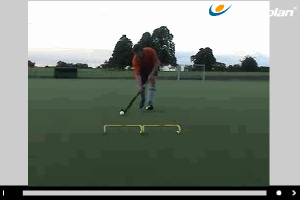
Overhead Gates: Set up gates at various distances. Players must land overheads through gates, developing accuracy and weight control.
Receive Under Rule: Practice receiving overheads with a defender waiting at 5 metres. The receiver must control and make a good next action before the defender can engage.
Press Breaking: Play games where the attacking team scores extra points for successful overheads that beat the press. This encourages appropriate use of the technique.
Competition Application
The rule is being trialled in specific competitions. Check whether your league or tournament is using the trial rule or the standard rule. Your preparation should match the rules you'll play under.
If you're unsure, prepare for both. The skills of accurate overheads and clean aerial receiving are valuable regardless of the specific rule interpretation.
Key Coaching Points
- Understand the 5-metre protection for receivers
- Know that safe interception is still permitted
- Develop accurate overhead passing
- Train clean aerial receiving
- Adjust pressing tactics to account for overheads

 sportplan_hockey









