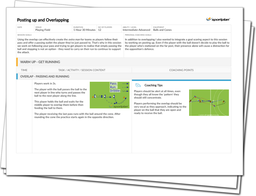
Overlap to Overload, that's the ethos of this session. By using the overlap your team can effectively create the extra man by following their pass and offering a passing outlet to the player they've just passed to.
In addition to overlapping, this session focuses on getting your players to take up offensive positions on the field by Posting Up.
Even if the player with the ball doesn't decide to play the ball to the player who's stationed on the far post, their presence alone will cause a massive distraction for the opposition's defence and will open up space for the rest of your team to run into.

in more ways than one
 sportplan_netball



in more ways than one
sportplan_hockey

A few weeks into the league season, poor first touches are costing teams the ball. Coach body shape, scanning and receiving on the move to keep possession.

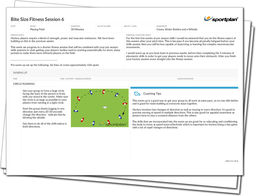
Pre-season fitness fades fast once the league starts. Build conditioning into ball work and use rolling subs well to keep your squad sharp all season.

The first weeks of the season decide whether a junior or new player sticks with adult hockey. Here is how to keep them safe, give them a clear job and build their confidence from the very first bully.