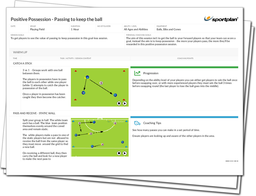
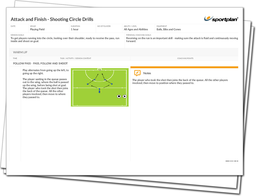
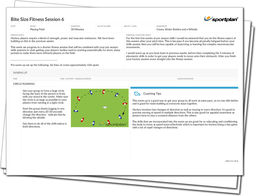
This attacking session gets your players to practice making quick decisions, supporting one another and communicating when running up the field on the attack.
The reason it's important for your players to be quick is because the longer they hold onto the ball the smaller the advantage will be. To ensure your team don't squander the offensive overload this session gives your players plenty of chance to be creative in a series of game-related practices, to ensure they make the extra player count and get their shot on goal!
What's in the Session?
To get things off to a flying start we open with the three man-weave, a great overlap and support drill, before then getting competitive in the first of a series mini-games - building gradually up to the "Up and Down Relay Game" and the final "3 Zone Overload Game".

in more ways than one
 sportplan_netball



in more ways than one
sportplan_hockey

A few weeks into the league season, poor first touches are costing teams the ball. Coach body shape, scanning and receiving on the move to keep possession.

Pre-season fitness fades fast once the league starts. Build conditioning into ball work and use rolling subs well to keep your squad sharp all season.

The first weeks of the season decide whether a junior or new player sticks with adult hockey. Here is how to keep them safe, give them a clear job and build their confidence from the very first bully.