Split the group in to 3 teams, and start them with group 1 and 3 at one end of the marked area and group 2 at the other. Group 1 will begin to advance across the marked area, passing the ball along the line as they go. After each person has passed the ball on though they must slow their run, so that when the end man receives the ball he can accelerate to the head of the line and start passing it back across to the initial ball carrier, who then delivers a pop pass to the first man of group 2. Group 2 then repeat the exercise working their way back across the grid to group 3 and so on.
Once the ball carrier has released the ball they must slow their run to get behind the following ball carrier Once the end man receives the ball he must accelerate quickly to allow enough time for the ball to get all the way back along the line within the limits of the grid. All passes must be backwards To start with the 3rd and 4th players must hold their runs in order to stay behind the ball.
This practice has no coaching points
This practice has no progressions

in more ways than one
 sportplan_rugby


Greasy balls and soft pitches turn tidy handling into a lottery. Here is how to coach your players to keep hold of the ball when November conditions bite.
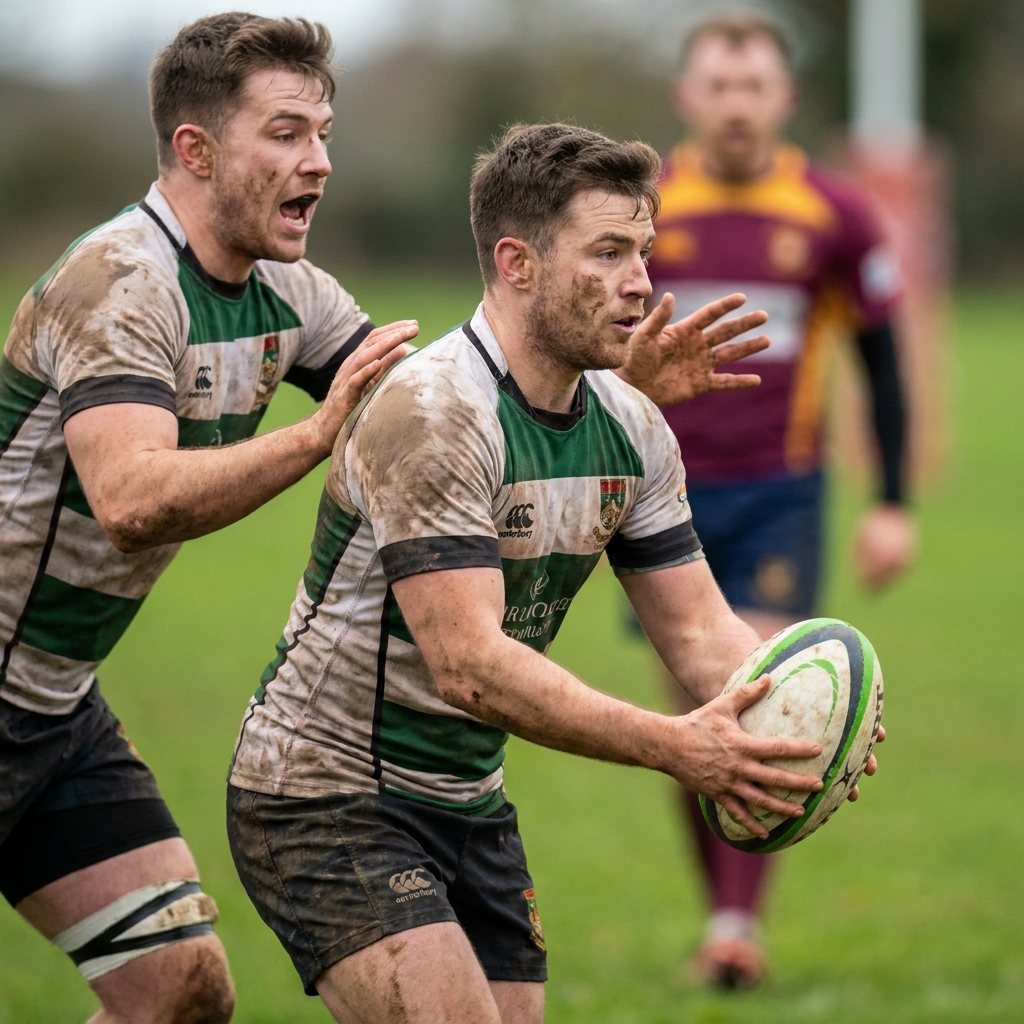
Most line breaks are made by support runners, not ball carriers. Teach the angles, depth and timing that get them there.

The isolated ball carrier is rugby's spookiest turnover. Here is the five-step fix, plus drills that rebuild support lines fast.