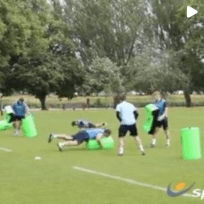
We are setting up 4 contact areas where 4 rucks will be formed.
We have 4 pairs of defencive players (with or without rucking shields) on the far line of cones.
we have 4 ball carriers on the middle line of cones.
we have 2 sets of 3 support players on the first 2 cones on the near line.
when the ball is passed to the first ball carrier he drives into the pair of defencive players in front of him
the 1st set of support players then go to support and secure the ball
once the ball is passed the support players have to get to the yellow cone ready to support the 3rd ball carrier
once the ball is secured it is passed to the 2nd ball carrier who drives into the pair of defencive players in front of him
So the 1st set of support players have to support the 1st ball carrier and then the 3th ball carrier

in more ways than one
 sportplan_netball


in more ways than one
sportplan_rugby

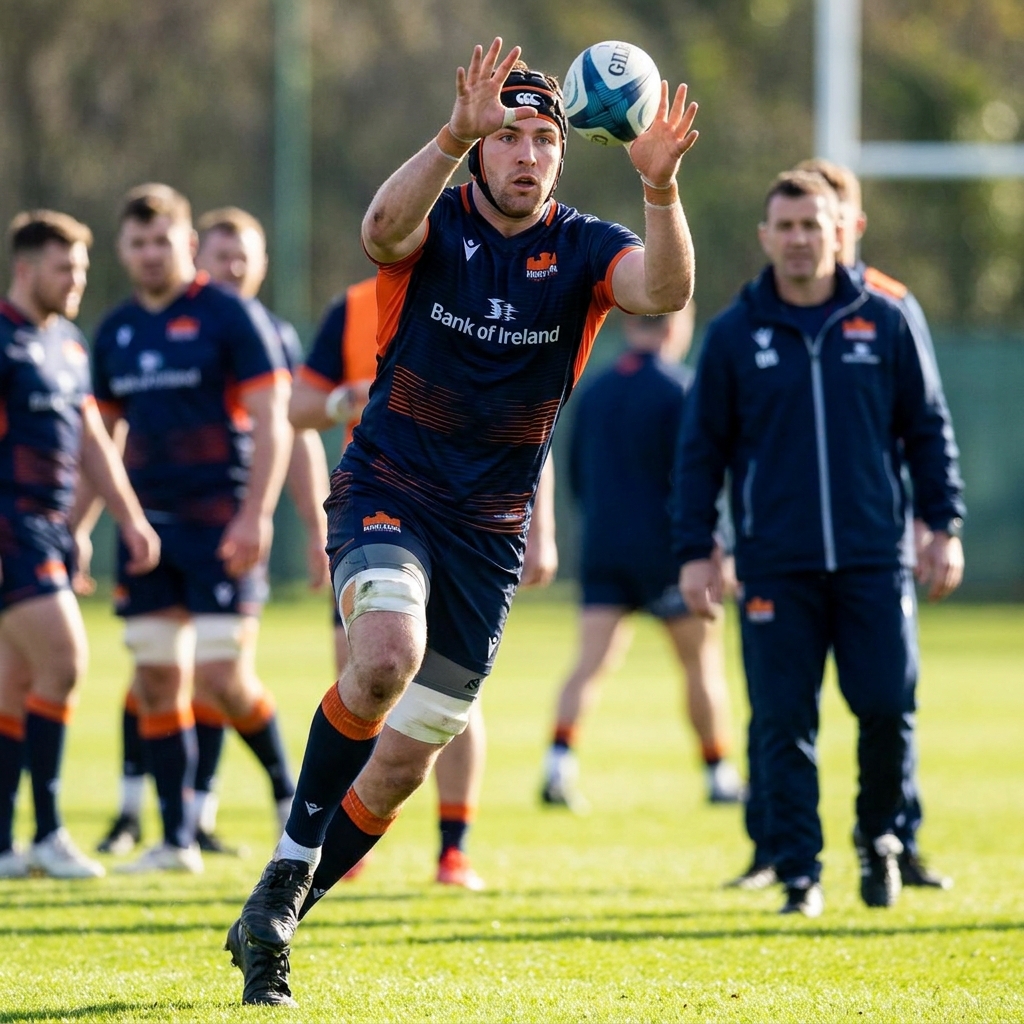
Restart kicks are now the most common set-piece in rugby and the easiest to lose. Treat them like a lineout: prepare options, drill the catch, and own the reception.
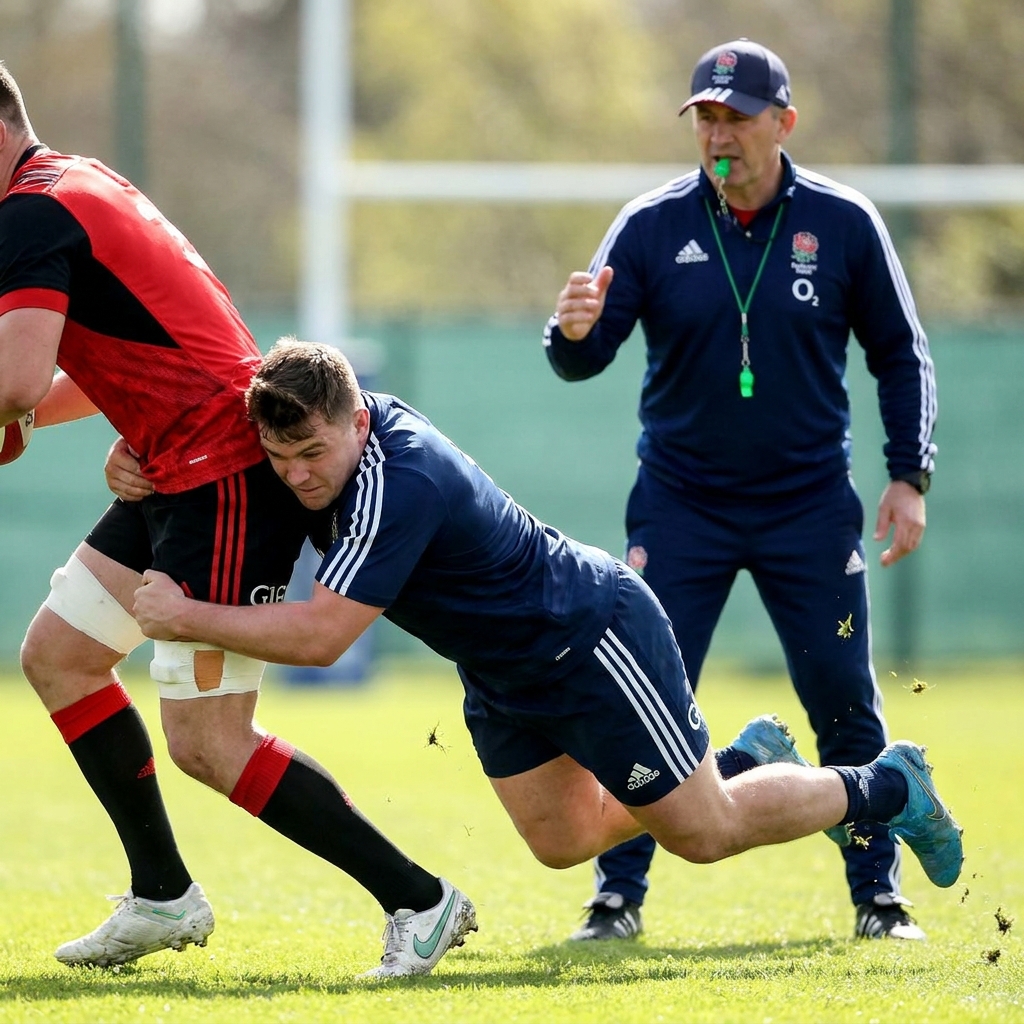
World Rugby has dropped the legal tackle height to the base of the sternum for the 2026 U20 Championship in Georgia. Here is what the trial means for coaches at every level.
Kicking is up across the Six Nations and Champions Cup, which means counter-attack opportunities are up too. Learn how to turn a loose kick into seven points.