Most of the FutureFit headlines have been about the new 3v3 game at Under-7s, which we covered in FA FutureFit: What the New 3v3 Format Means for Your Youngest Players. But the change that affects the most coaches this season sits further up the pathway. From 2026/27, every format lasts two years: 5v5 at Under-8s and Under-9s, 7v7 at Under-10s and Under-11s, and 9v9 at Under-12s and Under-13s.
If you coach one of those Under-9, Under-11 or Under-13 groups, your players were expecting to step up this season, and they have not. Some of them, and a few of their parents, will feel that. The job now is to make the second year in a format genuinely harder, not just the same thing again.
What Has Actually Changed
Under the old structure, players moved from 5v5 to 7v7 at Under-9s, from 7v7 to 9v9 at Under-11s, and from 9v9 to 11v11 at Under-13s. Under FutureFit, each of those step-ups comes a year later, so full 11v11 now starts at Under-14s.
The reasoning is the same as the 3v3 change: smaller formats mean more touches, more decisions and more involvement for every player. Keeping a group in a format for a second year gives them time to master it before the pitch and the numbers grow. Leagues are bringing the formats in this season, so check with yours on the detail of your age group.
Why the Second Year Is an Opportunity
In the first year of a new format, a lot of your coaching goes on simply getting players comfortable: where to stand, how big the pitch feels, what the new laws mean. By the second year that is done. You start the season with a group that already understands the game they are playing.
That frees you to coach the next layer. Better decisions, quicker play, playing in more than one position, and handling pressure. The pitch does not get bigger, so the challenge has to come from you.
A Four-Step Framework for Progressing Without a Bigger Pitch
Step One: Raise the standard, not the size. Last season a successful pass was good enough. This season ask for the pass to the right foot, played early enough that the receiver can take it forward. Same game, higher bar.
Step Two: Use constraints to make the game harder. Limit touches in certain zones, shrink the space in training, or add a rule that a goal only counts if every outfield player has touched the ball. Constraints add pressure without adding players.
Step Three: Use overloads and underloads. Play 4v3 so the attackers learn to find the spare player quickly, then flip it to 3v4 so the smaller team has to defend smartly and break out under pressure. Both sides of an overload teach something the even game does not.
Step Four: Rotate positions on purpose. A second year in the same format is the perfect time to stop anyone becoming "just a defender". Give every player time in the back line, in midfield, up front and, where it suits, in goal. They will understand the bigger format far better when they reach it.
How to Train It
Keep your sessions built around small games, and keep the numbers smaller than matchday. If you play 7v7 on a Saturday, a lot of your Tuesday should be 3v3 and 4v4. Every reduction in numbers is more touches per player, and touches are what this extra year is for.
Plan the season in blocks. Spend a few weeks on a theme such as playing out from the back or defending as a unit, then change the theme and the conditions. Players notice when the challenge changes, and it stops the second year feeling like a rerun of the first.
Talk to parents early, too. A quick explanation that the format is staying put by design, and that you are using the time to stretch their child, heads off a lot of touchline frustration.
Key Coaching Points
- Treat the second year in a format as a chance to coach the next layer, not to repeat last season.
- Make the game harder with higher standards and constraints, since the pitch will not do it for you.
- Use overloads and underloads so players learn both to exploit and to cope with an extra player.
- Rotate positions deliberately so every player understands the whole team before stepping up.
- Keep training numbers smaller than matchday to maximise touches and decisions.
- Explain the change to players and parents so nobody feels they have been held back.
Recommended Drills
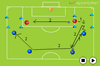
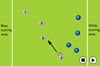
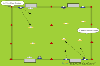
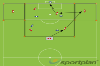
VIEW ALL CONDITIONED GAMES DRILLS
Frequently Asked Questions
Some of my players are clearly ready for a bigger game. Are they being held back?
Not if you coach the year well. The strongest players are the ones who benefit most from constraints, such as limited touches or playing in an unfamiliar position. Give them harder problems to solve rather than more space to run into, and they will arrive at the bigger format with more to offer.
How do I stop the season feeling repetitive for the players?
Change the challenge regularly. Work in themed blocks, vary the conditions in your games, and swap positions around. The format is the same, but the problems inside it should look different every few weeks.
Should I start introducing ideas from the next format anyway?
A little, as long as it fits the game they play now. Scanning before receiving, supporting play from behind and defending as a unit all carry straight into bigger formats. Positional rotation is the best preparation of all, because players who have seen the game from every angle adapt quickly when the pitch grows.
 sportplan_football