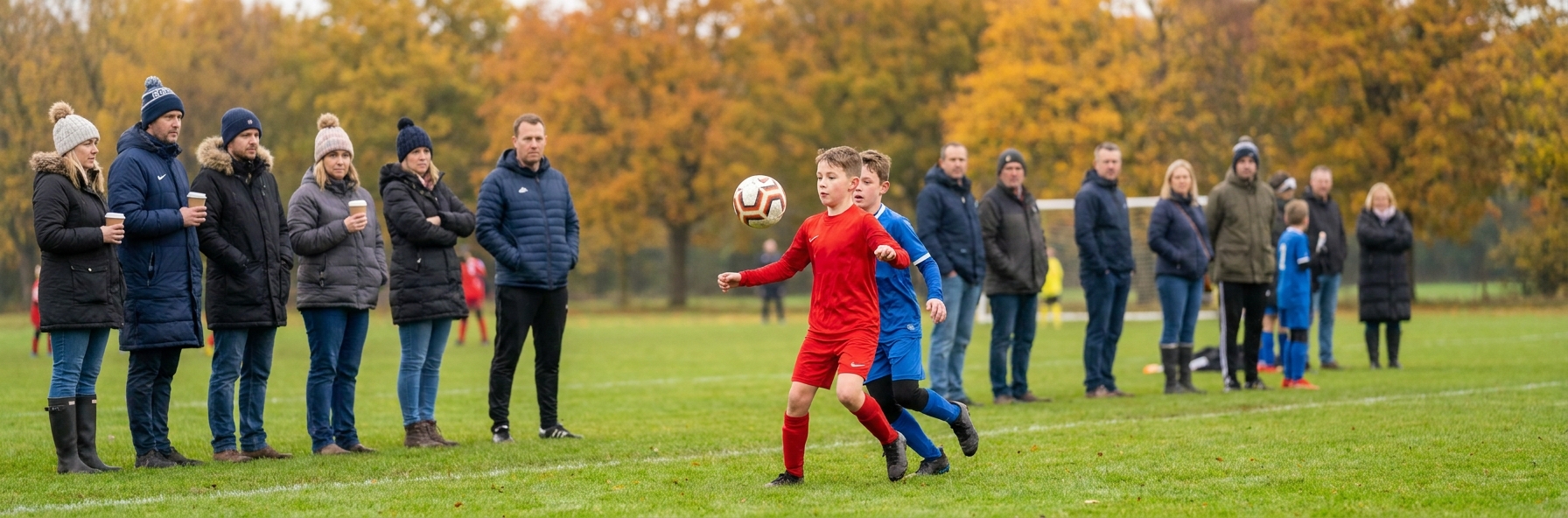
This season completes The FA's three-year phase-out of heading in grassroots youth matches. Deliberate heading is now an offence in all affiliated U7 to U11 football, punished with an indirect free kick, and heading returns at U12 as players move up to secondary school.
For U11 coaches this is the first season playing 9v9 without headers, and the ball still goes in the air. Goal kicks, clearances, long passes and crosses all drop out of the sky. The teams that cope best will be the ones who have taught their players what to do instead.
What the Rule Actually Says
Only a deliberate header is an offence. The free kick is taken where the ball was headed, unless a player deliberately heads it inside their own penalty area, in which case the opposition restart from the nearest point on the edge of the area. Accidental contact, such as a ball striking a player's head, is not the target of the rule.
The FA's training guidance also says heading should not be introduced in training sessions at U7 to U11. So the job this season is not to replace heading practice. It is to build every other way of dealing with a high ball.
Why Players Struggle Without Heading
Many young players simply duck or turn away when the ball is in the air, because they have never been taught how to judge its flight. Others back off and let it bounce, which hands the second ball to the opposition. And some teams keep hitting it long out of habit, then lose possession every time it comes down.
The fix is part technique, part game plan. Players need soft controlling surfaces, and teams need to keep the ball lower so fewer duels happen in the air in the first place.
A Five-Step Framework for the Ball in the Air
Step One: Read the flight early. Teach players to watch the ball from the moment it is struck, take small adjusting steps and arrive under it, rather than waiting and reacting late.
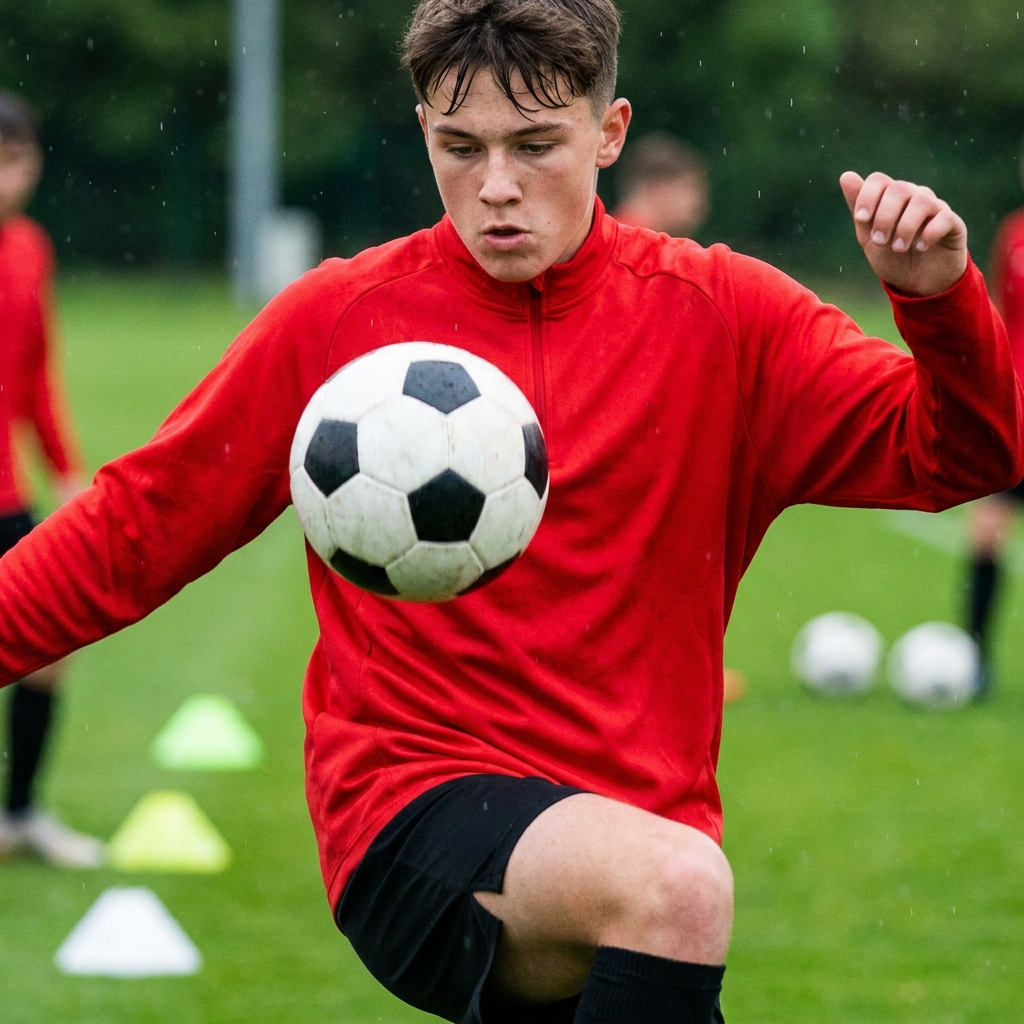
Step Two: Pick the surface. Chest for a dropping ball at body height, thigh for a ball dropping in front, and the instep or sole of the foot for a ball coming down at the feet. Give them a choice and let them experiment.
Step Three: Cushion, do not block. The controlling surface should give slightly as the ball arrives, so it drops close. Rigid bodies make the ball bounce away to the nearest opponent.
Step Four: Win the drop zone. If they cannot control it cleanly, the next best thing is to be first to the bounce. Defenders should get goal-side of where the ball will land; attackers should attack the space it bounces into.
Step Five: Keep it on the deck. Encourage goalkeepers to roll or pass out, coach low driven passes and cut-backs instead of floated crosses, and praise teams that play through rather than over.
How to Train It
Warm-up: pairs with one ball, feeding gentle underarm throws for chest, thigh and foot control. Progress to controlling on the move and passing back with the second touch.
Technical: a feeder serves higher balls into a grid and the receiver must control and dribble out through a gate. Add a passive defender who can only pressure once the ball has landed.
Decision-making: 4v4 where goal kicks are thrown in high by the coach. Teams score a bonus point if they keep the ball after it lands.
Game: finish with a 9v9 or small-sided game where goals from low crosses and cut-backs count double. Remind players that deliberate headers give away a free kick, just as on matchday.
Key Coaching Points
- Watch the ball early and move the feet to get under it.
- Choose the right surface: chest, thigh or foot.
- Cushion the ball so it drops within one step.
- If control is not possible, be first to the bounce.
- Play through the lines with low passes rather than hitting it long.
- Never punish a player for accidental contact with the head; only deliberate headers are offences.
Recommended Drills
 First Touch: Bringing the Ball Down
 Receiving with the Chest
 Thigh Control Stage 1
 Short Corner: Low Cross
Frequently Asked Questions
Is heading banned for under-11s in England?
In affiliated grassroots matches, yes. From the 2026-27 season deliberate heading is an offence at U7 to U11, punished with an indirect free kick. It applies to leagues, clubs and affiliated school matches. Heading returns at U12.
What happens if a player heads the ball by accident?
The rule targets deliberate headers. A ball that strikes a player's head accidentally is not the same offence. Coach players to use other surfaces, but do not make them anxious about every bounce.
Should I practise heading with my U11s to get them ready for U12?
No. The FA's guidance is that heading should not be introduced in training at U7 to U11. Use this season to build flight judgement and chest, thigh and foot control. That gives players a much better base when heading technique is introduced, with light balls and strict limits, at U12.

 sportplan_football