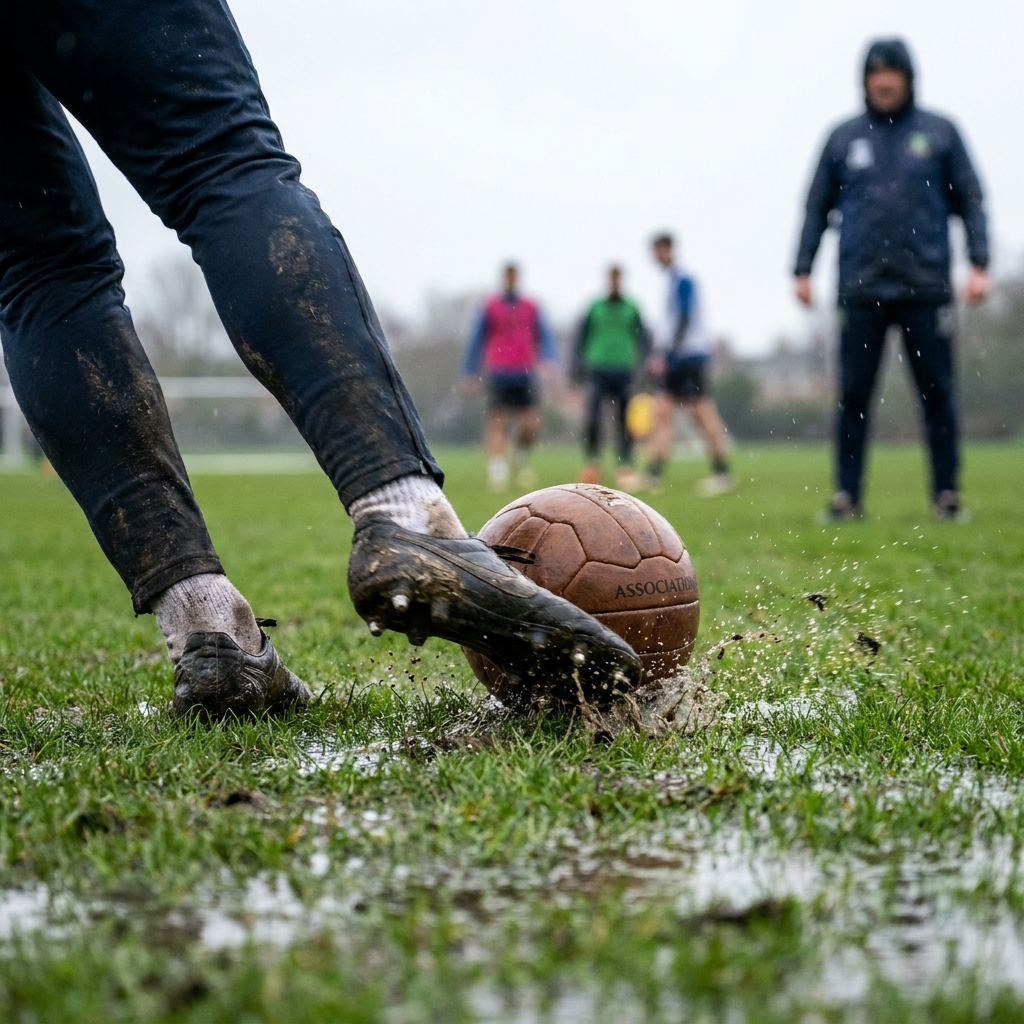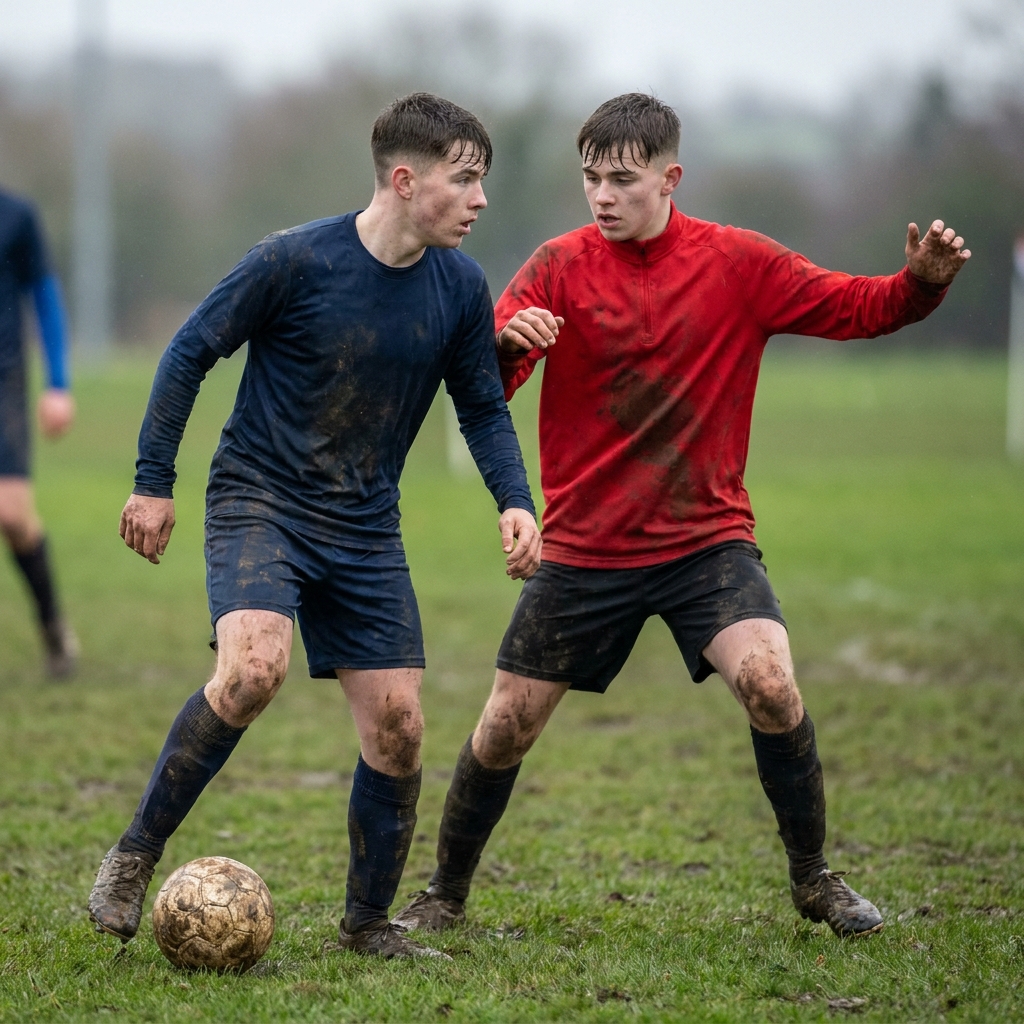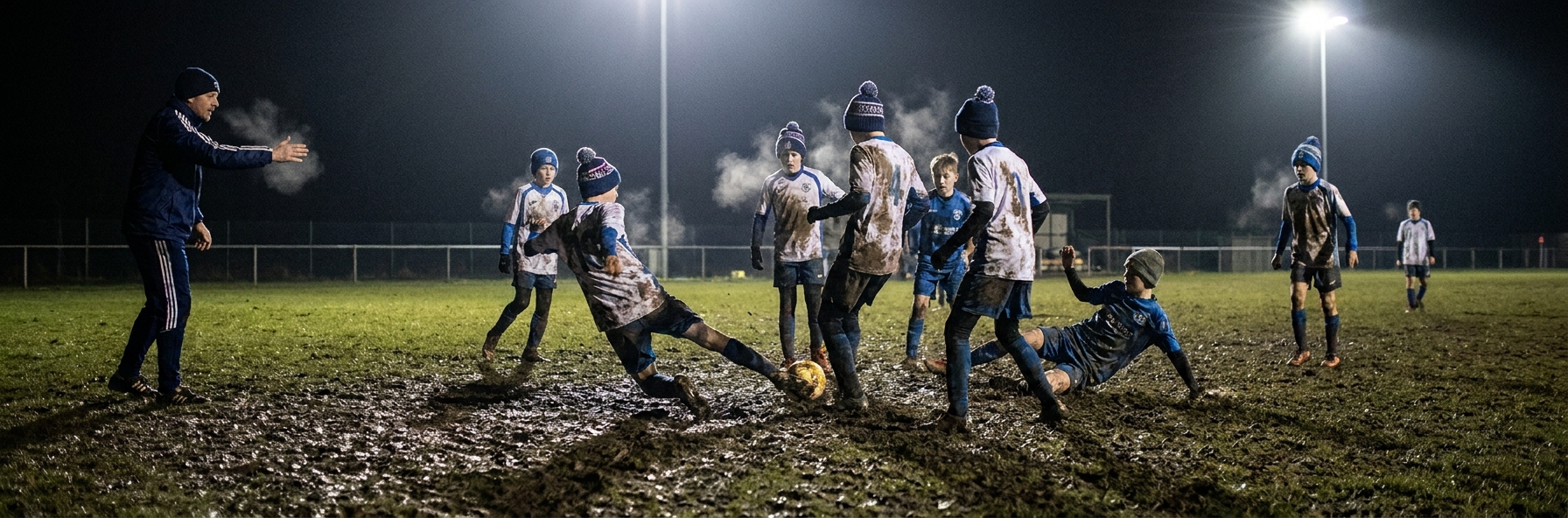
By late November the pitch has usually given up on you. The surface that passed smoothly in September now holds the ball up, standing water sits in the goalmouth, and the first ten minutes of any session are spent working out which bits of grass are actually safe to use. Add a 5pm kick-off in the dark and a squad that arrived cold, and a lot of coaches end up either cancelling or running the same tired shuttle runs just to keep everyone moving.
Neither is a good answer. A session you quietly turn into fitness work teaches players nothing about the game, and a season with no winter training at all leaves a gap that shows up badly come spring. The better option is to plan for the conditions rather than hope they improve, and to treat a heavy pitch as a different coaching problem rather than a smaller version of a summer one.
Why a Normal Session Plan Falls Apart in Winter
Most session plans assume a true surface, players who are already warm, and enough light to see a pass develop from thirty yards. Take any one of those away and the plan starts to creak. A sliced pass that would sit up nicely in August dies in standing water in November. A drill with long queues, fine on a warm evening, leaves players standing still and getting colder with every rep. None of that is a coaching failure on your part; it is a different set of conditions that needs a different shape of session.
The FA's own winter weather coaching guidance makes the same point: on a heavy pitch and in cold conditions, sessions work better when they are built around small-sided games and constant movement, rather than long explanations and large-group drills that leave most players standing around.
A Framework for Adapting on the Day
Step One: Inspect before you plan. Walk the pitch, not just look at it from the gate. Check for standing water, deep mud, slippery painted lines and any hidden holes left by a previous match. Decide there and then whether the full pitch is usable, only part of it is, or you need a Plan B indoors.
Step Two: Shrink the space, not the ambition. If only a corner of the pitch is safe, use it. Smaller areas and tighter small-sided games still deliver first touch, decision-making and fitness, and a 4v4 in a good patch of grass beats an 11v11 drill spread across a boggy full pitch.
Step Three: Cut the standing-around. Long queues are the enemy of a warm, engaged squad in winter. Favour continuous games and rotating small groups over single-file drills where most players wait their turn in the cold.
Step Four: Warm up properly, not just physically. A short, ball-based warm-up that raises heart rate quickly matters more in the cold than a long static stretch. Keep it moving and keep it with the ball from the first minute.
Step Five: Have a genuine Plan B ready. If the pitch is unsafe, know in advance where you would move the group, whether that is a hard court, a hall, or a shortened outdoor session with extra layers and a faster tempo. Deciding this on the night, in the dark, with parents waiting, is too late.
How to Train It: A Winter-Ready Session Plan
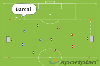
Warm-up: start with a quick, ball-based activation that raises body temperature fast and keeps everyone moving from the first whistle, rather than standing still to stretch.
Technical: move into a tight possession drill that rewards a clean first touch under pressure, which is exactly the skill a heavy pitch punishes hardest.
Decision-making: add a small-sided possession game in a reduced area, so players keep making the same technical decisions but now with opponents closing them down.
Game: finish with a fast, continuous conditioned game that keeps numbers rotating and bodies warm, and gives you a natural, high-energy way to end the session.
Key Coaching Points
- Inspect the actual playing surface before you finalise the session, not just the weather forecast.
- Build sessions around small-sided games and constant movement rather than long queues and static drills.
- Use a shorter, ball-based warm-up in the cold instead of a long static stretch.
- Shrink the playing area to fit the safest usable ground rather than cancelling outright.
- Keep team talks and detailed feedback brief and sheltered; save the long explanations for the changing room.
- Agree a genuine indoor or reduced-session Plan B in advance, so a bad pitch never becomes a wasted evening.
Recommended Drills



Frequently Asked Questions
Should we still train outside when the pitch is waterlogged?
Not on the waterlogged part. Standing water and deep mud are a safety risk as well as a coaching headache, so if the whole pitch is unusable, move indoors or to a hard surface instead. Often only part of the pitch is bad, in which case a smaller, well-chosen area still gives you a good session.
How do I keep players warm without just making them run laps?
Keep the ball involved from the first minute. Continuous small-sided games and rotating possession drills raise heart rate just as effectively as running, and players stay engaged and learning rather than switching off during fitness work.
Is it worth moving sessions indoors or to futsal for part of the winter?
Many coaches find it is. A true, fast indoor or futsal surface lets players keep working on close control and quick decisions when the outdoor pitch cannot offer either, and it is a useful option to have ready rather than a last resort.

 sportplan_football