One of the clearest stories of the 2026 World Cup was the long-range goal. Reporting on FIFA's own analysis showed that around 16 per cent of goals came from outside the penalty area, roughly double the share at the 2022 tournament in Qatar.
The reason will sound familiar to any Sunday league or youth coach this autumn. Opponents drop deep, pack the box and dare you to break them down. When there is no space inside the area, the space outside it becomes the opportunity, but only if your players can recognise the moment and strike the ball well.
Why Teams Do Not Shoot Enough
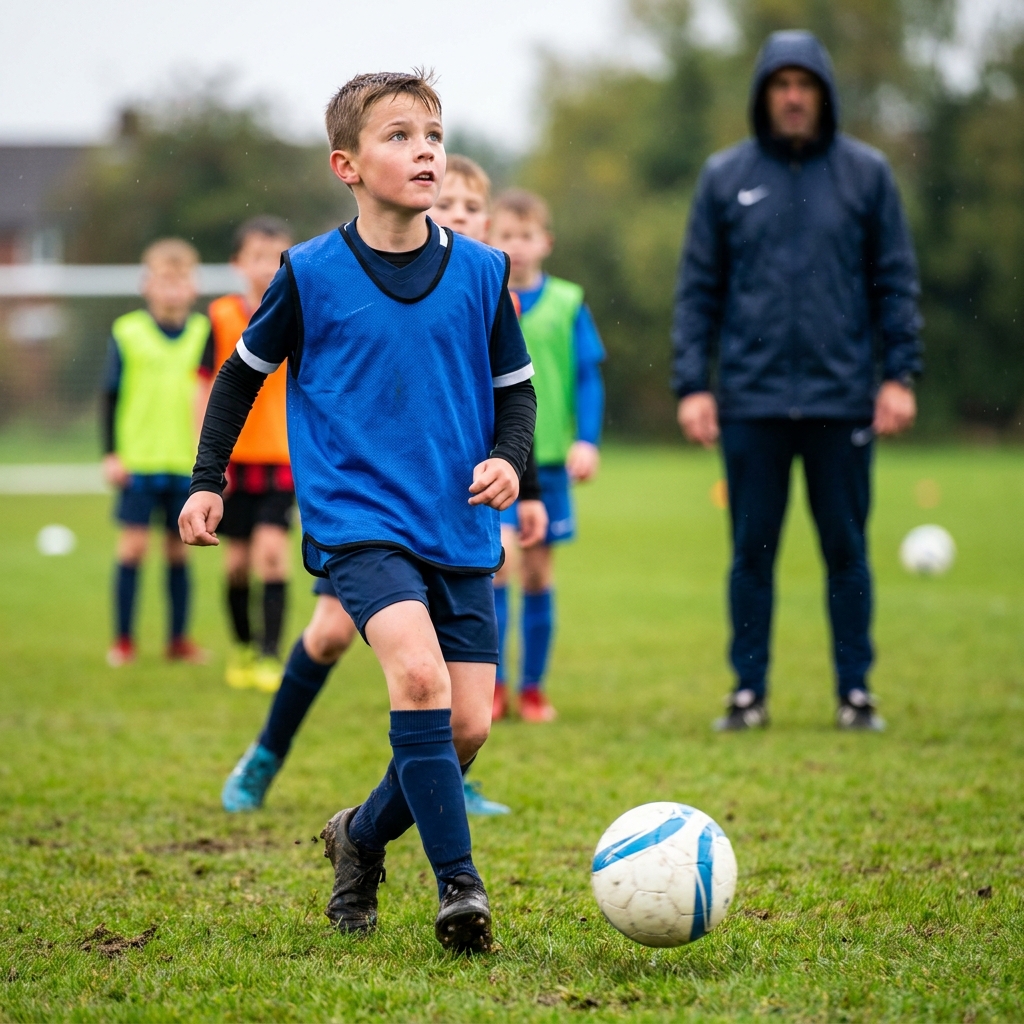
Most grassroots teams under-shoot from range for three reasons. Players are told to "work it into the box" so often that they stop looking at goal. Their striking technique has never been coached beyond the penalty spot. And the rest of the team does not follow in, so a parried shot is simply cleared.
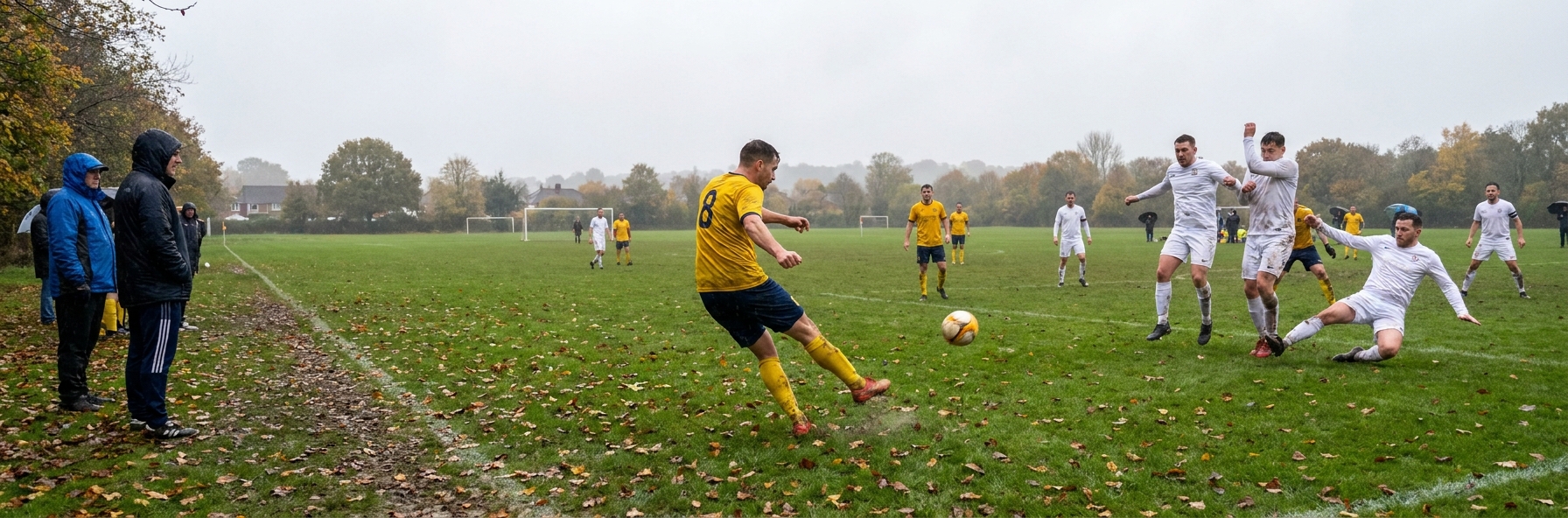
A crowded box also works in the shooter's favour. With defenders and attackers between the ball and the goal, keepers can lose sight of the strike late. A low, hard shot through bodies is often more dangerous than a perfect curler.
The Four-Step Long-Range Framework
Step One: Recognise the moment. Shoot when the opponent has dropped off, there is a clear lane to goal and the ball is set on the stronger foot. If a defender is closing fast, move the ball one touch to open the angle, then strike.
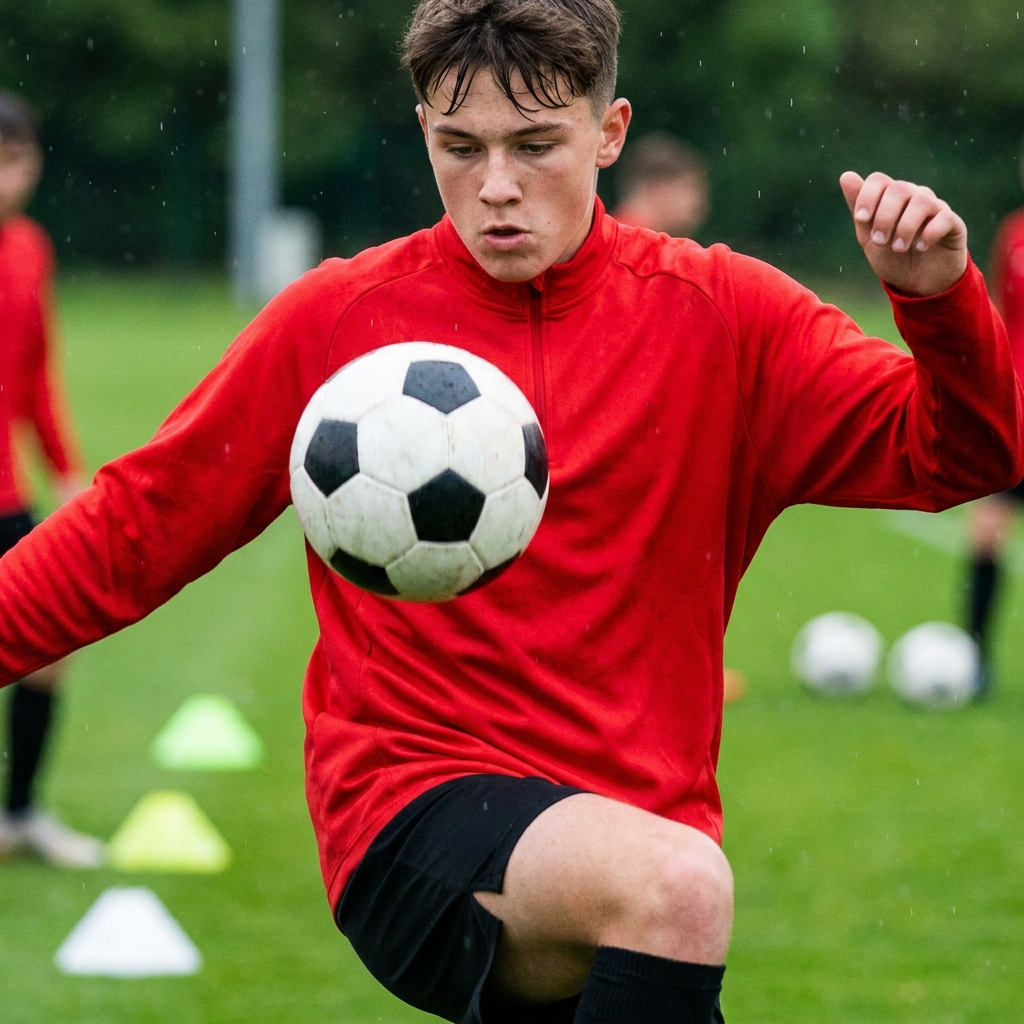
Step Two: Set it with the first touch. The best long-range goals usually start with a touch out of the feet, slightly to the side and in front. A touch that stops dead under the body makes a clean strike almost impossible.
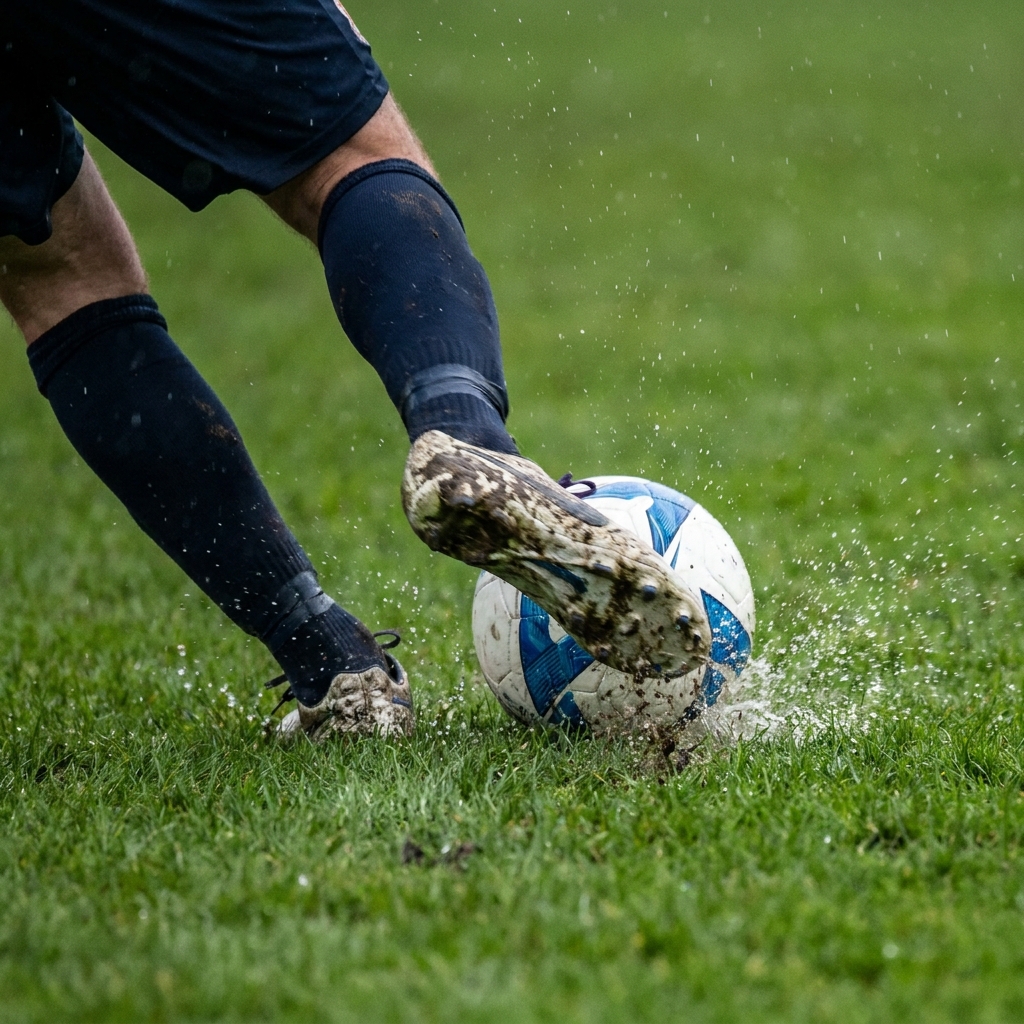
Step Three: Strike through the ball. Non-kicking foot beside the ball, head and chest over it, laces through the middle and land on the kicking foot. Accuracy first; a shot on target that the keeper must deal with is always better than a wild one over the bar.
Step Four: Follow in. Every shot from distance needs at least one teammate attacking the space in front of the keeper for the rebound. Plenty of long-range efforts turn into tap-ins for whoever reacts first.
How to Train It
Warm-up: pairs passing over 15 to 20 metres, focusing on a set-up touch to the side before each pass, then progressing to driven passes along the ground.
Technical: a dribble, set and strike at a goal with a keeper from just outside the box. Count only shots that hit the target, and rotate shooters and rebounders.
Decision-making: a zoned game where the attacking team can shoot from a marked area outside the box. Defenders in the box block lanes, so attackers must decide whether to shoot, move the ball sideways to open a lane, or pass in.
Game: small-sided game against a deep defending team, with goals from outside the area worth two and a rebound goal worth a bonus point.
Key Coaching Points
- Look at goal every time you receive in the zone outside the box.
- Set the ball out of your feet with the first touch.
- Keep the head and chest over the ball to keep the shot low.
- Hit the target; make the goalkeeper make a save.
- Use bodies in the box as a screen, not a reason to pass.
- Always have a teammate following in for the rebound.
Recommended Drills
Frequently Asked Questions
How do I teach kids to shoot from distance?
Start with technique at a sensible range for their age and ball size. Teach a set-up touch, the non-kicking foot beside the ball and striking with the laces. Reward shots on target rather than power, and build the distance up as their technique improves.
When should a player shoot from outside the box?
When there is a clear lane to goal, the ball is set on a good foot and no defender can block in time. Against a deep defence, an early shot can be the best option because waiting only lets more bodies get back.
Why do my players' long shots always go over the bar?
Usually the body is leaning back at contact, or the ball is struck too far underneath. Coach the head and chest over the ball, contact through the middle and landing on the kicking foot. That keeps the shot low and hard.
 sportplan_football