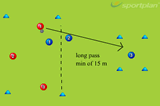
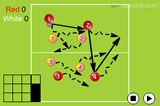
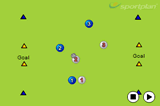
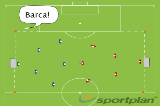
Station 6 players in 2 teams of 3 in 1/3 of the area and 3 players in 1 team in the other 1/3.
The ball starts in the area at the top of the diagram. The 3 players in possession must attempt to advance the ball into the middle area. The team advancing the ball into this area then carries the ball into the opposing 1/3. Now they must attempt to advance the ball to the end line at the bottom of the diagram beyond the 3 players in the bottom 1/3. Defensive players must attempt to prevent the team in possession from getting the ball to either the middle area or the end line. Play continues from end to end with the winner being the first team to get to 5 points/goals.
Develop so that 3 defenders become 2 defenders plus a goalkeeper. Now you have 3 attackers trying to beat 2 defenders and score past the goalkeeper.
Good supporting positions at good distance and angles.
Quality of pass and quality runs.
Spread out wide and deep when we attack.
Move from defense to attack at controlled speed.

in more ways than one
 sportplan_netball



in more ways than one
sportplan_football

Deliberate heading is now out of U11 grassroots matches. Here is how to coach chest, thigh and foot control so your players still win the ball in the air.
Long-range goals doubled at the 2026 World Cup as teams sat deep. Here is how to coach when to shoot from distance, the technique, and the follow-up.

Under FutureFit, your Under-9s stay at 5v5, your Under-11s stay at 7v7 and your Under-13s stay at 9v9. Same pitch, same numbers, one more year. Here is how to make sure that year feels like a step forward rather than a repeat.