From First Idea to First Session
There is a particular kind of nervous excitement in standing on a court for the very first session of a junior programme you have built yourself. A dozen children, a basket of balls, a handful of parents watching from the fence - and the quiet worry that you have forgotten something important. The good news is that running a thriving junior tennis programme is far more about a few solid foundations than about secret coaching genius. Get the framework right, group the children sensibly, keep the sessions fun, and stay on top of the admin, and you will have a programme that grows itself by word of mouth.
This guide is the complete first-season walkthrough. We will cover getting properly set up under the LTA, securing regular court time and the right equipment, grouping children by stage, planning sessions that work, managing parents kindly but firmly, and handling the money and admin without it eating your evenings. Take it section by section and you will arrive at your first term ready rather than rattled.
Getting Set Up: The LTA Foundations
Before you advertise a single class, get the framework in place. In Britain, junior tennis sits under the Lawn Tennis Association (LTA), and its junior pathway is LTA Youth - the modern framework that replaced what most people still call "mini tennis". It is built around colour-coded ball stages so children play with the right ball, on the right size court, for their age and ability.
The LTA Youth Ball-Colour Stages
- Red: the entry stage for the youngest players. The slowest, largest, low-compression balls on a small court, so children can rally almost from the first lesson.
- Orange: the next step up. A slightly bigger court and a marginally faster ball, building on the rallying and movement learned at red.
- Green: moving towards the full court with a ball closer to standard speed but still slightly softened, bridging the gap to the adult game.
- Yellow: the standard ball on a full-size court - the full game, for players who have progressed through the earlier stages.
The stages exist for one reason: a five-year-old swinging at a standard, fast ball on a full court will miss, get frustrated and quit. Give that same child a slow red ball on a small court and they will rally, score points and grin. Group by the stage a child is ready for, not strictly by their birthday.
Alongside understanding the pathway, you need to be properly qualified and checked to coach children:
What You Need Before You Coach
- An LTA coaching qualification: a recognised coaching course gives you the teaching framework, the LTA Youth content and the confidence to run a group of children safely and well.
- DBS and safeguarding: an in-date enhanced DBS check and completed safeguarding training are non-negotiable for working with juniors. This is the baseline for keeping children safe, not an optional extra.
- LTA Accreditation: accreditation ties your qualification, DBS and safeguarding together into one recognised status, renewed regularly. Most registered venues and parents will expect to see it before you take a session.
- Your venue's LTA registration: your courts or club should be an LTA-registered venue, which unlocks support, competition access and the LTA's tools.
- ClubSpark: ClubSpark is the LTA's official platform, free to registered venues, and it is where court booking, registration and LTA competitions live. It is excellent and we will come back to it.
If you are launching the whole club rather than just a coaching block, work through our starting a tennis club checklist first - it covers venue, committee, affiliation and insurance in order, so you are not doing this back to front.
Securing Court Time and the Right Equipment
A junior programme lives and dies on regular, protected court time. A floating slot that moves every fortnight will haemorrhage families fast; the same hour, the same day, every week, is what builds the routine parents can plan their lives around. Pin down a fixed weekly slot, ideally after school or on a weekend morning, and protect it fiercely. At an LTA-registered venue this is managed through ClubSpark, where courts are booked and your programme sessions are blocked out.
The equipment list for junior tennis is mercifully short, but using the right kit for the stage is the single biggest thing that separates a session children love from one they find impossible:
Your First-Term Kit List
- Low-compression balls: red, orange and green balls to match the stages you are running. These are the most important purchase you will make - never start young children on a standard yellow ball.
- Smaller rackets: shorter, lighter rackets sized to the child. A racket that is too big and heavy ruins technique before it ever forms.
- Mini nets and lines: portable nets and floor lines or markers to set up smaller red and orange courts within a standard court. One full court can become several mini courts, multiplying how many children are actually hitting.
- Cones, spots and targets: cheap, endlessly useful for games, stations and giving children something to aim at.
- A big basket of balls: the more balls in play, the less standing in queues - and queueing children are bored children.
Grouping Children by Stage
Resist the temptation to split groups purely by age or, worse, by who turned up with whom. Group by LTA Youth stage and ability. A confident seven-year-old may be ready for orange while a nervous eight-year-old is happier and more successful at red. Children progress when they are appropriately challenged - able to rally and score but still stretched - and stall when they are out of their depth or bored.
Keep groups small enough that every child hits often. With mini nets you can run several small courts side by side, so even a busy session keeps everyone active. If you are juggling several groups across different coaches or volunteers, you will quickly want one place to see who is in which group and who is available each week - our guide to squads, groups and availability covers keeping that organised.
Planning Sessions That Work
The golden rule of junior coaching is maximum hitting, minimum talking. Children learn tennis by playing tennis, not by listening to you explain it. Build every session around games and rallies, keep your instructions short, and demonstrate rather than describe. A simple, repeatable shape works well: a fun, active warm-up that gets heart rates up and rackets moving, a main block of game-based practice on a theme, and a finish with points or a mini-competition so they leave on a high.
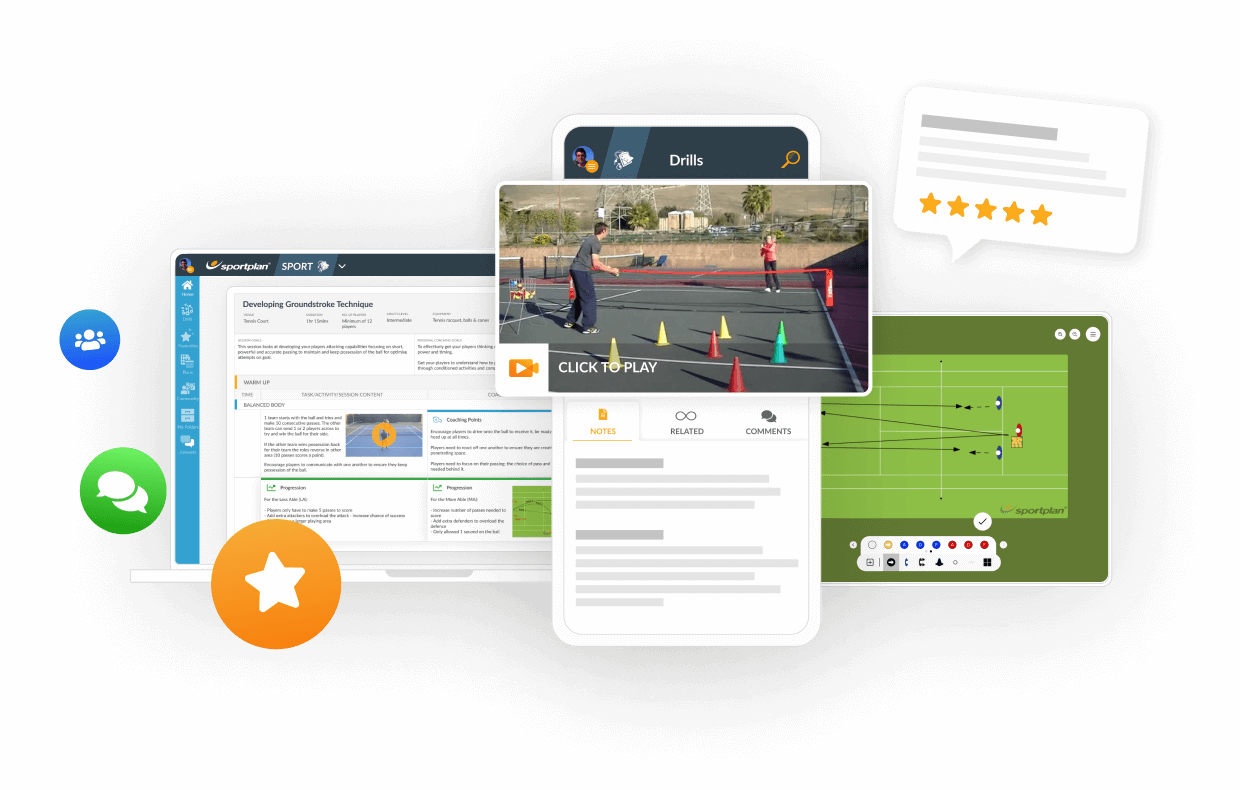
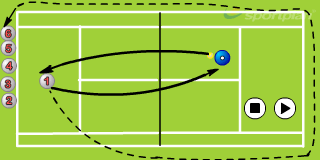
Have a written plan for every session - it keeps you calm when twelve children are looking at you. Our free tennis session plan template gives you a ready structure to drop activities into, and our drills for juniors guide is full of practices designed for exactly this age group. Here are two reliable favourites to start with:

Managing Parents
Parents are your programme's lifeblood and, handled well, your best marketing. Set expectations clearly from the start: where to wait, the term dates, what to bring, how you will communicate, and how and when fees are paid. A short, friendly welcome message covering all of this saves a hundred questions later. Be visibly warm at drop-off and pick-up - a quick word about how a child got on is worth more than any flyer - and keep your communication consistent so nobody misses a cancelled session or a change of court.
The thing that wears volunteers down is not the coaching; it is the admin around it. Chasing payments, re-asking who is coming, fielding a dozen separate messages on a busy group chat. Getting communication into one organised place from day one is the kindest thing you can do for your own evenings. Our tennis club communication guide has more on keeping parents informed without it taking over your week.
The Money and Admin: Setting Coaching Fees
Decide your coaching fees before your first session, not after parents start asking. Most junior programmes charge per term or per block rather than week to week - it gives you predictable income and steadier attendance, because a family that has paid for a term turns up. When you set the figure, work out your real costs first: court hire, balls and kit replacement, your coaching time, and any assistant, insurance or affiliation costs. Then divide sensibly across the expected group size, check it against what is charged locally, and you have a fair fee that keeps the programme sustainable. Our guide to tennis subs and coaching fees walks through the sums in detail.
Collecting termly by Direct Debit or a simple online payment link beats handling cash or chasing transfers, and it means the money side runs quietly in the background while you concentrate on the tennis.
One Tidy Place for the Coaching-Group Layer
Here is the honest lie of the land on tools, and it matters more in tennis than in any other sport. ClubSpark is the LTA's official platform and it is genuinely excellent - free to LTA-registered venues and comprehensive, covering court booking (its standout feature), membership, online payments, coaching-programme management and LTA competitions and box leagues. For court booking and your venue's LTA record, it is the place, full stop, and your programme should run its bookings and registration there.
What ClubSpark does not try to be is a slick, mobile-first communication and coaching-group app. If you find yourself wanting a branded club or coaching app, a newsfeed and tidy parent communication on the phone (where roughly nine in ten people actually deal with this), squad and group availability across several coaches, and Direct Debit or auto-pay for coaching fees and subs in one place, that is where a tool like Teamo fits. A brief, honest aside: Teamo is made by Sportplan, the same team behind this site, so weigh that as you would any recommendation from the people who built it - it is free up to 25 members with no ads, and you can see how Teamo handles the coaching-group and parent-comms side. Crucially, Teamo does not do court booking, and it is not a replacement for ClubSpark or the LTA - it complements them. ClubSpark and the LTA stay the home of court booking, venue registration and LTA competitions; Teamo simply sits alongside for the coaching-group, communication and payments layer. Many venues will keep ClubSpark for bookings and use a comms app for the day-to-day squad and parent side.
Your First Term, in Short
It can feel like a mountain from the bottom, but it is really a short, ordered list. Get the foundations in place, protect your court time, buy the right kit, group the children well, plan fun sessions, look after your parents, and set your fees from day one. Do those, and the coaching - the bit you got into this for - becomes the easy, joyful part.
When you are ready to build out a full term of practices, browse the complete Tennis drills library for hundreds of activities sorted by skill and stage. Your first session will go better than you fear, and by half-term you will wonder why you were ever nervous.
Frequently Asked Questions
How do I start a junior tennis programme?
Start by getting the framework right: book regular court time at an LTA-registered venue, make sure you have a coaching qualification, an in-date DBS check and safeguarding training, and get accredited with the LTA. Buy the right kit for the LTA Youth stages - low-compression balls, smaller rackets and mini nets or lines for the red and orange stages. Then group children by stage rather than age, plan short, game-based sessions, and set clear coaching fees from the first week so the money side never falls behind.
Do tennis coaches need a DBS and an LTA qualification?
Yes. To coach juniors in Britain you need a recognised LTA coaching qualification, an in-date enhanced DBS check and completed safeguarding training, and you should hold LTA Accreditation, which ties those checks together and is renewed regularly. Most registered venues and parents will expect to see your accreditation before you take a single session. It is the baseline for working safely with children, not an optional extra - sort it before you advertise your first class.
What are the LTA Youth stages?
LTA Youth (formerly mini tennis) uses colour-coded ball stages so children play on the right size court with the right ball for their age and ability. Red is the entry stage for the youngest players, using the slowest, largest low-compression balls on a small court. Orange comes next on a slightly bigger court with a faster ball, then green, which moves towards a full court with a ball closer to standard speed, before players progress to the yellow ball on a full-size court. Group children by the stage they are ready for, not strictly by age.
How much does junior tennis coaching cost?
It varies by area and group size, but most programmes charge per term or per block of sessions rather than per week, which gives you predictable income and steadier attendance. When you set your fee, cover court hire, balls and kit replacement, your coaching time and any assistant or insurance costs, then divide across the expected group. Collecting termly by Direct Debit or an online payment link keeps cash flow steady and saves you chasing parents week to week. Our subs and coaching fees guide walks through the sums.