Tennis Runs on Time-Sensitive Messages
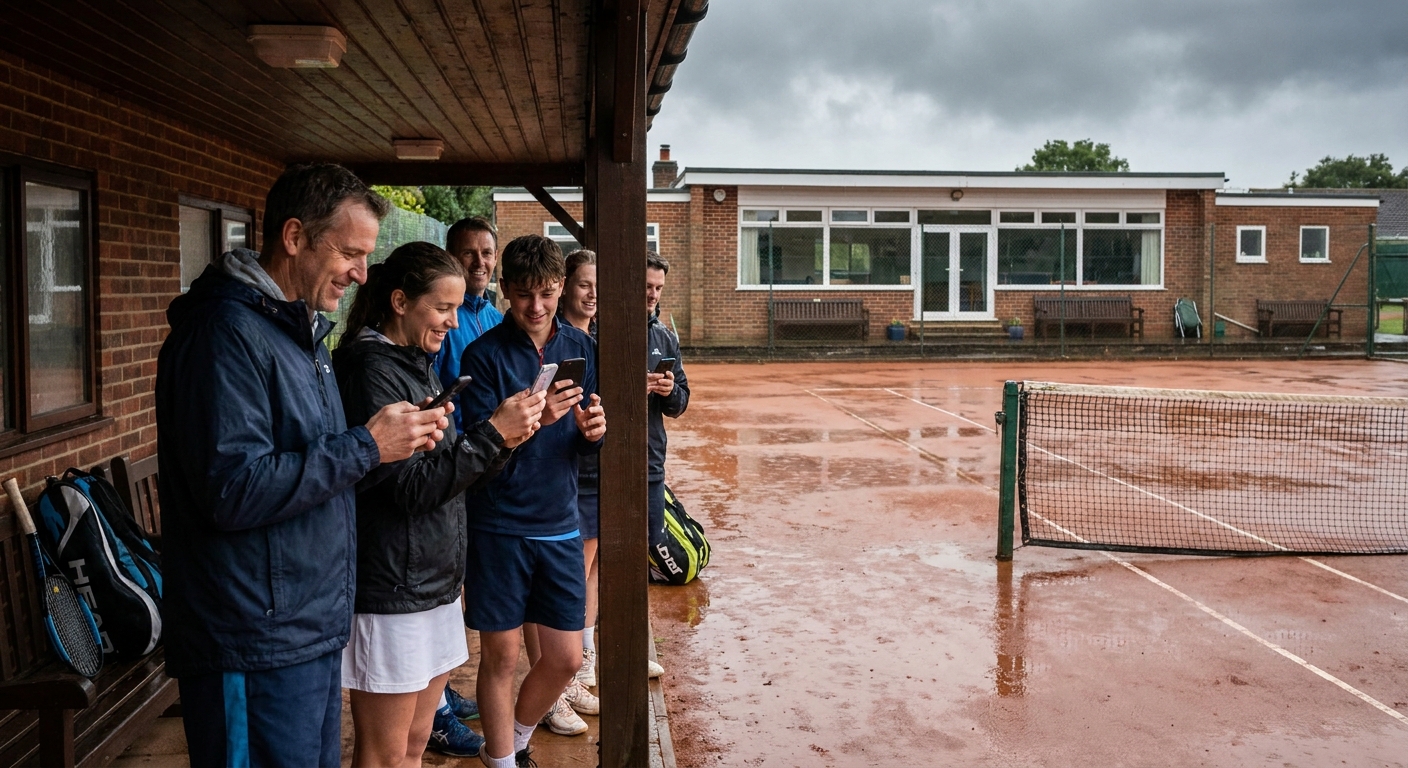
More than almost any other sport, tennis club communication is dominated by messages that have to arrive fast and reach exactly the right people. The English weather sees to that. A coaching group is on, then a downpour rolls in at 4pm and the 5pm junior session is off - and now you have forty-five minutes to make sure a dozen parents do not drive to a locked, soaking court. That single rain-off, repeated across a season, is the defining communication challenge of running a tennis club.
It is not only the weather. Court availability changes when a county fixture takes over the show courts. A box-league round needs chasing before the month-end deadline. Squad and group sessions need weekly reminders so half the cohort does not forget. Match teams have to be confirmed. And membership renewals come round every spring whether you are ready or not. Each of these is a message that lands well or badly, and the difference between a smooth club and a chaotic one is very often just how those messages are handled.
Why WhatsApp Groups Struggle With This
Almost every tennis club starts on WhatsApp, and it is easy to see why: it is free, everybody already has it, and a group is up and running in two minutes. For a single adult squad sorting out who is playing on Saturday, it is genuinely fine. The trouble starts as soon as the club grows beyond one tidy group and the messages start to matter.
The first problem is notification overload. When the cancellation, the social banter, the lift-share requests and the "great game today!" messages all share one channel, the important notice is buried within minutes. Members mute the group to stay sane - and then miss the rain-off entirely. A message that nobody reads is worse than no message at all, because you believe the job is done.
The second is that you have no idea who has actually seen it. A WhatsApp group shows you a tick, not a read count you can rely on, and certainly not a "yes, I'll be there" RSVP. When you cancel a junior session you are left hoping, with no way to see which six of the twelve families still think it is on. There is no read tracking and no RSVP built for the job.
The third is the most serious: safeguarding and data protection. A standard WhatsApp group shares every member's phone number with everyone else, mixes adults' and children's numbers in one open space, and allows a coach to message a child directly with no oversight. For junior tennis that runs straight into LTA safeguarding expectations and the GDPR duty you owe to families. An informal group chat is simply not built to keep adults and under-18s safely apart.
And finally there is no single club voice. With several coaches and volunteers all posting across several groups, official news arrives in different words from different people at different times. Members stop knowing which message is "the" message - and the club loses the calm, one-source-of-truth feel that makes people trust it.
What Good Tennis Communication Looks Like
Strip it back and good club communication is not complicated. It is the right message reaching the right group, fast, with a way to know it landed - and a safe, lawful way to do that for children. A handful of principles get you most of the way there, whatever tools you use.
Rules for Sane Club Communication
- Right message, right group: a rain-off for the Tuesday green-ball squad goes to the Tuesday green-ball squad - not the whole club. Targeted beats broadcast every time.
- Decision first, detail second: open with the outcome ("Tonight's 5pm session is cancelled - rain"), then the reason and what happens next. Never make people read three sentences to find out if they are coming.
- Confirm it landed: for anything time-sensitive, use a channel that shows read receipts or an RSVP, so you can see who still thinks the session is on.
- One announcements channel: keep official notices in a quiet, reply-free space and let the social chatter live somewhere else, so the rain-off is never buried.
- Child-safe by default: message guardians for under-18s, never coach-to-child one-to-ones, and keep all junior contact visible to a parent and a second adult.
- One source of truth: one club voice for official news - a newsfeed or notices channel everyone trusts - so members always know where the real word comes from.
- Send early: the moment a decision is made, send it. Forty minutes' notice on a cancellation is a courtesy; four minutes is a problem.
None of this requires special software - a disciplined club can do most of it on the tools it already has. The point is to be deliberate rather than reactive, especially about who sees what and how you know it arrived.
Practical Rules If You Stay on WhatsApp
Plenty of clubs will stay on WhatsApp, and that is a perfectly reasonable choice - it is free and familiar. If you do, a few rules turn a chaotic group into a workable one:
Split the groups. Create an "Announcements" group where only admins can post, for cancellations and official notices, and keep a separate social group for chatter. Members can mute the social one and still catch the messages that matter. One group trying to do every job is the root of most WhatsApp chaos.
Message parents, not children. For any junior squad, build the group from guardians' numbers, not the children's. Never set up a one-to-one chat between a coach and a child. This is the single most important safeguarding habit, and it costs nothing.
Agree a few ground rules and pin them: notices group is announcements only, no off-topic posts, no late-night messages, official updates come from named admins. A shared etiquette stops the slow drift into noise.
Ask for replies on anything critical. Because you cannot see read receipts you can trust, end a cancellation with "please reply 👍 so I know you've seen this" - and then chase the families who go quiet. It is manual, but it closes the gap.
These rules genuinely help. What they cannot do is give you reliable read tracking, true RSVPs, guardian-safe messaging by design, or a single newsfeed - and that gap is where a purpose-built app starts to earn its place.
Where ClubSpark Fits - and Where It Does Not
Before we talk about a communication app, an important point of honesty for tennis specifically. Court booking itself is best handled in ClubSpark, the LTA's official platform - and ClubSpark is genuinely excellent at it. It is free to LTA-registered venues and covers court booking (its standout feature, and the thing it does better than anyone), membership, online payments, coaching-programme management and LTA competitions and box leagues. If your venue uses ClubSpark for bookings, keep it: it is the right tool for that job and the official LTA record.
This article is about the communication around the booking - the cancellations, reminders, squad updates and renewals - rather than the booking itself. That is a different problem, and it is the one WhatsApp handles badly and a dedicated club app handles well. The two are complementary: many venues quite sensibly keep ClubSpark for court booking and the LTA record, and add a slicker app and communication layer on top for everything else.
Where a Club Communication App Earns Its Keep
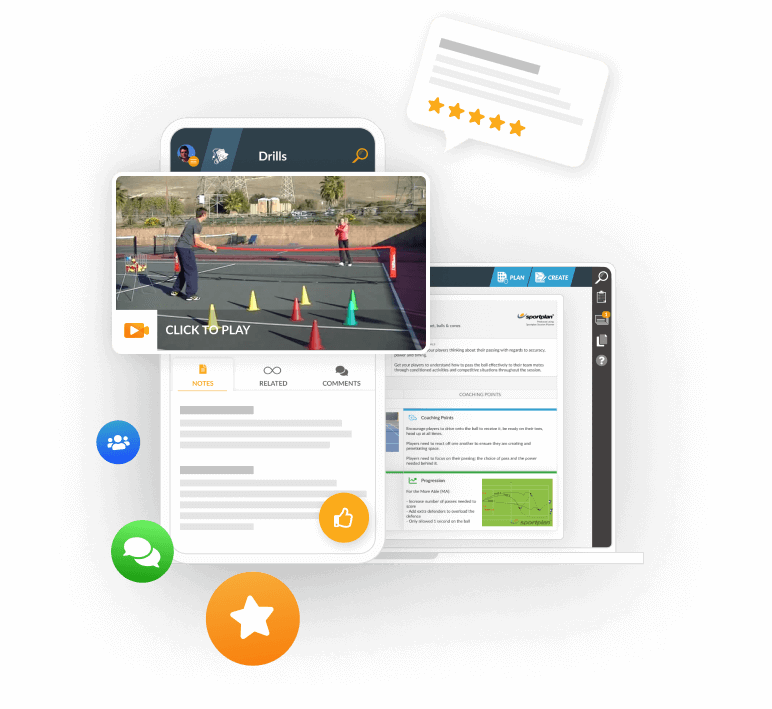
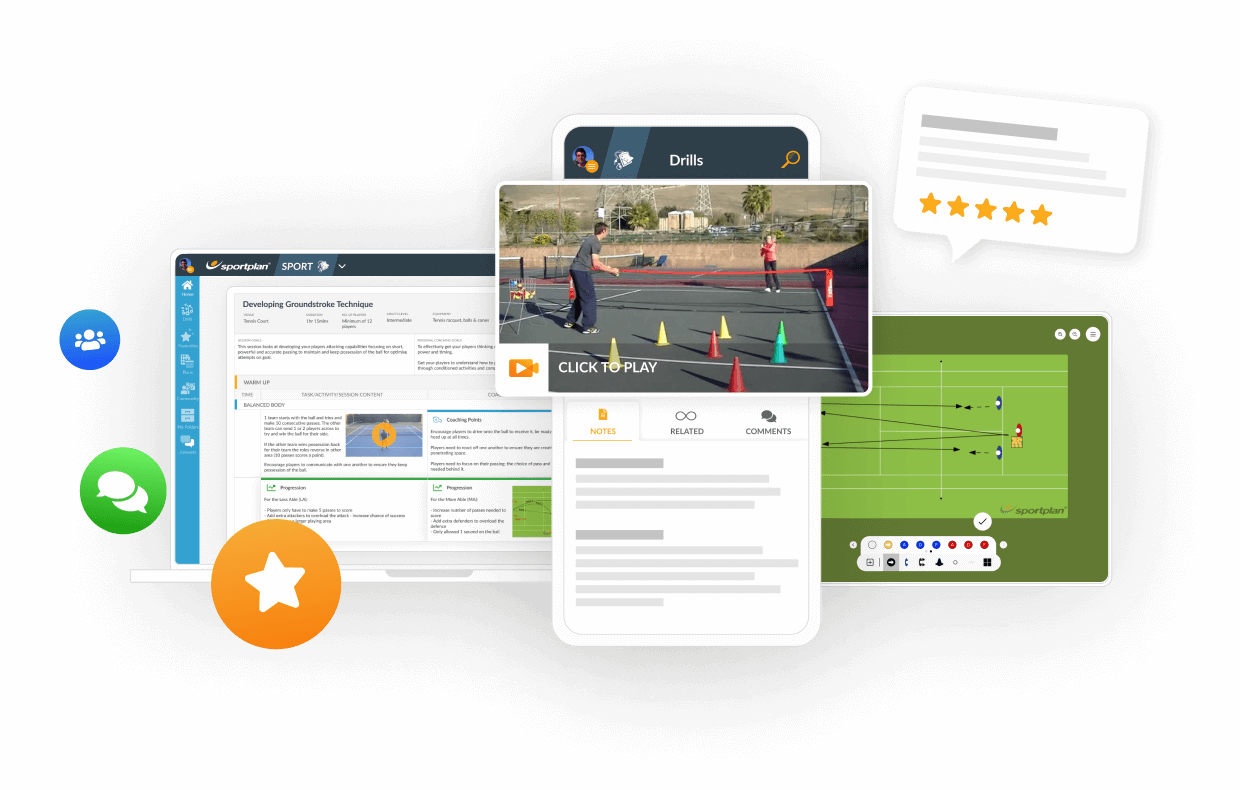
Once you have decided communication deserves better than a noisy group chat, the case for a purpose-built club app is mostly about the four things WhatsApp cannot do. Teamo - which, in the interests of being straight with you, is made by Sportplan, the same company behind this site - is built around exactly this layer. It sends instant, targeted push notifications, so a one-tap rain-off reaches only the Tuesday squad and you can see the RSVPs come back rather than hoping. It runs child-safe, GDPR-minded chats with guardian visibility for under-18s, so messages to children are seen by a parent and the safeguarding worry largely disappears. It gives every squad or group its own space, so notices stay separate from chatter. And it pulls everything into a branded club app with one Club Newsfeed - a single source of truth, mobile-first for the roughly nine in ten members who live on their phones. For the coaching side, you can also collect squad and coaching fees by Direct Debit and keep group availability across multiple coaches in one place. If a tidier communication layer sounds useful, you can see how Teamo handles club communication alongside whatever you use for booking.
To be fair about the trade-offs: WhatsApp is free and everyone already has it, which is a real advantage, and ClubSpark handles the court booking and LTA competitions that Teamo does not touch. Teamo is not a booking system and does not replace your LTA record - it complements ClubSpark by handling the squads, communication and coaching-fee side. Whether the upgrade is worth it depends on how much of your week disappears into chasing read receipts and worrying about who is in which chat.
Pulling It Together
Tennis communication is a timing problem dressed up as an admin problem. Get the rain-off, the reminder and the squad update to the right people fast - safely for the juniors, and from one trusted voice - and the club simply runs more calmly. You can do a great deal of that with disciplined WhatsApp habits; you can do more of it, with less effort and less safeguarding risk, on a club app built for the job. And whichever you choose for the messages, keep ClubSpark for the bookings: that part it does best.
Communication ties straight into the rest of the club's running. Our guide to running a junior tennis programme sets the wider context, the tournaments and box leagues guide covers the round-by-round chasing that good notices make painless, and the squads, groups and availability guide goes deeper on collecting RSVPs across multiple coaches. When you are ready to plan the sessions themselves, the full Tennis drills library has hundreds of practices sorted by skill.
Frequently Asked Questions
How do I message a tennis group about a cancellation?
Send one short, clear message to exactly the group affected - the Tuesday green-ball squad, not the whole club - and send it as early as you possibly can. State the decision in the first line ('Tonight's 5pm junior session is cancelled - rain'), then the reason and what happens next (rebooked, refunded or simply off). On WhatsApp you cannot tell who has seen it, so ask people to reply to confirm. A club app that sends a targeted push notification to one group and shows you read receipts and RSVPs removes the guesswork - you can see at a glance who still thinks the session is on.
Is WhatsApp safe for a junior tennis squad?
WhatsApp is free and familiar, but it carries real safeguarding concerns for under-18s. A standard group exposes every member's phone number to everyone else, mixes adults and children in one open chat, and allows direct one-to-one messaging between a coach and a child with no oversight. LTA safeguarding guidance favours communicating with juniors through parents and keeping adult-to-child contact transparent. If you stay on WhatsApp, message guardians rather than children, never set up one-to-one coach-child chats, and keep a second adult visible. A child-safe club app with guardian visibility - where messages to under-18s are seen by a parent - is designed around exactly this.
How do I stop my club WhatsApp being chaos?
Most club WhatsApp chaos comes from one group trying to do too many jobs. Split it: keep a quiet 'announcements only' channel for cancellations and official notices where members cannot reply, and let the social chatter live elsewhere. Agree a few rules - no off-topic posts in the notices group, no 3am messages, one club voice for official updates. Mute the social group so the important messages are not buried. Better still, move time-sensitive notices to a club app with a single newsfeed and targeted notifications, so a rain-off reaches the right squad without 200 messages of banter on top.
Is WhatsApp GDPR-compliant for a kids' group?
A club WhatsApp group is not automatically GDPR-compliant, and for children it needs particular care. Adding members shares their phone numbers - personal data - with everyone in the group, which needs a lawful basis and consent, and for under-18s that consent sits with a parent or guardian. WhatsApp also offers no way to handle data-access or deletion requests at club level. A purpose-built club platform with proper consent capture, guardian-managed under-18 accounts and the ability to remove a member's data cleanly is far easier to run lawfully than an informal group chat.
What is the difference between ClubSpark and a club communication app?
ClubSpark is the LTA's official platform and handles court booking, membership, online payments, coaching-programme management and LTA competitions - court booking in particular is its standout strength, and it is free to LTA-registered venues. A club communication app is about the messages around all that: instant cancellations, session reminders, squad updates and a club newsfeed. Many venues keep ClubSpark as their booking and LTA record and add a slicker app and communication layer on top for parent messaging, squad availability and coaching-fee collection. The two complement each other rather than competing.