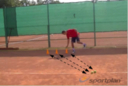
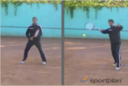
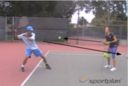
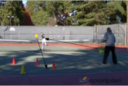
The coach stands and the net. The player and coach rally together in cross-court direction. After few good shots the coach hits the next volley short. The player has to react, move quickly forward and finish the ball offensively in down the line direction.
Many players know how to rally and are skilled enough to attack the ball but they lack of reaction skills. This connection is necessary to use own strengths to win more points. If you are not able to quickly perceive easy ball and move forward even your great technique won't help you.
In this drill the player works on reaction to short balls. The coach at the net forces the player to react faster because the distance between both players is shorter. Additionally, the player doesn't know when the coach will make the short ball, so he is working in environment that is exactly like this in a tournament match. To make it more real coach should hit easier balls only if the last few shots in a row were of good quality.
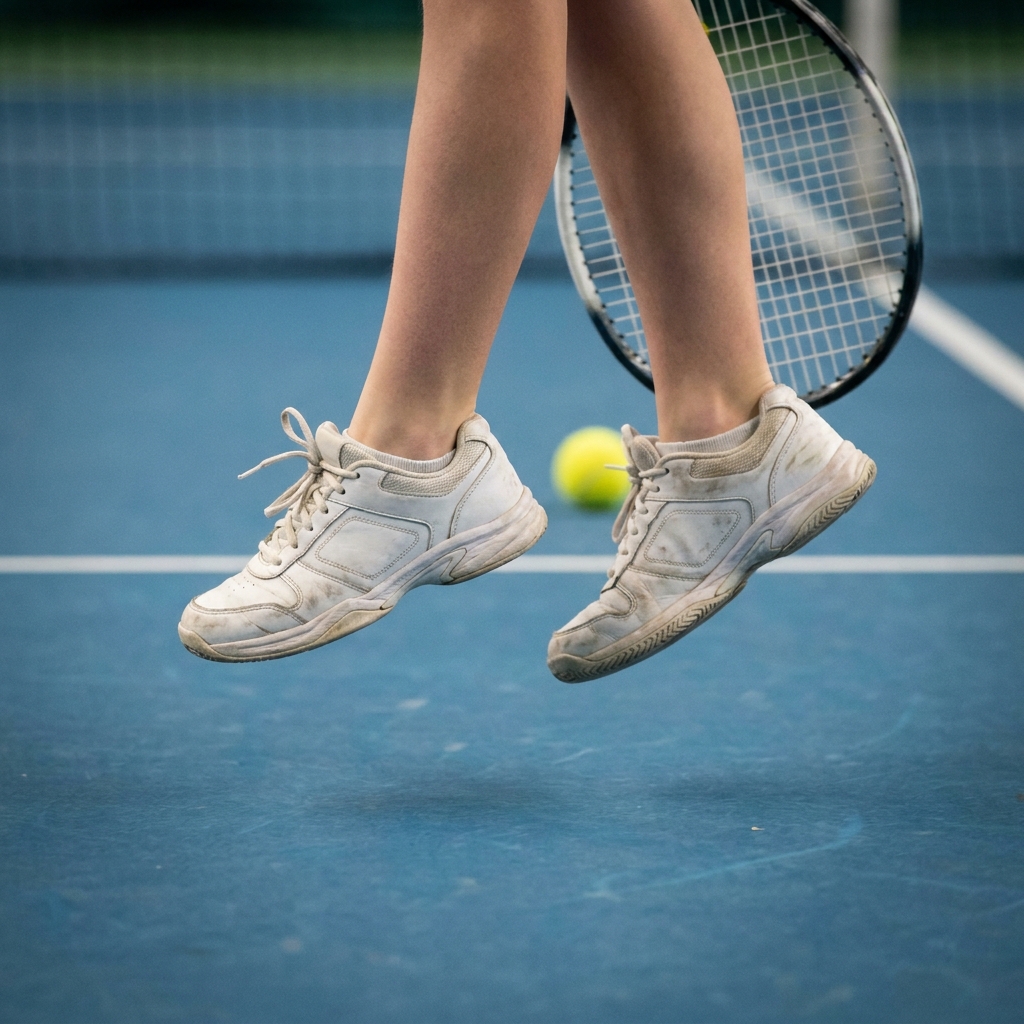
Indoor courts give players less time and less room. Help them sharpen their split step, shorten their swing and stay calm, and winter becomes a season of real progress.
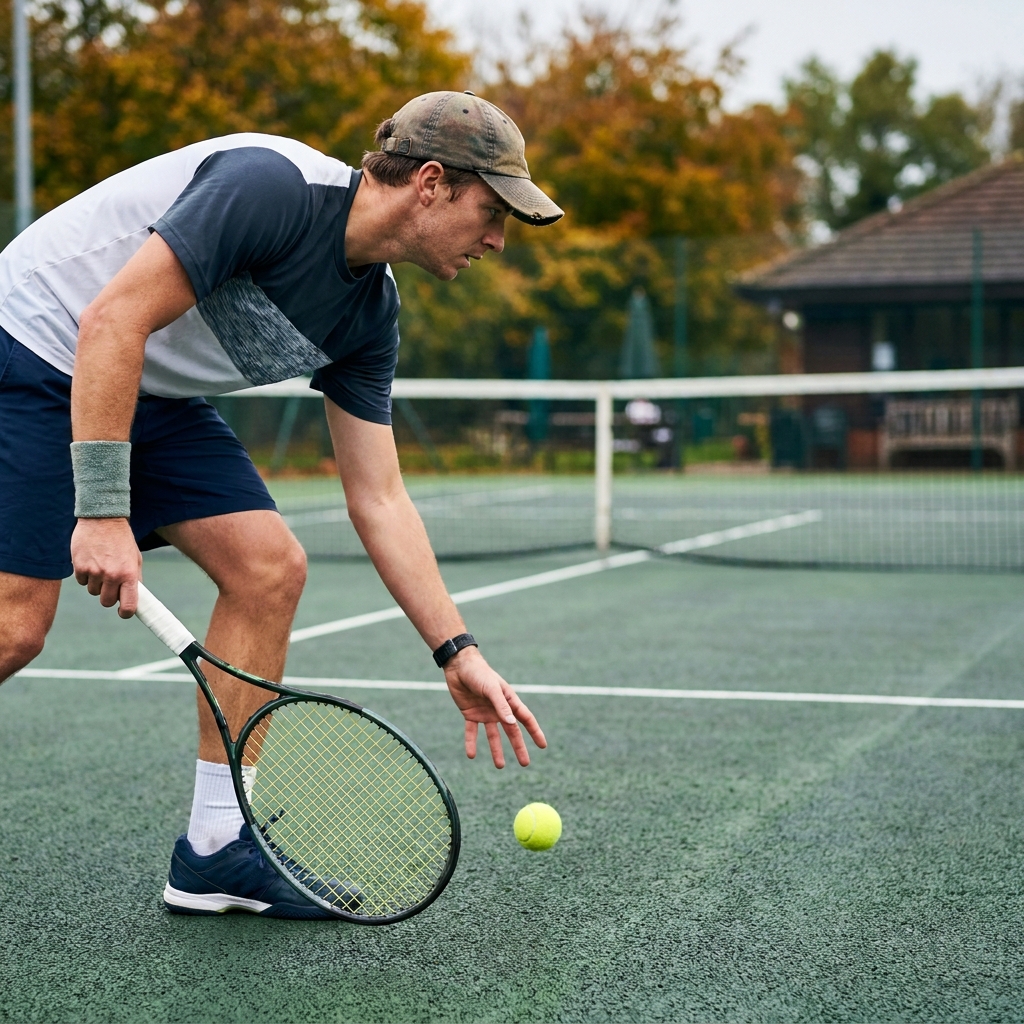
A tiebreak is a short sprint where every point is worth the same as a break of serve. The players who win them are rarely the ones who hit hardest. Here is how to coach the patterns, habits and scoreboard thinking that win the big points.
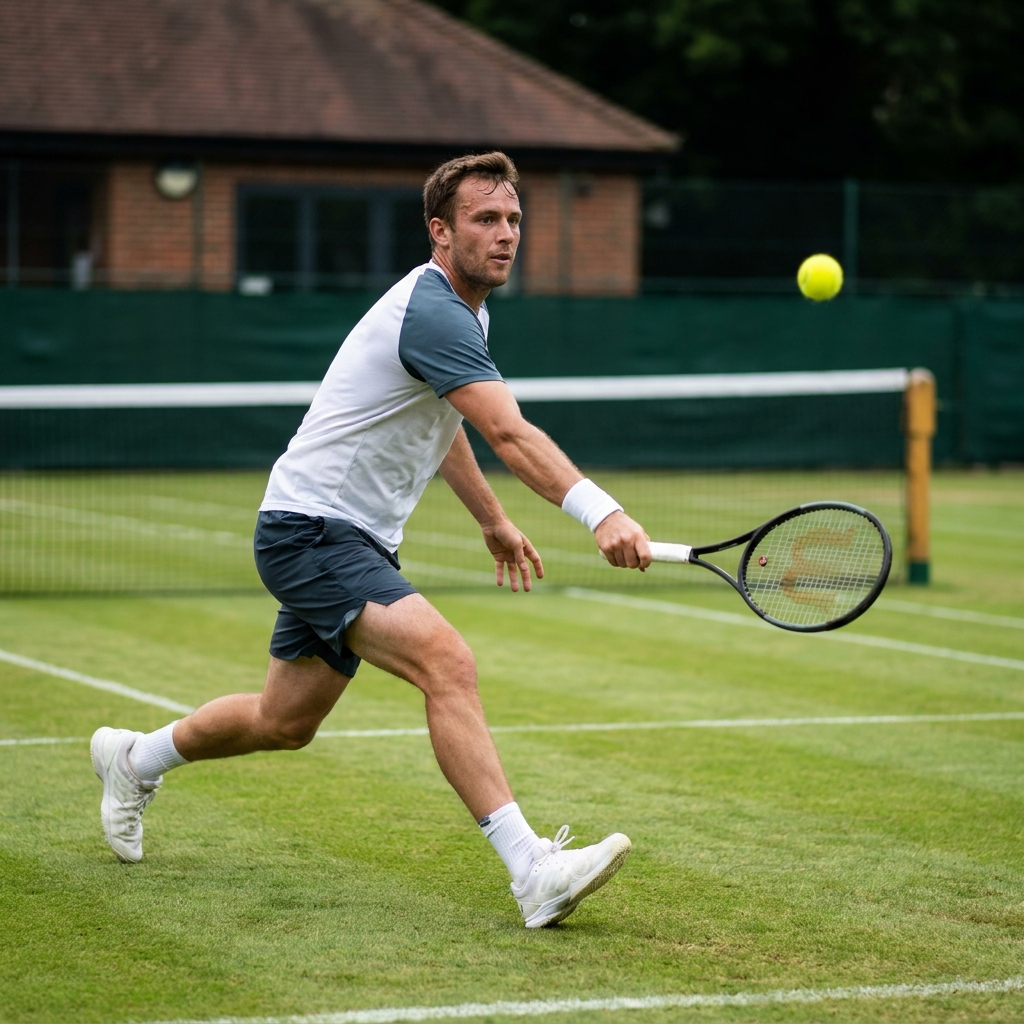
Most club players practise the serve on its own and then have no idea what to do with the ball that comes back. Serve plus one is the pattern that turns a good serve into a won point.


Register for FREE and get coaching tips, top drills, session and more every week!