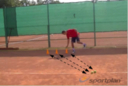
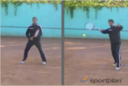
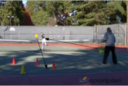
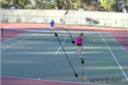
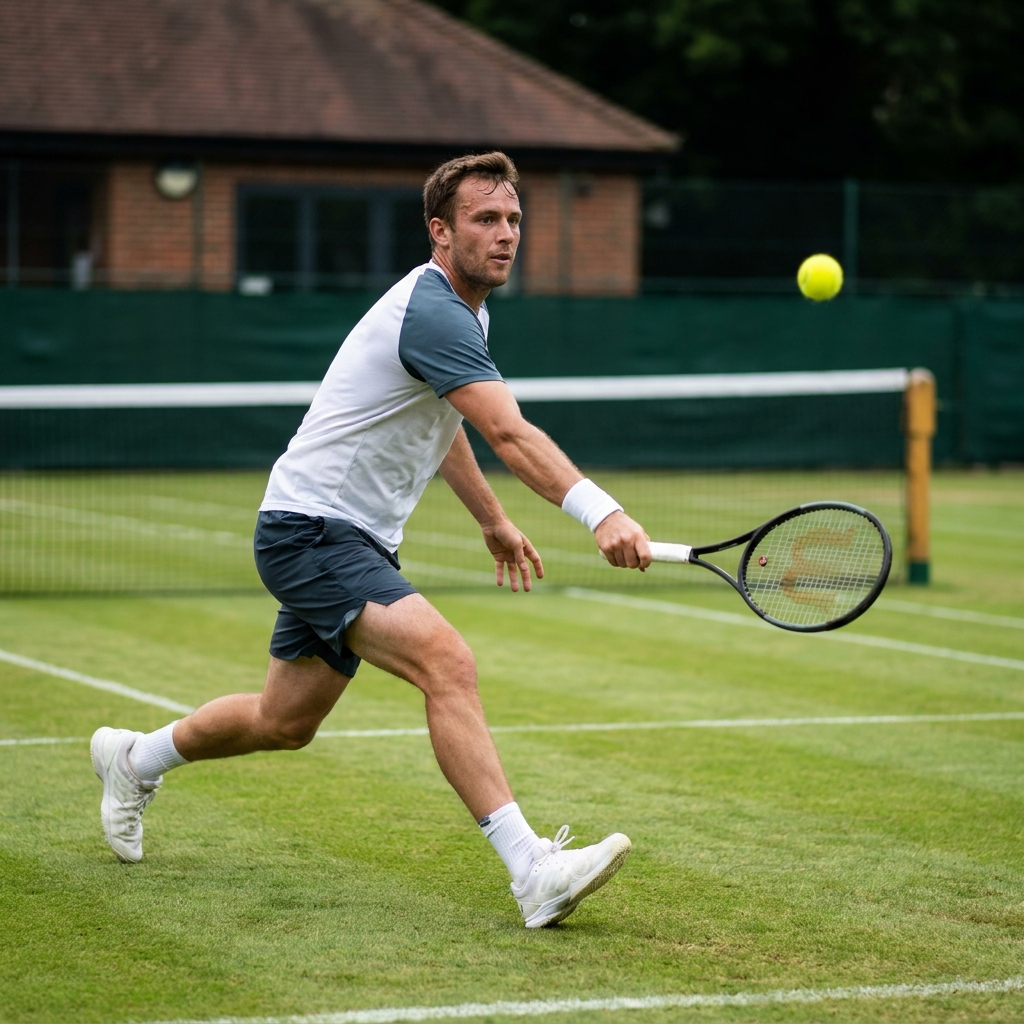
The player stands in square stance and the coach stands in front of the player. The coach feeds balls behind the front leg. The player has to put body weight on back leg and hit forehand while maintaning balance.
Ability to balance own body weight is a skill that top players show during every tournament. Being able to hit from back leg is a first step to counter really difficult balls while playing against advanced opponents. Not too many players spend enough time on this skill so it should not be surprising that forced errors are so common in modern fast-pace tennis.
In this drill the player works on balance and body weight transfer. By feeding deeper balls the player is forced to bend the back leg more and put all body weight just on this leg. This is a demanding position for the body, so this aspect has to be practiced, to make sure that the player is able to perform it effectively without making mistakes. The coach should encourage their players to work on fitness off the court because many difficult positions in tennis require enormous body strength, flexibility, and awareness.
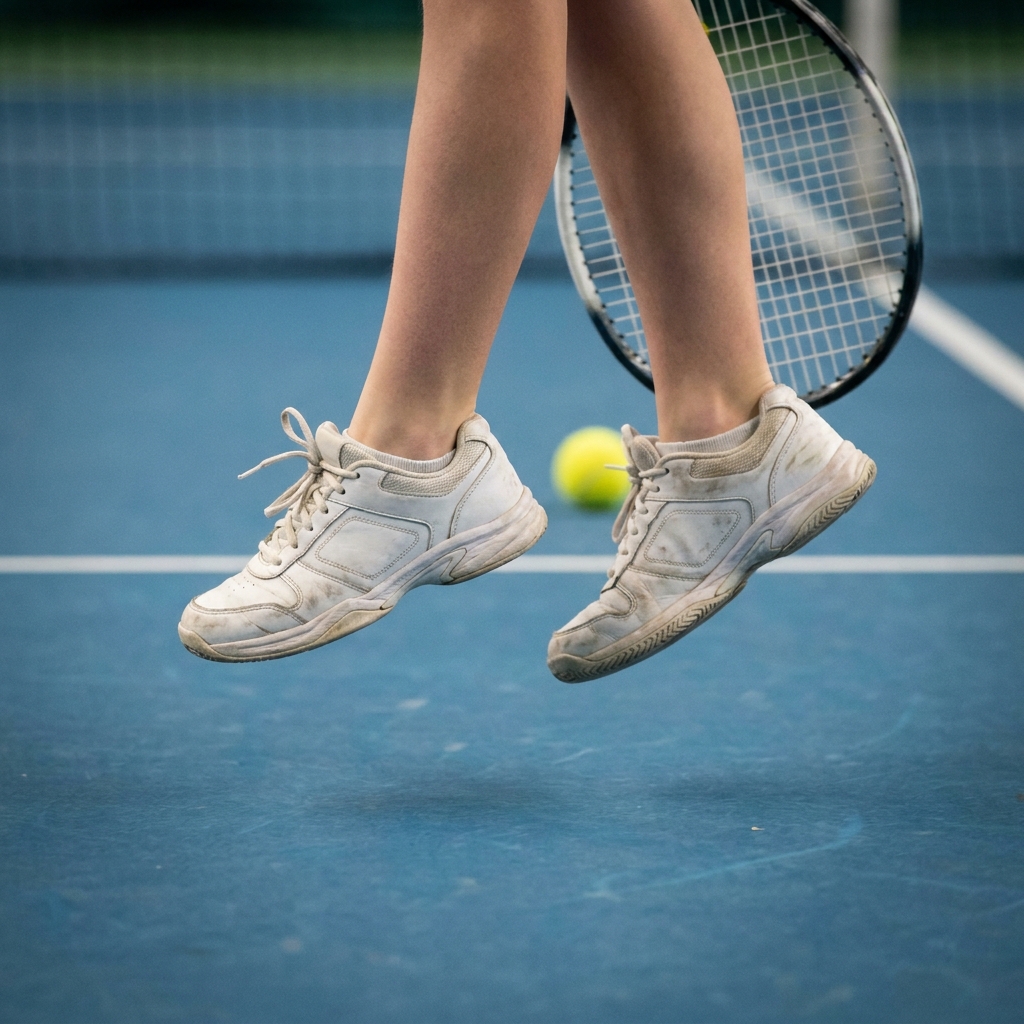
Indoor courts give players less time and less room. Help them sharpen their split step, shorten their swing and stay calm, and winter becomes a season of real progress.
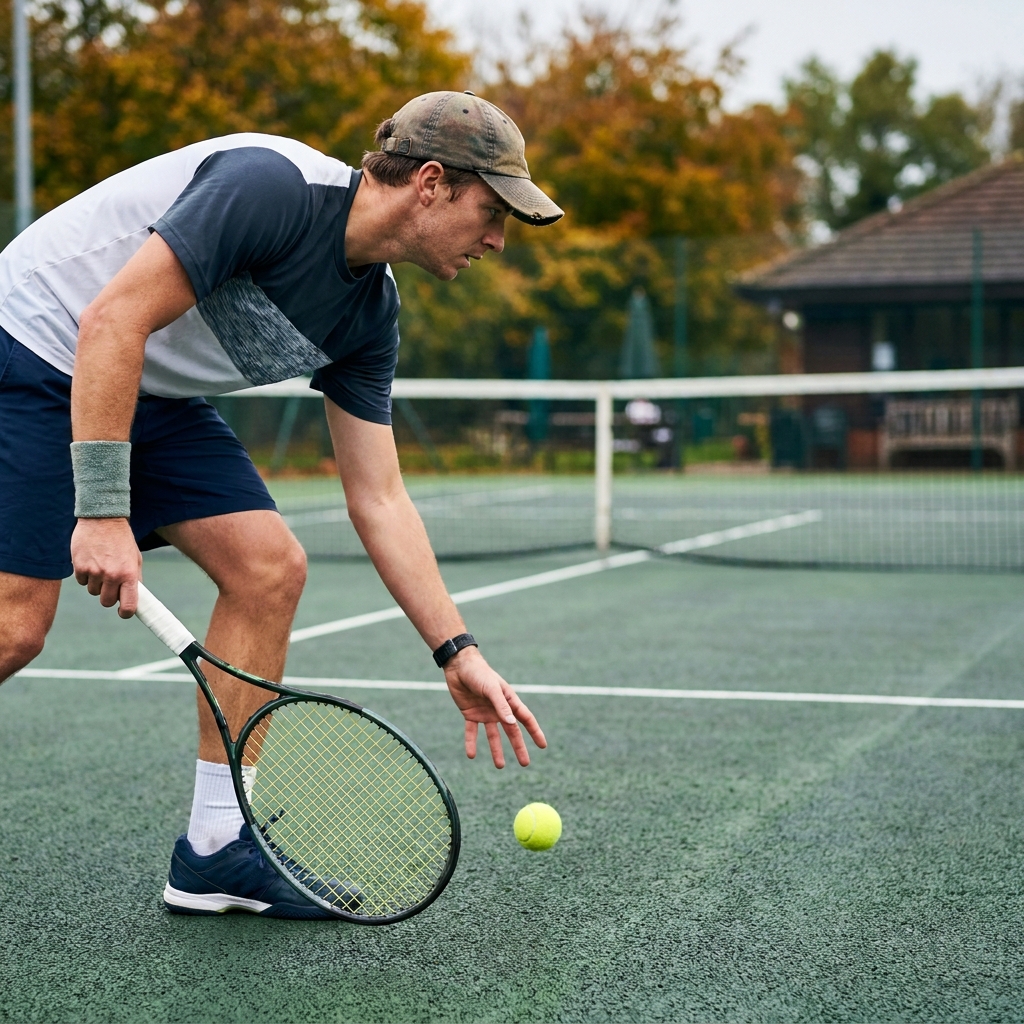
A tiebreak is a short sprint where every point is worth the same as a break of serve. The players who win them are rarely the ones who hit hardest. Here is how to coach the patterns, habits and scoreboard thinking that win the big points.
Most club players practise the serve on its own and then have no idea what to do with the ball that comes back. Serve plus one is the pattern that turns a good serve into a won point.


Register for FREE and get coaching tips, top drills, session and more every week!