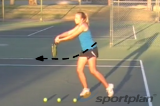
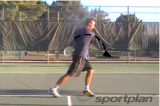
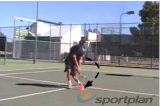
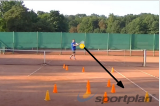
The player keeps tennis ball between the body and dominant elbow and the player imitates backhand stroke. The ball can't leave the body before the player “hits” backhand.
Being too far away from the ball is a common error on all levels of tennis performance. Players try to save the situation by reaching with the arms and racquet what results in weak and short responses. It is crucial to control our arms while working on backhand's technique.
This exercise focuses on the player arms' position. Tennis ball is tucked between the body and the elbow to help the player to “feel” the problem. If the player shadows and ball is released before point of contact, it simply means that arms are not in controlled position. The coach should explain to the player that he/she can't change arm's position during the stroke. After few attempts, coach should feed some balls to see the player's improvements with the ball.
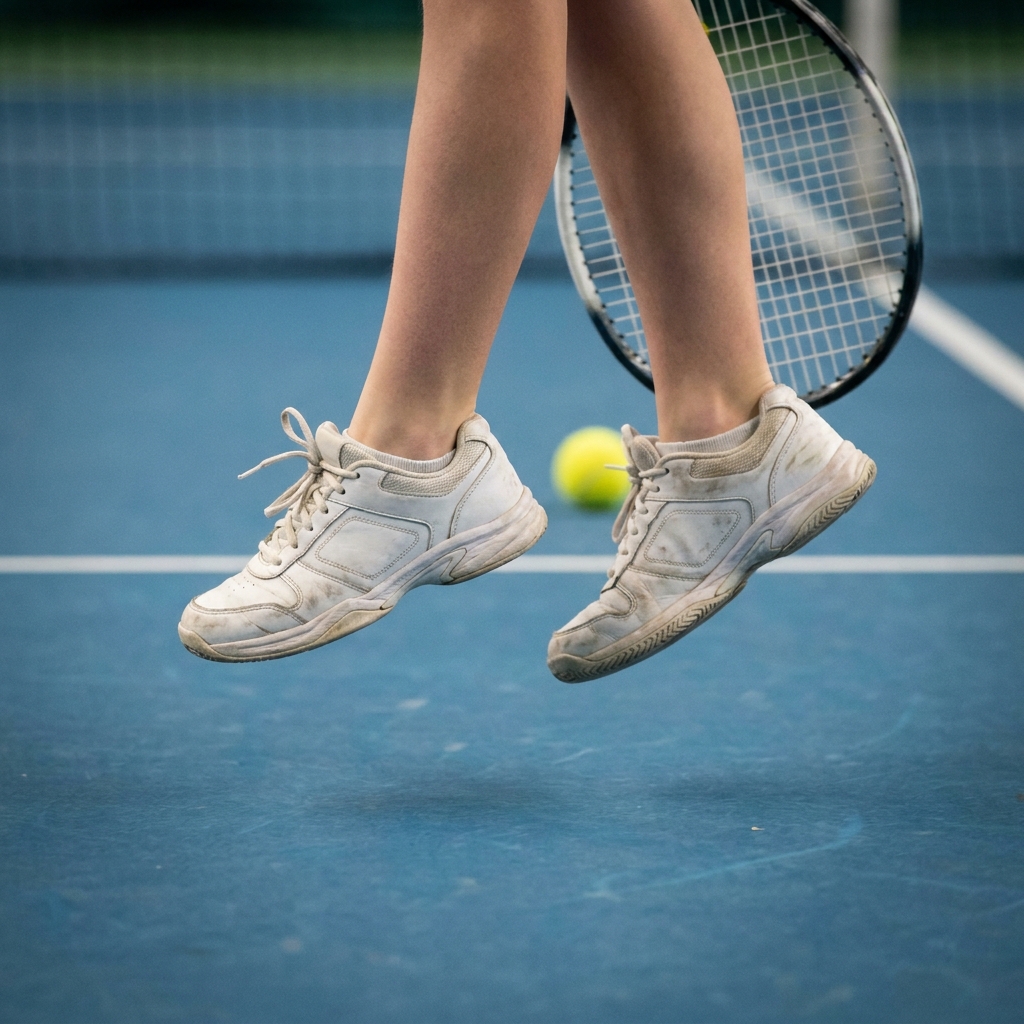
Indoor courts give players less time and less room. Help them sharpen their split step, shorten their swing and stay calm, and winter becomes a season of real progress.
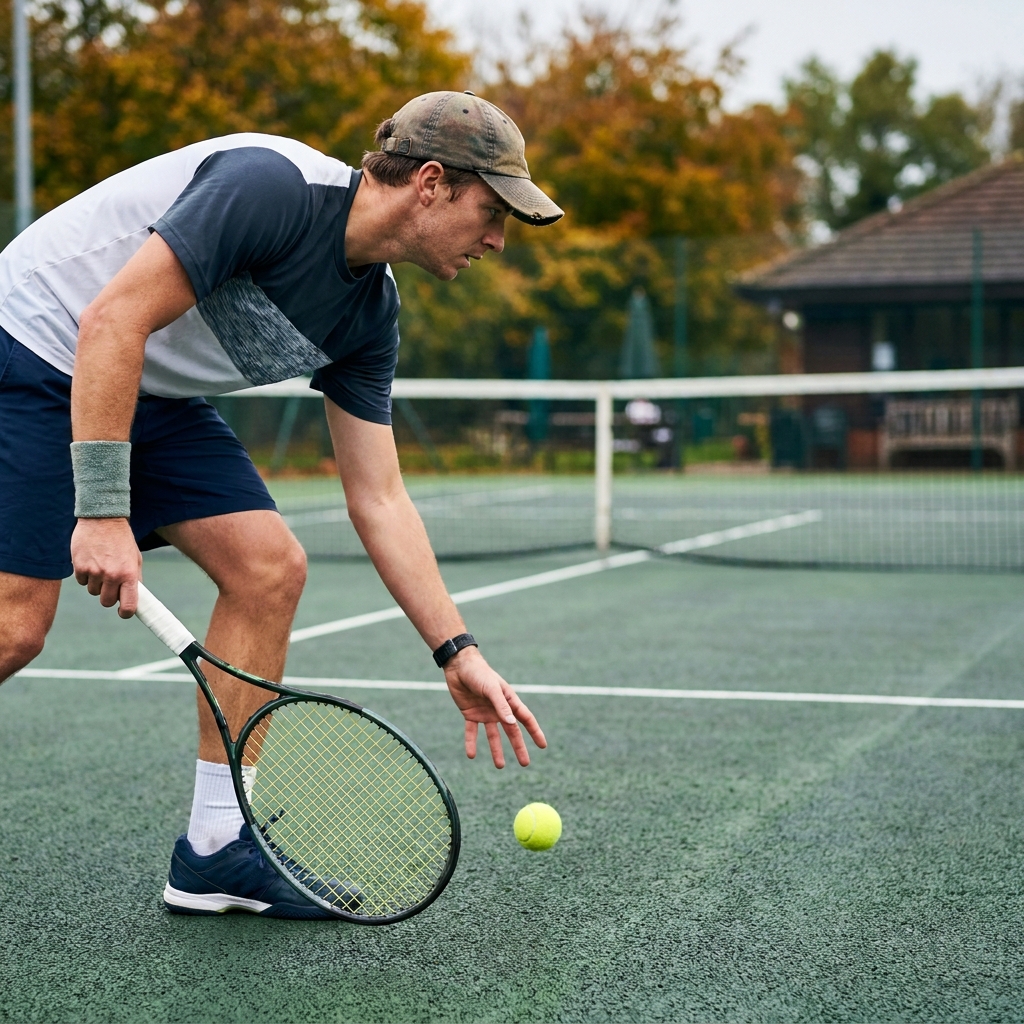
A tiebreak is a short sprint where every point is worth the same as a break of serve. The players who win them are rarely the ones who hit hardest. Here is how to coach the patterns, habits and scoreboard thinking that win the big points.
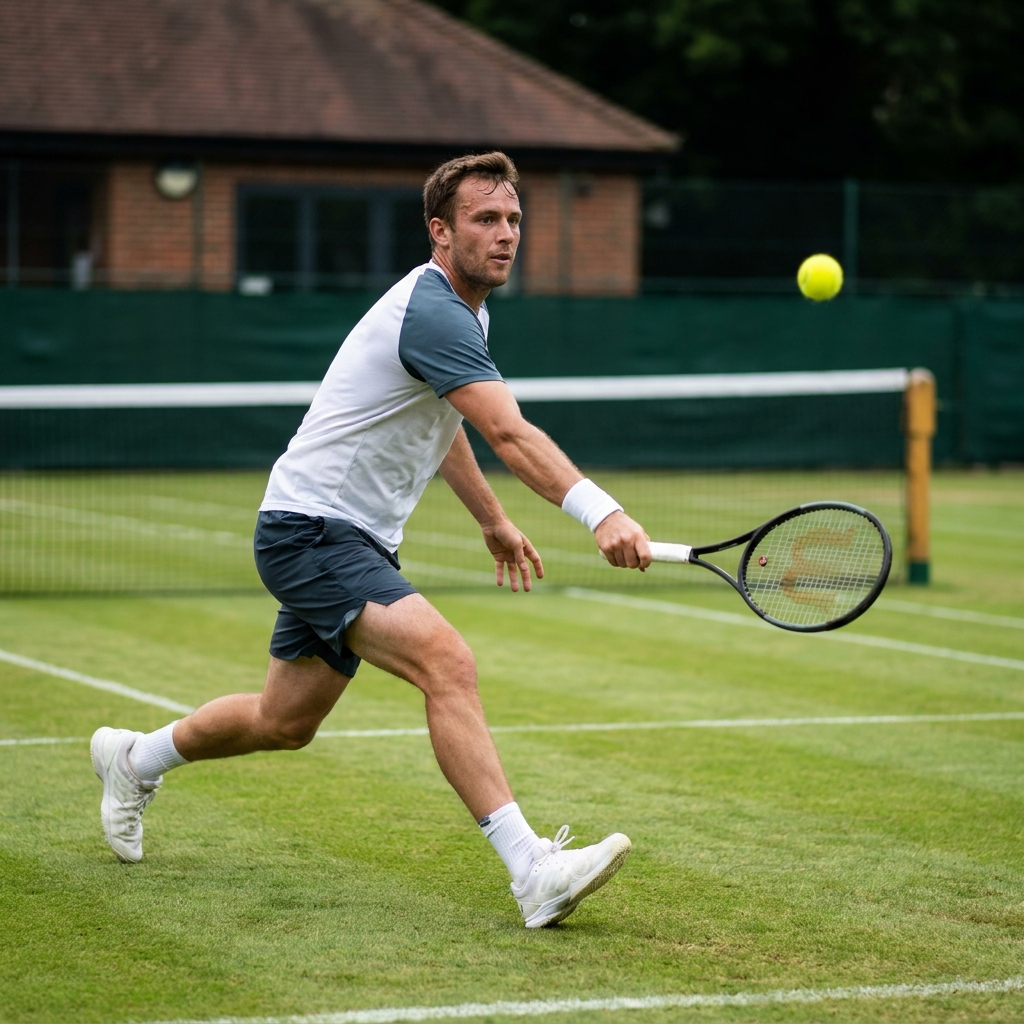
Most club players practise the serve on its own and then have no idea what to do with the ball that comes back. Serve plus one is the pattern that turns a good serve into a won point.


Register for FREE and get coaching tips, top drills, session and more every week!