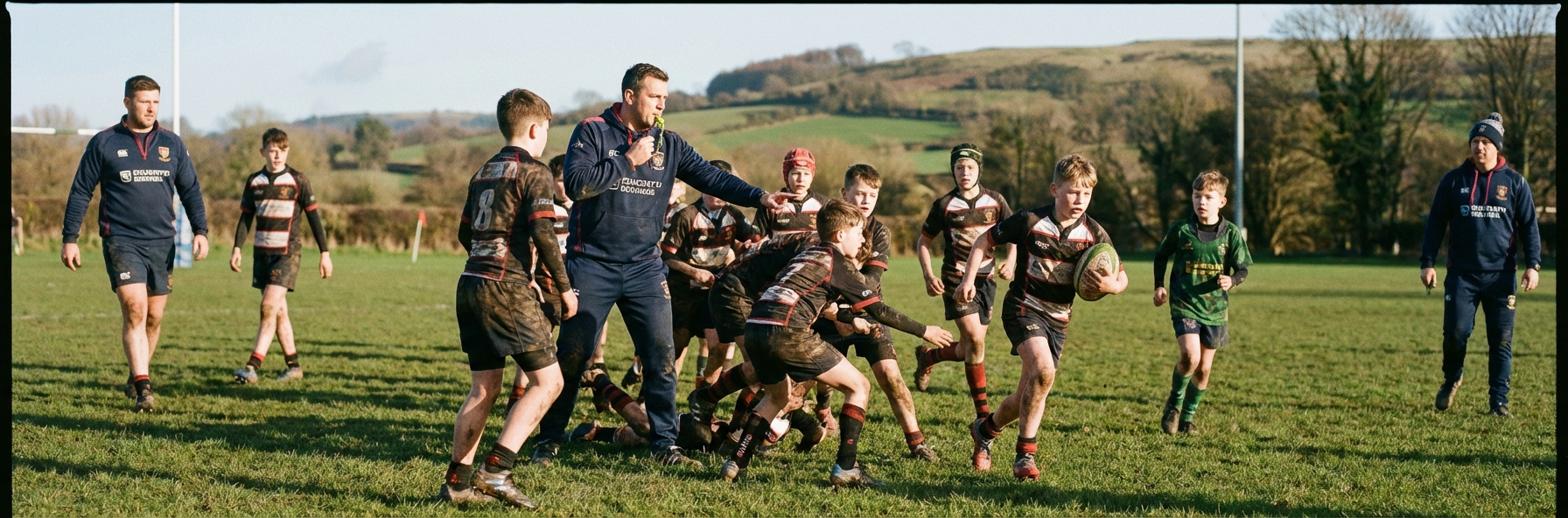
Rugby's approach to youth development has evolved significantly. The RFU's philosophy - player-centred, development-driven, competition-supported - puts the wants and needs of young people at the heart of every decision. This isn't about producing winning junior teams. It's about developing excellent adult players and lifelong participants.
Understanding this philosophy transforms how we coach, select, and measure success with young players.
Player-Centred: What Does It Mean?
Player-centred development means decisions start with the individual player, not the team's immediate needs. What does this player need to develop? What experiences will help them grow? What's their current stage of development?
Player-centred principles:
- Individual development goals alongside team goals
- Playing time decisions based on development needs
- Feedback focused on personal progress
- Recognition that players develop at different rates
This doesn't mean ignoring team success. It means understanding that the best teams emerge from environments where individuals are developing well.
Development-Driven: Skills Before Systems
Young players need to build technical foundations before tactical complexity. A 12-year-old who can execute a pressing system but can't pass accurately off both hands hasn't been well served by their coaching.
Development priorities by age:
Under 12: Fundamental movement skills, basic catching and passing, evasion, introduction to contact in controlled environments.
Under 14: Technical refinement, introduction to positional play, understanding of space and support, safe tackling technique.
Under 16: Tactical understanding, set piece fundamentals, game management concepts, physical development.
Under 18: Position-specific skills, advanced tactical concepts, leadership development, preparation for senior rugby.
Competition-Supported: Results in Context
Competition matters. Young players need to experience winning, losing, pressure, and the emotions that come with matches. But competition serves development, not the other way around.
Healthy competition culture:
- Results don't define success - development does
- Every player gets meaningful game time
- Post-match discussions focus on learning, not blame
- League positions matter less than individual growth
The question after every match should be "What did we learn?" not just "Did we win?"
Late Specialisation
Early positional specialisation limits development. Young players should experience multiple positions to build complete game understanding. The lock who has played in the back row understands breakdown better. The centre who has played fly-half understands decision-making under pressure.
Practical approach:
- Rotate positions throughout the season
- Don't lock players into roles before U16
- Encourage multi-sport participation
- Value versatility as a development asset
The Coach's Role
In player-centred environments, coaches facilitate rather than dictate. They create learning opportunities and guide discovery rather than simply delivering instructions.
Facilitation techniques:
- Ask questions before giving answers
- Let players solve problems through games
- Provide feedback that promotes thinking
- Create environments where mistakes are learning opportunities
Effective questions:
- "What did you notice there?"
- "What could you try differently?"
- "Why did that work?"
- "What are your options in that situation?"
Managing Talent Identification
Early talent identification is unreliable. Research consistently shows that predicting adult performance from junior performance is difficult. Late developers frequently outperform early achievers.
Healthy identification practice:
- Keep pathways open for late developers
- Don't de-select based on current ability alone
- Value attitude and coachability alongside talent
- Remember that physical maturation affects performance
Relative age effect - where players born early in the selection year are over-represented in elite programmes - remains a challenge. Be aware of birthdate bias in your selections.
Creating Enjoyment
Players who enjoy rugby keep playing rugby. Dropout happens when the experience becomes negative - too much pressure, too little playing time, too much adult ego in children's sport.
Enjoyment factors:
- Varied, engaging training sessions
- Meaningful involvement in matches
- Positive relationships with coaches and teammates
- Sense of personal progress and achievement
- Appropriate level of challenge
Ask your players regularly: "Are you enjoying training? What would make it better?"
Key Coaching Points
- Put the player's development at the centre of every decision
- Build technical foundations before tactical complexity
- Use competition to support development, not define success
- Delay positional specialisation
- Keep pathways open for late developers
- Create environments where enjoyment drives retention

 sportplan_rugby