The line break is rugby's moment of creation. When an attacker breaks through the defensive line, the game changes. Defenders scramble, space opens up, and tries become possible. Understanding how to create and exploit line breaks separates good attacking teams from great ones.
Research shows that ball movement speed, decoy runners, and attacking depth all correlate strongly with line break success. Here's how to develop these elements.
Reading the Defence
Line breaks don't happen by accident. They happen when attackers identify and exploit defensive weaknesses. Before the ball is even played, your players should be reading the defence.
What to look for:
- Spacing gaps between defenders
- Defenders not watching the ball
- Slow realignment after previous phases
- Dog-leg in the defensive line
- Defenders drifting or shooting early
The fly-half and inside centre are primary readers, but every back should be scanning the defence and communicating what they see.
Ball Speed: The Ultimate Weapon
Quick ball movement stretches defences and creates opportunities. When the ball moves faster than defenders can shift, gaps appear. Slow ball lets the defence reorganise and compress.
Creating ball speed:
- Quick ruck ball - two-second target from tackle to pass
- Flat, accurate passing - no looping deliveries
- Receivers running onto the ball, not standing
- Early decision-making - know what you'll do before you receive
Training ball speed: Touch restrictions force quick decisions. Two-touch games demand fast hands. One-touch combinations reward preparation and anticipation.
Depth and Tempo
Attacking depth creates time to read and react. Standing flat gives defenders easy targets. Running from depth onto the ball creates momentum and decision-making time.
Depth principles:
- First receiver: deep enough to have options
- Second receiver: depth to attack the line at pace
- Outside backs: timing runs to hit holes at speed
Tempo variation keeps defenders guessing. Fast ball stretches them wide. Slow ball allows forwards to reload. Varying tempo through a phase of play prevents defensive settling.
Decoy Runners and Manipulation
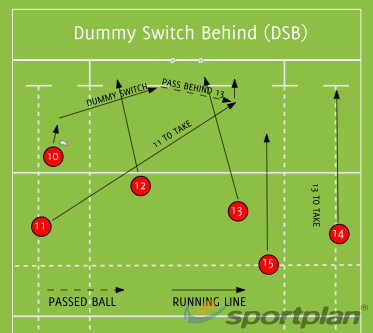
Decoy runners manipulate defensive focus. A well-timed dummy run pulls a defender out of position, creating space for the actual ball carrier.
Effective decoy principles:
- Decoys must look like genuine threats
- Run hard toward a specific defender
- Time the run to draw eyes before the pass
- Be ready to become the receiver if the defender doesn't bite
Dummy lines - predetermined decoy patterns - create consistent manipulation. But they require precision to work. A mistimed dummy run becomes a collision with your own ball carrier.
Exploiting the Break
Making the line break is only half the job. Exploiting it - turning the break into points - requires support running and decision-making.
Ball carrier responsibilities:
- Scan for support immediately after breaking the line
- Draw the covering defender before passing
- Communicate with support: "With you!" "On your left!"
- Score if clear; pass if drawing cover creates a better opportunity
Support runner responsibilities:
- Anticipate the break - don't wait for it to happen
- Position for the offload or continuation
- Stay behind the ball carrier until needed
- Communicate your presence and position
Set Piece Strike Moves
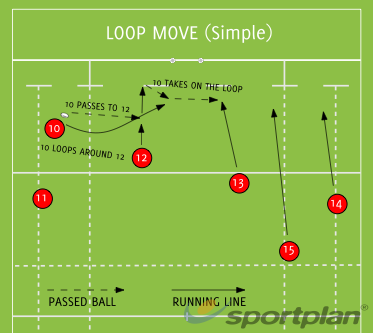
Set pieces provide the best platform for pre-planned line break attempts. The defence is organised, but so is your attack. Strike moves - practised combinations from scrum or lineout - target specific defensive vulnerabilities.
Effective strike move elements:
- Clear trigger and timing for all involved
- Multiple threats that force defensive decisions
- Flexibility to abort if the defence reads it
- High first-phase success rate in training
Don't over-complicate strike moves. Simple combinations with precise execution beat elaborate plays with room for error.
Phase Play: Breaking Tired Defences
Defences tire through phases. Repeated realignment, collision, and chase fatigues both body and concentration. Line breaks often come in phases 4-8 when defenders make mistakes.
Building phase pressure:
- Maintain width through phases
- Vary point of attack
- Keep ruck speed high
- Watch for defenders dropping off concentration
Key Coaching Points
- Read the defence before the ball is played
- Ball speed creates gaps - train for fast hands
- Depth creates time - run onto the ball
- Decoys manipulate focus - time them precisely
- Exploit breaks with support and communication

 sportplan_rugby