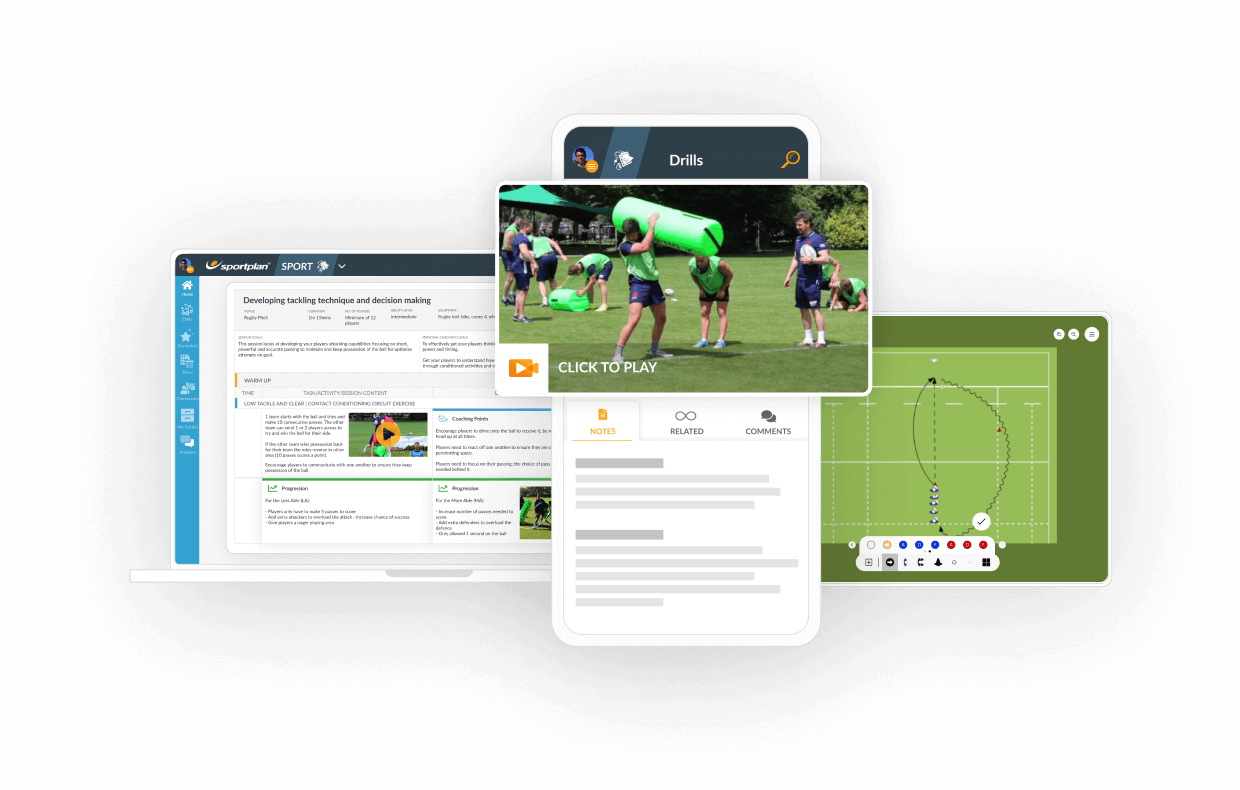
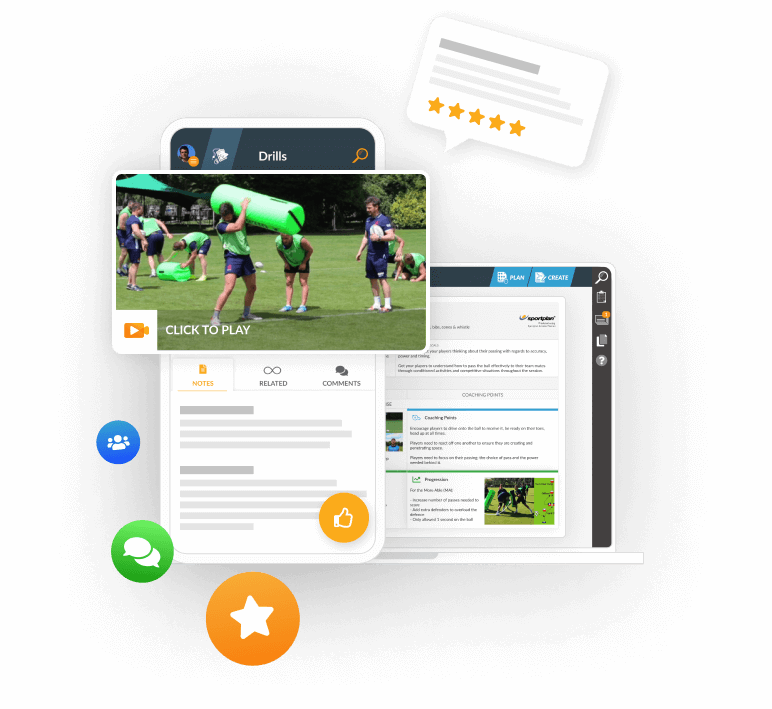
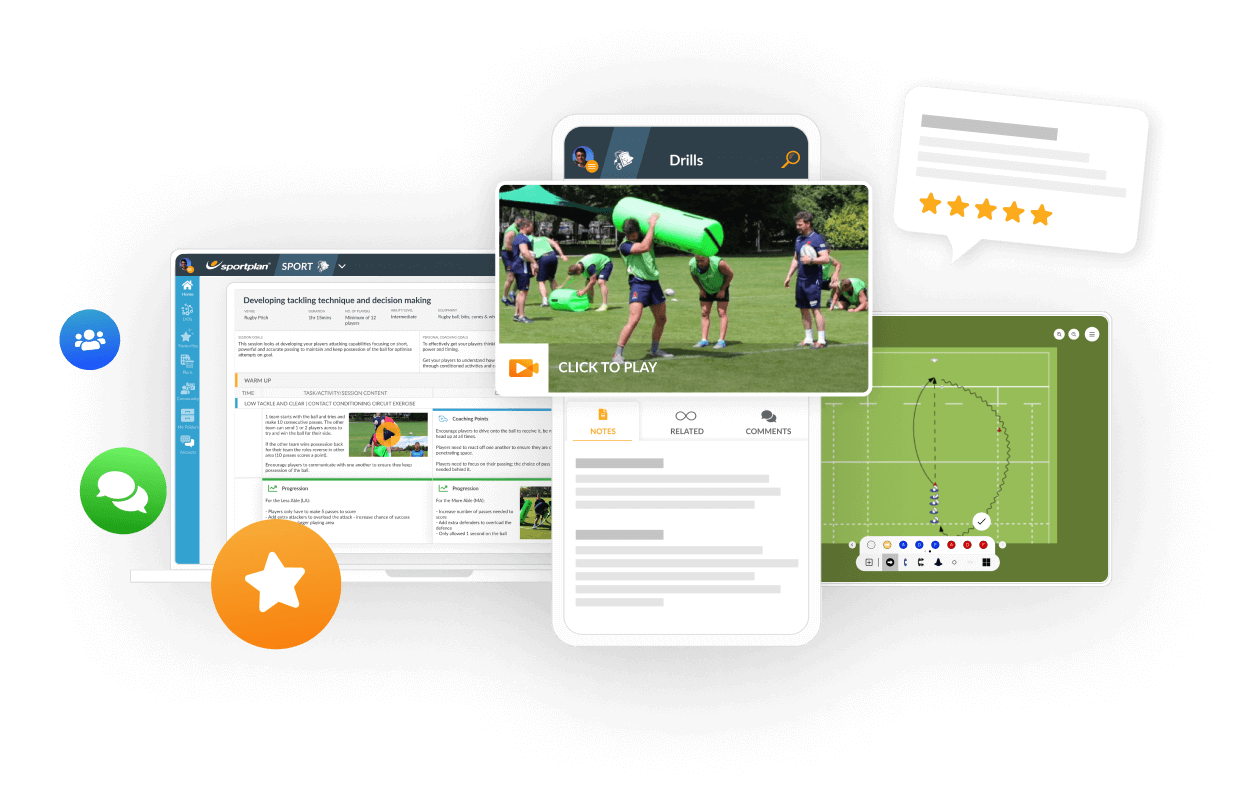
A coach or scrum half feeds a ball carrier who should be running onto the ball.
The ball carrier should run towards the tackle sausage and use footwork and a hand off to move past the tackle sausage towards the first two tackle bags.
The player should aim to hit the gap between the two tackle bags and power beyond the contact.
Those two players then drop the bags and follow the original runner in support.
The ball carrier then hits the bag, goes to ground and looks to lift the ball up to one of his support players.
The next player then hits the last tackle bag, goes to ground and presents the ball.
The next support player clears away the bag to secure the ball.
This drill works on a number of skills (running onto the ball, hand off, footwork and hitting gaps, communication and support, clearing out a ruck) in continuity which means its more game realistic and trains players to not only perform the individual skills, but also to be thinking about how the skills link together and what their next job is.
Your players should never catch the ball standing still.
Players should run an S line using footwork, rather than straight towards the gap, which is easy for defenders to read.
Always remind your team to hold the Ball with two hands.
Support players should be communicating with the ball carrier to tell him where they are and what to do. For example: “Im on your left” or “go to ground”.
Players should have low body height when clearing out the ruck.
in more ways than one
The offload is one of rugby's most devastating weapons when executed well, turning a defensive collision into a second-phase attacking opportunity. This article breaks down the technique, timing, and training progressions coaches need to develop confident offloaders at every level.
Defensive line speed is the single most important factor in shutting down attacking opportunities before they develop. This guide explores how to coach your defensive line to push up as a connected unit, communicate under pressure, and deny the opposition time and space.
The teams winning in 2026 aren't taking risks - they're grinding out territory with relentless pick-and-go phases. Here's how to coach it.