







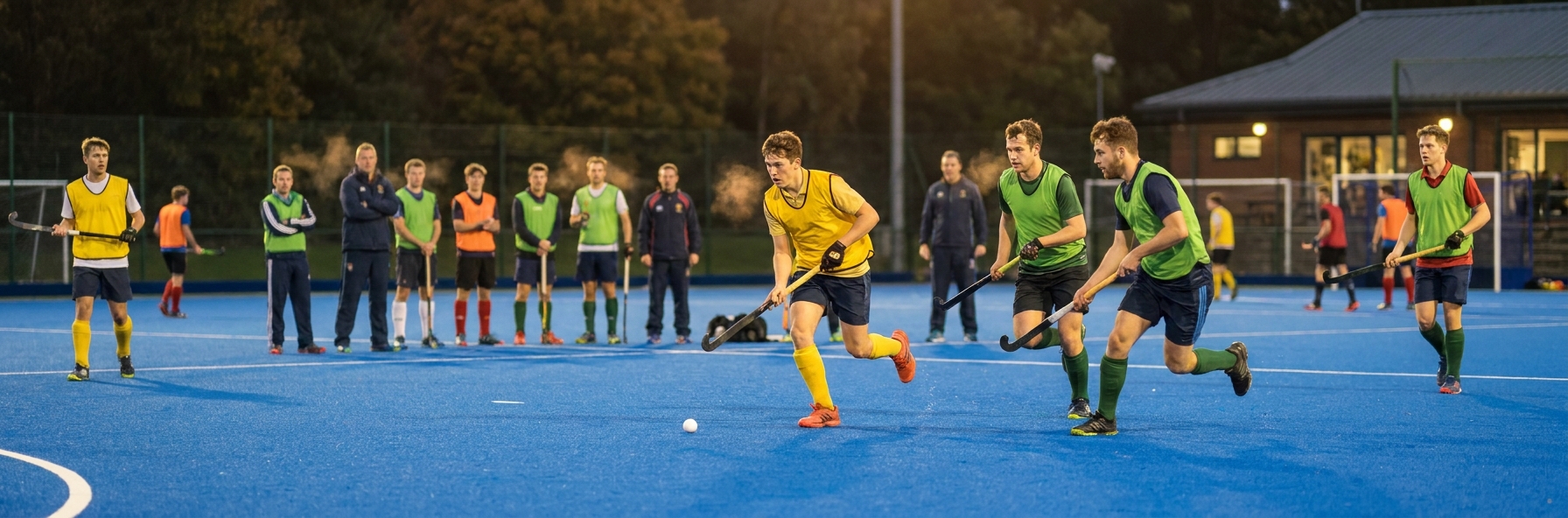
The league season is now under way, and the fitness your players built over the summer is already starting to slip. With one training session a week, a match on Saturday and the dark evenings drawing in, there is rarely time for separate running sessions. By December many club sides are noticeably slower in the last quarter than they were in September.
The answer is not more laps. It is making every minute of training count by building conditioning into ball work, and managing match minutes so players can work hard when they are on the pitch.
Why Fitness Drops Off In-Season
In pre-season, training is often dedicated to fitness. Once matches start, sessions understandably switch to tactics, set pieces and skills, and the high-intensity work disappears. At the same time, players pick up knocks, miss weeks through work or illness, and recover more slowly after matches on heavy autumn pitches.
Hockey is a game of repeated short sprints, quick changes of direction and recovery. If training does not include that kind of intensity, players lose it, even if they are still playing every weekend.
A Four-Step In-Season Plan
Step One: Keep intensity, cut volume. In-season, short and sharp beats long and steady. Aim for blocks of high-intensity work with the ball, rather than long runs that leave legs heavy for Saturday.
Step Two: Condition with the ball. Use small-sided games and running-based passing drills so players work hard while practising skills. Smaller areas and fewer players mean more touches and more sprints.
Step Three: Manage the week. Keep the hardest work early in the training session and early in the week. Use the session closest to match day for lighter, sharper work and set pieces.
Step Four: Use rolling substitutions on purpose. Hockey allows unlimited rolling substitutions, so plan short, intense shifts rather than leaving players on until they tire. A player who knows they will come off soon can press harder and sprint back further.
How to Train It
Warm-up: Passing on the move in small groups, building from a jog to three-quarter pace with sprints after each pass.
Technical: Receive and run drills where players work for 30 to 45 seconds, then rest while a partner works. Keep the quality of the touch high even as players tire.
Decision-making: Small-sided possession games with a clear work-to-rest ratio, such as two minutes on and one minute off, rotating teams.
Game: A 4v4 or 5v5 end zone game in a compact area. Rotate players on and off frequently to mirror rolling substitutions on match day.
Key Coaching Points
- Prioritise intensity over volume once the season starts.
- Build fitness into ball work so skills and conditioning improve together.
- Keep technique sharp when tired; fatigue is when touches and tackles go wrong.
- Schedule the hardest work away from match day.
- Plan substitutions so players can work flat out during short shifts.
- Check in with players about knocks and recovery, and adjust the load for them.
Recommended Drills


VIEW ALL CONDITIONED GAMES DRILLS
Frequently Asked Questions
How do hockey players stay fit during the season?
Most club players stay fit through a mix of high-intensity training with the ball, matches and, where possible, one short extra session a week such as interval running or a gym session. The key is keeping some sprint and repeat-effort work in training once the season starts.
Should I still do running sessions with my team in-season?
Short, sharp running can help, but separate running sessions take time away from the ball. For teams that train once a week, building conditioning into small-sided games and passing drills is usually the better use of time.
How long should a hockey player stay on before being substituted?
There is no fixed rule, and it depends on position, fitness and the size of your squad. Many coaches find short shifts help players work harder, especially in midfield. Agree a rough rotation before the match and adjust as the game unfolds. Check your league's rules on squad size and when substitutions are allowed.

 sportplan_hockey









