







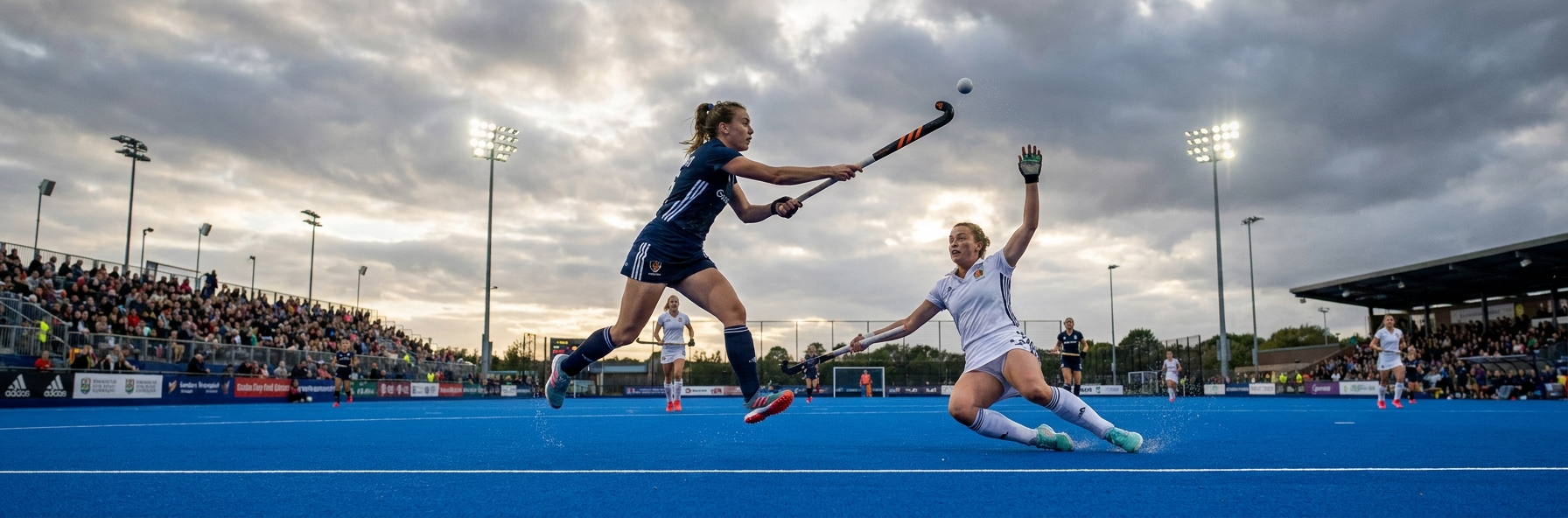
The FIH Rules of Hockey 2026, effective from 1 March, contain a small wording change that has a big impact on the aerial game. Opponents may now approach the receiver once the ball has been touched, provided the initial 5m of space to allow safe reception has been respected. The rule was trialled in the Pro League's 2024/25 season and is now standard at every level.
On paper it sounds modest. In practice it changes the calculation behind every overhead pass your team makes. The receiver has less time, the approacher has more permission, and the receiving zone is now a contested area rather than a protected one. Teams that have not adjusted are losing possession on aerials they used to win comfortably.
What Has Actually Changed
The previous rule required a clear 5m around the receiver until the ball was controlled - meaning the ball had to be brought safely to the ground before any opponent could close in. The new wording shifts the moment of release. As soon as the receiver makes first contact with the ball, the 5m bubble dissolves, and opponents can approach.
This rewards anticipation over passivity. The receiver who stands waiting for the ball to settle is now a target. The receiver who steps to the ball, controls it early and moves immediately wins the contest. The same applies to the player chasing the aerial - hesitation costs you the metre that used to be guaranteed.
The bottom line: the 5m space is now a launch pad for both teams, not a sanctuary for the receiver.
Coaching the Receiver
Three habits separate good aerial receivers from those who concede possession under the new rule.
Step to the ball, don't wait for it. The receiver should move forward into the descending ball rather than holding ground. This shortens the window between first touch and second touch, and it puts the receiver's body between the ball and the closest opponent.
First touch is half a metre forward. Cushioning the ball straight down used to work. It doesn't any more, because the chasing opponent is already moving as your stick makes contact. The new instruction is to take the ball half a metre into space - usually diagonally forward - so your second touch is already a pass or a dribble away from pressure.
Eyes up before the ball lands. The receiver must already know where the next pass is going before the aerial arrives. Train this by calling out a colour or a number while the ball is in the air; the receiver has to look up, register, and then play the ball there with one touch.
Coaching the Approacher
The approacher is the new tactical role created by this rule. Previously, the closest defender to a falling aerial waited politely outside the 5m. Now they prepare to engage the instant the ball is touched.
The approach angle matters as much as the speed. A flat-on approach gives the receiver an easy way past. A curved approach - arriving on a diagonal that cuts off the most dangerous outlet - forces the receiver to play backward or sideways, which is often what your team wants.
Train approachers to start their movement when the ball reaches the top of its arc, not when it lands. By the time first contact is made, they should already be at speed and inside that 5m bubble. Timing is everything; arrive too early and you concede the free hit, arrive too late and the receiver has gone.
Adapting Your Restart Plays
Many teams use aerial passes as restart plays from 16s, free hits in the defensive third, and outlets from goalkeepers. All of these need review.
The receiver under your aerial restart used to be the safest player on the pitch. Now they are likely to be tackled within a second of receiving. Add a second support runner within 3m of the expected landing zone, give them a clear role as the immediate outlet, and rehearse the bounce pass that turns a contested aerial into a clean second-phase attack.
Goalkeepers throwing or hitting long aerials from inside the circle should also rethink target selection. Picking the player in space is no longer enough - pick the player in space who has a teammate within 3m. Otherwise you are simply giving the opposition a contested 50/50 in your own half.
Key Coaching Points
- The 5m is gone the moment the ball is touched - train for contested receptions
- Receivers step forward into the ball, never wait under it
- First touch goes into space, not straight down
- Approachers start moving at the top of the arc
- Every aerial needs a support runner within three metres

 sportplan_hockey









