








The Boring Bits Are the Important Bits
Starting a hockey club is far more admin than coaching. The first matches are the easy, exciting part. What keeps a club alive - and, more importantly, keeps your players safe - is the unglamorous groundwork: affiliating to the right bodies, setting up your money properly, locking in pitch time, and putting safeguarding in place before a single junior turns up. Get those foundations right and everything else follows.
This guide is a practical, ordered checklist for founding a hockey club in England. Work through it roughly in sequence. A few items - notably safeguarding - are not optional and should be sorted before your first junior session, not bolted on later. None of it is difficult, but it is easy to forget a step, so treat the list below as your master plan.
The Founding Checklist - Work Through It in Order
- Form a committee: Recruit at least a chair, a secretary and a treasurer. You cannot run a club, open a bank account or affiliate without named, accountable people.
- Adopt a constitution: A short written document setting out the club's name, aims, membership rules, how the committee is elected and how money is handled. England Hockey and most banks will expect one.
- Open a club bank account: In the club's name, with at least two signatories. Never run club money through a personal account - it exposes you personally and fails any audit.
- Affiliate to England Hockey: Affiliation is the gateway to leagues, insurance and the official structures. You will usually join via your county or regional association.
- Arrange insurance: Public liability and personal accident cover, typically arranged through England Hockey affiliation. Confirm what is and is not covered before you play.
- Secure pitch time: Book a regular astro (water-based or sand-dressed) for training and home matches. Pitch availability is the single biggest constraint on most new clubs.
- Put safeguarding in place: Appoint a welfare officer, get coaches DBS-checked, adopt a safeguarding policy and codes of conduct - before your first junior session.
- Join a league: Apply to enter a local league through your county or regional association so you have a fixture programme to play.
- Recruit players and volunteers: Build a squad and, just as importantly, the volunteers - umpires, team managers, a fixtures secretary - who keep it all running.
- Set up registration and subs: A clean way to register members, capture consent and emergency contacts, and collect membership subs and match fees.
Step 1: Your Committee and Constitution
A club is a group of people who have agreed how they will run things together, and that agreement needs to be written down. Start by finding a handful of committed people to form a committee - at minimum a chair, a secretary and a treasurer. These are the named, accountable roles that banks, England Hockey and your league will all ask for. Do not try to do everything yourself; spreading the load is what stops founders burning out in the first season.
Then adopt a constitution. It sounds grand, but it is just a short document setting out the club's name and aims, who can be a member, how the committee is elected, how decisions are made and how the club's money is controlled. Plenty of model constitutions exist that you can adapt. A clear constitution is also usually a requirement if you later want to be recognised as a Community Amateur Sports Club (CASC), which brings tax advantages worth looking into once you are established.
Step 2: Money - Bank Account and Budget
Open a bank account in the club's name with at least two signatories before any money changes hands. Running club funds through a treasurer's personal account is a common early mistake and a serious one - it muddles personal and club money, exposes the individual, and makes the accounts impossible to audit. A proper club account, controlled by your constitution, protects everybody.
Build a simple first-year budget. On the income side you have membership subs, match fees and any sponsorship or fundraising. On the cost side, pitch hire will dominate - more on that below - alongside affiliation and league fees, insurance, umpires, balls and bibs. Many founders cover the first few weeks personally and then set subs at a level that makes the club self-funding. Our guide to setting hockey subs and match fees walks through pitching those numbers so you cover costs without scaring people off.
Step 3: England Hockey Affiliation and Joining a League
England Hockey is the governing body for the sport in England, and affiliating to it is what turns a group of friends with sticks into a recognised club. Affiliation is normally arranged through your county or regional association, and it is the gateway to several things at once: it is usually how you arrange your insurance, it gives you access to the leagues and competition structures, and it connects you to the official fixtures and results systems. You cannot enter most leagues without it.
Joining a league is a separate step that runs alongside affiliation. You apply through your county or regional association to enter a division appropriate to your standard - new clubs typically start in the lower leagues and work up. Get in touch with your local association early, because league entry usually has a closing date well before the season starts, and you will want a confirmed fixture programme before you recruit in earnest.
Step 4: Securing Pitch Time
Hockey is played on an astro pitch, and pitch access is the single biggest practical constraint on a new club. Water-based and sand-dressed astros are in high demand and often controlled by schools, leisure centres or established clubs, so good slots get booked up fast. Approach every venue within reach early, be flexible on times - a less popular midweek evening or an early Sunday slot is far easier to get than prime Saturday afternoon - and try to lock in a regular training slot plus a home-match slot for the season.
Budget realistically: pitch hire is the recurring cost that dominates a hockey club's finances, and rates vary widely by venue and time of day. Get firm quotes in writing before you commit your members to subs, because the pitch bill is what your subs mostly pay for.
Step 5: Safeguarding - Do This Properly
If your club has any junior members - and most new clubs do - safeguarding is not a box to tick at the end. It is a legal and moral responsibility that must be in place before your first junior session. Done well it is straightforward; the point is to do it deliberately rather than hope it sorts itself out. Here is a real mini-checklist to work through.
Safeguarding Mini-Checklist - Before Your First Junior Session
- Appoint a welfare officer: Hockey's safeguarding lead is usually called the club welfare officer. Appoint a named, suitable adult who is the first point of contact for any welfare concern. England Hockey expects affiliated clubs with juniors to have one.
- DBS-check everyone in a regulated role: Coaches, team managers and anyone regularly supervising under-18s should hold a current enhanced DBS check obtained through the club. Keep a record of who is checked and when their check expires.
- Adopt a safeguarding policy: A written policy covering how concerns are reported, who to, and how records are kept. England Hockey provides templates and guidance you can adapt - use them.
- Get the right training: Your welfare officer and ideally your coaches should complete recognised safeguarding training. It is not onerous and it makes everyone far more confident about handling a concern.
- Agree codes of conduct: Short, signed codes for coaches, players and parents that set out expected behaviour and where the lines are. They prevent most problems before they start.
- Sort communication and consent: Capture parental consent and emergency contacts for every junior, and make sure adult-to-child messaging is open and visible rather than private and direct.
That last point - registration, consent and child-safe communication - is where a lot of well-meaning new clubs get sloppy, defaulting to an open WhatsApp group with parents, players and coaches all mixed together. For a junior section that raises genuine safeguarding and data-protection concerns. This is one area where a purpose-built club platform earns its place: online registration that captures each member's details, emergency contacts and consents properly and in line with GDPR, with child-safe communication where guardians have visibility of their child's chats, all run from a phone. Teamo handles registration and child-safe communication in exactly that way, and it carries a safeguarding pedigree - it was nominated as best safeguarding app by the Head of Safeguarding at England Athletics. (In the interest of being straight with you: Teamo is made by the Sportplan team behind this site, and the safeguarding nomination was specifically for England Athletics, not England Hockey - cited here only because it speaks to how the tool was built.) Whatever you use, the principle stands: capture consent and emergency contacts properly, and keep adult-to-child messaging visible.
Step 6: Recruiting Players and Volunteers
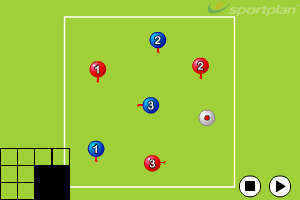
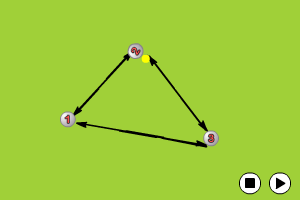
With the foundations laid, you can recruit in earnest. Use local schools, social media, community noticeboards and word of mouth, and run a couple of open "come and try" sessions to bring people in without commitment. New and returning players both respond well to a clear, welcoming first session - which is where having some structured practices ready pays off.
Recruiting volunteers matters just as much as recruiting players, and it is the part founders most often neglect. You need umpires, team managers, a fixtures secretary and helpers, or the whole load falls on two or three people who quietly burn out. Ask directly, give people defined roles, and share the jobs around. If you are building a junior section in particular, our guide to running a junior hockey team covers the season end to end, from sessions to selection to parents.
Step 7: Keep the Admin Off Your Plate
Once the club exists, the day-to-day admin begins: collecting subs, asking who is available, chasing match fees and getting clear messages out to the right people without losing them in a noisy group chat. This is exactly the load that wears volunteers down, so it is worth setting up properly from the start rather than improvising. Our guide to hockey club communication covers how to keep messages organised and reach the right groups without spamming everyone.
With the foundations in place and the admin under control, the evenings go back into coaching. When you are ready to plan those first sessions, browse the full Hockey drills library for hundreds of practices sorted by skill and age group.
Frequently Asked Questions
How do I start a hockey club?
Start by gathering a small founding group and forming a committee with at least a chair, a secretary and a treasurer, then adopt a simple written constitution so the club has agreed rules. Open a club bank account in the club's name, affiliate to England Hockey (which is usually how you arrange insurance and access leagues through your county or regional association), secure regular access to an astro pitch for training and home matches, and put safeguarding in place from the very first session - a welfare officer, DBS-checked coaches and a safeguarding policy. Then recruit players and volunteers. Most clubs are up and running within a season once these foundations are set.
Do you need a DBS to coach hockey?
If you coach, manage or regularly supervise under-18s, you should hold a current enhanced DBS check obtained through the club, and England Hockey expects affiliated clubs to have DBS-checked adults in those roles. A DBS check on its own is not a safeguarding policy - it sits alongside a welfare officer, recognised safeguarding training and codes of conduct. Coaching adults only does not normally require a DBS, but most clubs run junior sections, so in practice the coaching team is DBS-checked. Always confirm the current requirement with England Hockey, as rules are updated periodically.
What is a safeguarding officer?
A safeguarding officer - often called a club welfare officer in hockey - is the named adult responsible for protecting children and vulnerable adults at the club. They are the first point of contact for any welfare concern, make sure coaches are DBS-checked and trained, keep the safeguarding policy and codes of conduct up to date, and know how to report a concern to the local authority or the police when needed. England Hockey requires affiliated clubs with junior members to appoint one, and the role should be filled before your first junior session, not after.
How much does it cost to set up a hockey club?
It varies widely by area, but the recurring cost that dominates a hockey budget is astro pitch hire, which can run from roughly £40 to £90 an hour depending on the venue and time of day. On top of that you will budget for England Hockey affiliation and league entry fees, insurance (usually arranged through affiliation), umpires, a starter set of balls and bibs, and a goalkeeper kit if you can stretch to it. Many founders cover the first few weeks personally, then set membership subs and match fees so the club becomes self-funding. Costs change over time, so get current quotes from your pitch provider and county association before you commit.

 sportplan_hockey









