







You Said Yes. Now What?
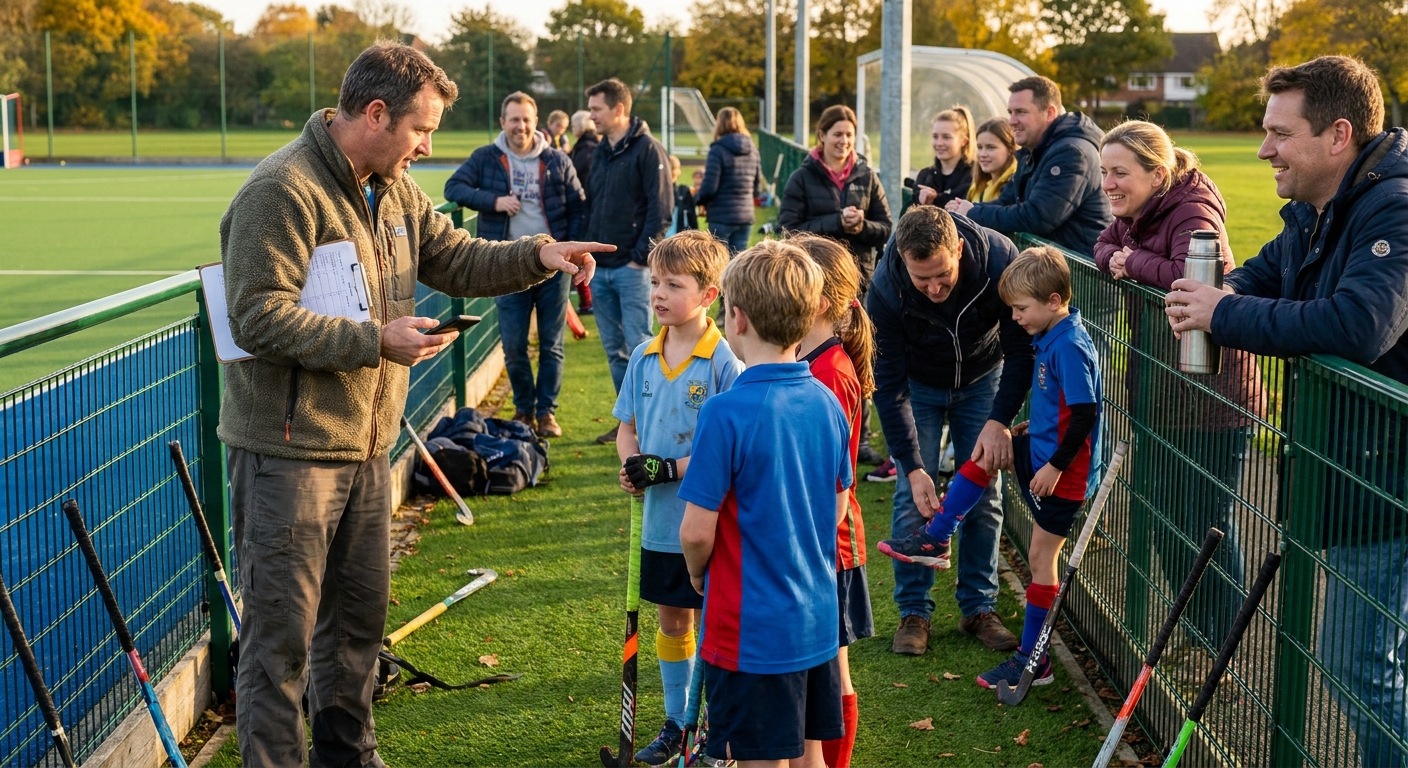
Maybe your child started playing and a coach left. Maybe the club put out a desperate call and you were the one who did not step back quickly enough. However it happened, you are now running a junior hockey team for the first time, and the to-do list feels enormous. Take a breath: thousands of volunteers do this every season with no special background, and the children turning up just want to run around, hit a ball and have fun with their mates.
This guide walks you through a first season in field hockey, start to finish - getting set up, sorting kit, planning your first sessions, managing parents, booking astro and fixtures, and keeping on top of the money. The aim is to get you organised without burying you in admin, because the admin is exactly what wears volunteers out and the coaching is the bit that should keep you coming back.
Getting Set Up: The England Hockey Basics
If you are running a team within an existing club, most of the formal set-up is already done for you - the club is affiliated to England Hockey, holds insurance, and has a safeguarding officer. Your job is to plug into that, not to recreate it. Find out who your club welfare officer is on day one; they are your first call for anything safeguarding-related.
If you are genuinely starting something new - a fresh junior section, or a club from scratch - then affiliation, insurance and a constitution do need sorting, but keep it light at this stage and lean on the people who have done it before. We have a full starting a hockey club checklist that walks through affiliation, insurance, committee roles and the rest in order, so you are not trying to hold it all in your head at once. For most new team leads, the honest answer is: you are joining an existing structure, so ask what already exists before you build anything.
Two non-negotiables, however lightly you approach the rest. First, helpers: never run a junior session alone. You want at least one other adult present, both for safeguarding and for simple practicality when a child is upset or hurt. Second, DBS and safeguarding: if you are in regular unsupervised contact with under-18s, you will need an enhanced DBS check (your club arranges it through England Hockey) and a short safeguarding awareness course. It is routine, it is usually free for volunteers, and it is the foundation of parents trusting you with their children. Keep it light, but do not skip it.
Kit for Juniors: What They Actually Need
One of the first questions every parent will ask is "what does my child need to buy?" Keep your answer simple and reassuring, because hockey can look expensive and it does not have to be at junior level. The essentials are short:
The Junior Kit Essentials
- A stick, sized to the child: junior sticks come in lengths by height, not by brand. Do not let families over-spend on a first stick while a child is still growing - a sensible mid-range junior stick is plenty.
- Shin pads: proper hockey shin pads, not football ones, as the ball is hard and comes in low.
- A gum shield: treat this as non-negotiable. A boil-and-bite one is inexpensive and protects teeth from sticks and balls.
- Eye protection for short corners: a hockey-approved face mask or goggles is strongly recommended for juniors and is often required when defending short corners. Worth flagging early.
- Astro trainers: grippy trainers suitable for the water-based or sand-based surface you play on - not studded boots, not worn-out school plimsolls.
- Goalkeeper kit: helmet, body armour, leg guards and kickers. Almost every club provides this as shared equipment - do not ask families to buy it. Make sure yours is clean, fits, and is offered to anyone willing to go in goal.
For the team itself, you need surprisingly little to run a good session: a bag of balls, a set of cones, and bibs in two colours. Most clubs already have this; if not, it is a small one-off cost that the whole season shares.
Planning Your First Sessions
The single best thing you can do for early sessions is keep them busy and fun. Juniors learn through games and lots of touches on the ball, not through standing in queues. Aim for a simple shape every week - a lively warm-up game, a couple of skill practices, and a small-sided game to finish - and resist the urge to over-coach. Plenty of small games, plenty of goals, plenty of laughter.
You do not need to invent any of this. Our hockey session plan template gives you a ready-made structure to drop drills into, and the junior drills guide is full of age-appropriate practices. Here are two reliable starters that work with almost any age and ability:
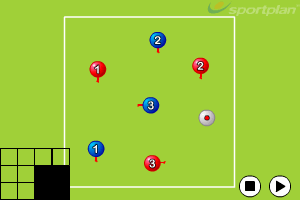
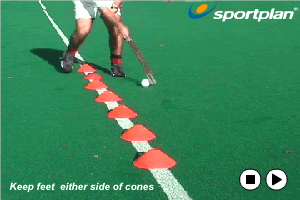
Browse the full Hockey drills library when you want more, sorted by skill so you can build a session around whatever the group needs that week.
Managing Parents
Parents are not the enemy - they are your volunteers-in-waiting, your lift-givers and your sideline supporters - but a new coach can find them daunting. The trick is to set expectations early and communicate clearly. At the start of the season, tell parents how you will share information, what time to arrive, what kit is needed, how subs work, and what supportive sideline behaviour looks like. Most issues come from uncertainty, not bad intentions.
The recurring frustration, almost universally, is communication scattered across a dozen channels - a text here, an email there, and a group chat that buries the one message that mattered under fifty that did not. Keeping everything in one calm, predictable place is the biggest favour you can do yourself and the parents. Our guide to club communication goes into the how in more detail.
Fixtures, Astro Slots and the Weekly Logistics
Once matches start, a new layer of logistics appears: booking and paying for astro slots for training, getting fixtures arranged and confirmed, and making sure everyone knows where to be and when. Astro time is precious and usually your biggest cost, so guard your slot, start on time and have a plan so none of it is wasted.
Fixtures in hockey run through England Hockey's Game Management System (GMS), which is the official record for fixtures, results and league tables. Our guide to hockey fixtures and GMS explains how it works and how to keep your players in the loop when a time or venue changes - which happens more often than you would like. Confirming availability for each fixture, then telling everyone the final details, is where a lot of a manager's week quietly disappears.
The Money and Admin, Without Drowning
You do not need to be an accountant, but you do need a clear, honest picture of the money. Your costs are mainly astro hire and England Hockey affiliation, plus small amounts for balls, cones and shared kit. Cover them with a modest sub - weekly, monthly or termly - plus a match-fee on game days, set so the season roughly breaks even rather than turning a profit. Keep a simple record of what comes in and goes out, and review your subs once a season against your real costs. Our guide to hockey subs and match fees covers how to pitch them fairly.
Here is where the admin can either run itself or slowly eat your evenings. Tracking availability, collecting subs and match fees, taking registrations and keeping parents informed are four separate jobs, and trying to do them across a spreadsheet, a payment app and a WhatsApp group is how volunteers burn out. A purpose-built club app pulls all of it into one mobile-first place: who is available this Saturday, who has paid, everyone's registration and emergency contacts, and your messages - run from your phone, with the system doing the chasing rather than you. Teamo does exactly this and is free for up to 25 members, which covers most junior teams; in fairness, it is made by the Sportplan team behind this site, so weigh that and try it alongside the alternatives before you commit. The point is not the brand - it is that one tidy system beats four messy ones, and that change alone hands you back your evenings for coaching.
Your First Month: A Sensible Order to Tackle It
- Week 1 - Safety and people: confirm your DBS and safeguarding are in hand, line up at least one helper, and get the club welfare officer's contact saved.
- Week 2 - Set up the basics: confirm your astro slot, gather balls, cones and bibs, and check the goalkeeper kit fits and is offered around.
- Week 3 - Get organised: collect registrations, emergency contacts and consent, and pick one place to communicate with parents so nothing scatters.
- Week 4 - Money and rhythm: set your subs and match fees honestly against real costs, and settle into a simple weekly session shape you can repeat.
That is genuinely most of it. Build a calm rhythm in the first month and the rest of the season looks after itself. For more on the team-management side once you are up and running, our team selection and availability guide helps with the weekly who-plays decision, and the wider Hockey coaching and club guides hub has everything from positions to drills to the admin you are now learning to love. Welcome to running a team - it is more rewarding than the to-do list makes it look.
Frequently Asked Questions
What do I need to start coaching a junior hockey team?
Less than you think. You need somewhere to play (usually an astro slot booked through a local club or school), a set of sticks and balls, some cones and bibs, and a simple plan for your first few sessions. On the people side you need at least one other adult to help, a way to take registrations and emergency contacts, and a DBS check plus basic safeguarding awareness if you will be in regular unsupervised contact with under-18s. You do not need a coaching qualification to start, though England Hockey's introductory courses are well worth doing once you are up and running.
Do hockey coaches need a DBS check?
If you are in regular, unsupervised contact with children as a coach or team manager, yes - you should hold an enhanced DBS check, and your club will arrange it through England Hockey's safeguarding process. It is normal, it is free or low-cost for volunteers, and it sits alongside a short safeguarding awareness course. Keep it light but do not skip it: a club that takes safeguarding seriously is one parents trust. If you are only ever helping out alongside a checked coach, your club will tell you what is needed.
What kit do junior hockey players need?
The essentials are a junior stick sized to the child, shin pads, a gum shield and astro trainers. A gum shield should be treated as non-negotiable. For matches and any short-corner work, eye protection (a face mask or hockey-approved goggles) is strongly recommended and often required for juniors. Goalkeepers need full protective kit - helmet, body armour, leg guards and kickers - which clubs almost always provide as shared equipment rather than asking families to buy. Encourage families to start with the basics and not to over-spend on a first stick while a child is still growing.
How much does junior hockey cost to run?
Your two big costs are astro hire and England Hockey affiliation, with smaller amounts for balls, cones, bibs and the odd bit of shared kit. Astro slots are usually the largest line by far. Most teams cover it with a small weekly or monthly sub plus a match-fee on game days, set so the season roughly breaks even rather than turning a profit. Keep a simple record of what comes in and goes out, set subs honestly against your real costs, and review them once a season. A shared club app makes collecting and tracking that money far less painful than a spreadsheet and a WhatsApp group.
How do I manage parents in junior hockey?
Set expectations early and communicate in one place. At the start of the season, tell parents how you will share information, what time to arrive, what kit is needed, how subs work and what supportive sideline behaviour looks like. Then keep all of it in a single channel rather than scattering it across texts, emails and a noisy group chat. Most parents simply want to know where to be and when, and to feel their child is safe and included. Clear, calm, consistent communication heads off the large majority of issues before they start.

 sportplan_hockey









