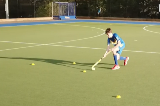
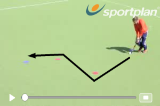
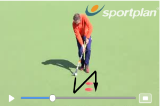
attacker attempts to outrun defender
attacker wins by getting through red gate before being tackled, and with the ball under control.
attackers are then given a second option. Both blue and red gates available.
Defending starting positions can be altered, #1 , #2
Drill is set up to show the benifits of carrying the ball hard to space.
Carrying the ball as simply as possible (ie. no indian dribble) allows the attacker to look at the defender, as well as moving at a quicker speed
The attacker can now ascertain if the defender is over committing and vulnerble to a change of direction.
other types of deception can be used. eg prentending to check back but then continuing to accelerate away.
eg. "pointing at pressure" - turning the whole body to threaten the blue gate. this can commit the defender by "standing him up", then accelerate away to the red gate.

in more ways than one
 sportplan_netball



in more ways than one
sportplan_hockey

A few weeks into the league season, poor first touches are costing teams the ball. Coach body shape, scanning and receiving on the move to keep possession.

Pre-season fitness fades fast once the league starts. Build conditioning into ball work and use rolling subs well to keep your squad sharp all season.

The first weeks of the season decide whether a junior or new player sticks with adult hockey. Here is how to keep them safe, give them a clear job and build their confidence from the very first bully.