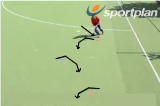
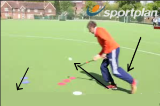
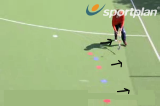
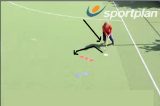
- This is an elimination lift, with a secondary touch taken in the air
- An advanced skill which makes a mid air interception much more difficult
- Allow the ball carrier the run in the same direction while moving the ball away and back around a defender
- Begin by having player move the ball at a slow pace, with the emphasis being put on the second touch
- Have the skill performed around a pole, so players know if they are moving the ball in time (in both directions)
- If the secondary touch is lacking control, put a bucket where you would like the ball to first bounce, and one slightly further out
- This will not only introduce a target to be aimed at, but will stop stray balls running off
- Perform the skill from right to left
- Introduce a passive defender

in more ways than one
 sportplan_netball



in more ways than one
sportplan_hockey

A few weeks into the league season, poor first touches are costing teams the ball. Coach body shape, scanning and receiving on the move to keep possession.

Pre-season fitness fades fast once the league starts. Build conditioning into ball work and use rolling subs well to keep your squad sharp all season.

The first weeks of the season decide whether a junior or new player sticks with adult hockey. Here is how to keep them safe, give them a clear job and build their confidence from the very first bully.