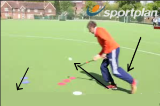
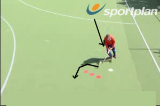
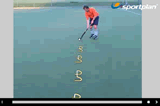
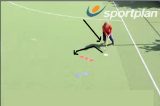
- Performing a running lift down the line
- Primary lift should be performed from standard playing position
- Secondary and tertiary lfits should be performed in a one handed carry position
- This will allow the ball to carried at a quicker pace
- The initial lift is performed from hockey position to protect the ball, and guarantee the initial lift
- The ball should be moved outside of the body and close to the line, making it difficult for a defender to get to the ball
- This will also increase the probability the ball will go out of play if a challenge is made
- The run should be arked so the defender cannot simply track the run in a linear fashion
- Introduce a passive defender to track the ball carrier, better recreating a game situation

in more ways than one
 sportplan_netball



in more ways than one
sportplan_hockey

A few weeks into the league season, poor first touches are costing teams the ball. Coach body shape, scanning and receiving on the move to keep possession.

Pre-season fitness fades fast once the league starts. Build conditioning into ball work and use rolling subs well to keep your squad sharp all season.

The first weeks of the season decide whether a junior or new player sticks with adult hockey. Here is how to keep them safe, give them a clear job and build their confidence from the very first bully.