What Is a Back Row Attack and Why Does It Matter?
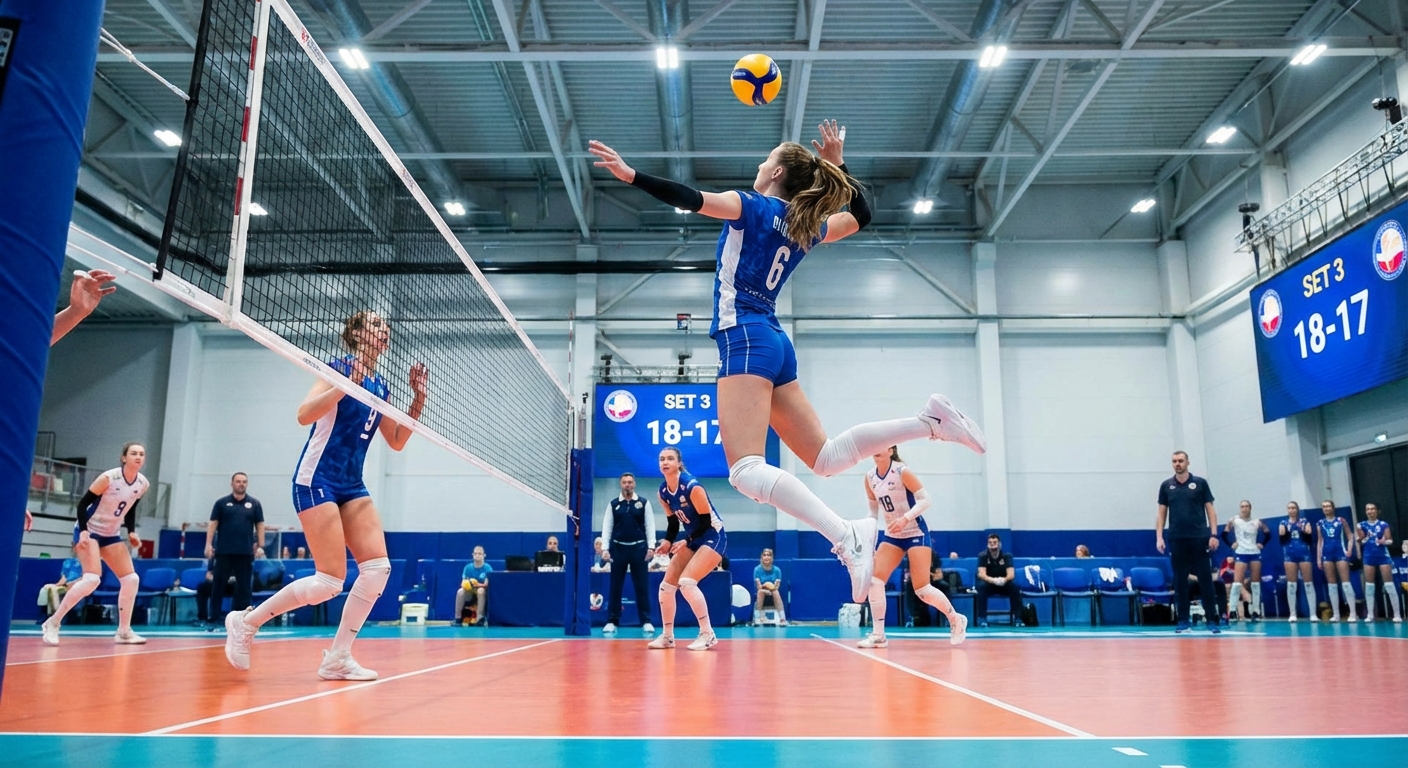
A back row attack is any attacking hit made by a player who is in one of the three back row positions (positions 1, 5, or 6). The defining rule is that the attacker must take off from behind the three-metre line (also called the attack line or ten-foot line). The player may land inside the three-metre zone after the hit, but the last point of contact with the floor before takeoff must be behind the line. This constraint makes back row attacks more demanding technically, but also makes them significantly harder to block and defend.
In modern volleyball at every level above beginner, the back row attack has become an essential part of the offensive system. It solves a fundamental tactical problem: when a team's front row hitters are being neutralised by the opposing block, the back row attack provides an additional hitting option that the block cannot reach. Because back row attackers hit from further behind the net, blockers cannot time their jump effectively, and the ball crosses the net at a flatter, faster angle that is difficult to dig.
Understanding the 3-Metre Line Rule
The three-metre line rule is the foundation of back row attacking, and coaches must ensure every player understands it clearly. A back row player may not attack the ball above the height of the net if they have taken off from within the three-metre zone. The key phrase is "taken off from" - the player's last ground contact before jumping must be behind the line. If any part of the player's foot is touching or past the three-metre line at the moment of takeoff, the attack is illegal and the point is lost.
This rule creates the distinctive approach pattern for back row attacks. Whereas front row hitters typically use a three or four-step approach that begins at or near the net, back row hitters must begin their approach further back and time their jump so that takeoff occurs before the line. The athletic demands are therefore higher: the hitter needs more explosive power to reach a hitting height comparable to a front row attack, and the timing with the setter must be precise because the ball travels a longer distance to reach the hitter.
Common Rule Confusion
The most frequent confusion among young players is about landing. Landing inside the three-metre zone after a back row attack is legal. It is only the takeoff that must be behind the line. Coaches should clarify this early and often, because players who are worried about landing will pull up short on their approach, reducing their hitting power and effectiveness.

Approach Footwork: The Left-Right-Left Pattern
For right-handed hitters, the standard back row attack approach uses a left-right-left footwork pattern (mirror this for left-handers). The approach is longer and more explosive than a front row attack approach because the hitter needs to generate maximum horizontal and vertical momentum from a position further from the net.
Step 1: The Directional Step (Left Foot)
The first step is short and directional. It orients the body toward the target area and begins building momentum. The hitter should be watching the setter during this step, reading the set trajectory to adjust their approach angle.
Step 2: The Acceleration Step (Right Foot)
The second step is longer and faster. This is where the hitter commits to the approach and begins converting horizontal speed into vertical lift. The right foot plants aggressively, slightly ahead of the body's centre of gravity, creating the braking force that will redirect momentum upward during the jump.
Step 3: The Takeoff Step (Left Foot)
The left foot closes quickly to the right foot, and both feet plant together for the jump. This final plant must occur behind the three-metre line. The arms swing aggressively from behind the body to above the head, driving the hitter upward. The entire approach should feel like a controlled explosion - measured steps building to a powerful takeoff.
The Key Coaching Point
The most common error in back row approach footwork is starting too late or too close to the three-metre line. Players should begin their approach at least one metre behind the line, giving themselves room to accelerate through the final steps without worrying about the line violation. A useful marker in training is to place a piece of tape approximately one metre behind the three-metre line as the approach starting position.

Setter-Hitter Timing: The Critical Connection
The timing between the setter and the back row hitter is the most challenging aspect to develop. Unlike a front row set where the hitter is close and the timing window is forgiving, a back row set must travel a greater distance with higher precision. The ball must arrive at the right height, the right depth (behind the three-metre line), and the right tempo to meet the hitter at the peak of their jump.
The D-Ball (Position 1 Attack)
The D-ball is a back row attack from position 1 (right back). The set is typically high and to the right antenna area, behind the three-metre line. The hitter approaches from outside the court and attacks on an angle across the front of the opposing block. This is often the first back row attack teams learn because the approach angle is natural for right-handed hitters.
The Pipe (Position 6 Attack)
The pipe is a back row attack from position 6 (middle back). The set goes to the middle of the court, behind the three-metre line, and the hitter attacks straight ahead. The pipe is faster than the D-ball, with a lower set, and is extremely effective against teams whose middle blocker is slow to recover from front row blocking commitments. The timing is tighter - the hitter must begin their approach as the setter contacts the ball.
The A-Ball (Position 5 Attack)
The A-ball from position 5 (left back) is less common but increasingly used at higher levels. It is typically reserved for left-handed hitters or ambidextrous attackers who can approach from the left side and attack effectively. The set goes to the left of centre, behind the line.
Why Back Row Attacks Are Harder to Block
The physics of blocking a back row attack explain why this skill is so valuable. A front row blocker times their jump based on the hitter's approach. When the hitter is at the net, the blocker can jump simultaneously and create a wall at the top of the net. But when the hitter is three or more metres behind the net, the ball crosses the net at a flatter trajectory and the blocker's timing is disrupted. The ball arrives faster, lower, and at an angle that is below the typical blocking zone.
Additionally, the block has to be wider to cover the hitting angles available to a back row attacker. A front row hitter's angles are limited by their proximity to the net, but a back row hitter can hit sharp cross-court, line, or deep middle with roughly equal effectiveness. This means the opposing team must either commit more blockers (weakening their defence elsewhere) or accept that the block will be less effective against back row attacks.

Training Progressions for the Back Row Attack
Stage 1: Approach Without Ball (Shadow Work)
Players practise the left-right-left approach from behind the three-metre line repeatedly. The coach checks footwork, takeoff position relative to the line, arm swing mechanics, and body balance at the peak of the jump. Use tape or cones to mark the starting position and the takeoff zone. Players should complete 20-30 shadow approaches before touching a ball.
Stage 2: Standing Hit From Behind the Line
A coach or partner tosses the ball high to the hitting zone behind the three-metre line. The hitter stands, jumps, and hits. This removes the complexity of the approach and allows the player to focus on contacting the ball at the correct height and position. Aim for consistent contact before adding the approach.
Stage 3: Approach and Hit From Coach Toss
The coach tosses the ball high to simulate a back row set. The hitter executes the full approach and attacks. The coach adjusts toss height, depth, and lateral position to challenge the hitter's ability to adapt their approach. This stage typically requires the most repetitions because the timing between approach and toss must become instinctive.
Stage 4: Setter-Hitter Connection
A setter delivers actual back row sets from the net. The hitter and setter work together to develop timing, communication, and consistency. Begin with the D-ball (highest set, most time) before progressing to the pipe (lower, faster). Track the percentage of hittable sets and clean attacks to measure progress.
Stage 5: Back Row Attack in Offence
Integrate the back row attack into the team's offensive system during 6v6 play. The setter calls back row attacks as part of the regular offensive patterns. Initially, designate specific rotations where the back row attack is the primary option, giving the hitter maximum repetitions in a game-like context.
Session Structure: Introducing Back Row Attacks
Sample Session Plan (75 minutes)
Warm-Up: Approach Footwork (10 min)
Players line up behind the three-metre line and practise approach footwork in groups of four. Each player completes five approaches from position 1, five from position 6, and five from position 5. Coach checks takeoff position relative to the line and provides individual corrections.
Technical Development: Coach Toss Hitting (20 min)
Players rotate through three hitting stations (positions 1, 6, and 5). At each station, the coach tosses the ball to the back row hitting zone and the player executes the approach and attack. Focus on clean contact, directional control, and consistent takeoff behind the line. Each player gets 10 attempts per station.
Setter-Hitter Connection (20 min)
Setters and hitters work in pairs. A passer feeds the ball to the setter, who delivers back row sets. Start with the D-ball, progress to the pipe. Track successful connections (hittable set plus clean attack) as a percentage. Aim for 50% initially, building toward 70% over several sessions.
6v6 With Back Row Focus (25 min)
Full game play where a bonus point is awarded for any point scored from a back row attack. This creates the incentive for setters to use the back row option and for hitters to call for it. Coach pauses play to provide tactical feedback on when the back row attack was the right choice and when a front row option would have been more effective.

When to Introduce Back Row Attacks to Developing Teams
The back row attack requires a foundation of skills that must be in place before it is introduced. Players need a reliable attacking approach and arm swing, comfortable jumping mechanics, and the ability to hit with directional control from the front row. Setters need the ability to set accurately to different locations. Attempting to teach back row attacks before these prerequisites are met will result in frustration and poor habit formation.
For most club and school programmes, the back row attack can be introduced when players are comfortable with front row hitting across all positions and the team is running a basic 5-1 or 6-2 offence reliably. This typically corresponds to players aged 14-16 who have been playing competitively for at least two seasons. Start with the D-ball, which is the most forgiving in terms of timing and the most natural in terms of approach angle for right-handed hitters.
Common Mistakes and Corrections
Mistake 1: Approaching Too Late
The most common error is starting the approach after the set has already peaked. By this point, the hitter is rushing and will either jump too early (hitting the ball on the way down) or too late (hitting from below the ideal contact point). The fix is to begin the approach as the setter contacts the ball, not after the set is in the air.
Mistake 2: Drifting Into the Three-Metre Zone
Under the pressure of timing, many players unconsciously creep forward and take off from inside the three-metre zone. Use a line of cones placed 30 centimetres behind the three-metre line as a visual barrier during training. If the player's foot crosses the cones, the repetition does not count.
Mistake 3: Hitting Flat Instead of Down
Because the hitter is further from the net, the temptation is to hit the ball flat to generate speed. This leads to balls flying long out the back of the court. Teach hitters to contact the top of the ball and snap the wrist over, creating topspin that pulls the ball down inside the court despite the flatter trajectory.
Frequently Asked Questions
Can the libero execute a back row attack?
The libero is restricted from attacking the ball above the height of the net from anywhere on the court, not just in the front row. This means the libero cannot execute a back row attack in the traditional sense. However, the libero can attack the ball if it is entirely below the top of the net at the moment of contact, which occasionally occurs on low, fast sets. In practice, the libero's role is passing and defence, not attacking.
Which position should we start with when teaching back row attacks?
Start with the D-ball from position 1 (right back). This position offers the most natural approach angle for right-handed hitters, the highest set (giving the most time to develop timing), and the clearest sight line for the hitter to see the setter. Once players are confident with the D-ball, progress to the pipe from position 6, which is faster and requires tighter timing. The A-ball from position 5 should be introduced last.
How do I set a back row attack differently from a front row set?
The back row set must be placed deeper - behind the three-metre line - and typically higher than a front row set to give the hitter time to complete their longer approach. The setter should aim for a ball that peaks approximately two to three metres behind the three-metre line and at a height of three to four metres above the net for a D-ball. The pipe is set lower and faster, peaking approximately one and a half metres behind the line at two metres above the net. Consistent practice between setter and hitter is the only way to develop this connection.
How many back row attack options should my team have in its offence?
For developing teams, one reliable back row attack (the D-ball) is sufficient to create the tactical benefit of spreading the opposing block. As the team advances, adding the pipe gives a second option and makes the offence significantly harder to defend. Three back row options (D-ball, pipe, and A-ball) is typical at competitive club and collegiate level. The number of options should match the team's ability to execute them consistently - a well-run single option is better than three poorly-executed ones.