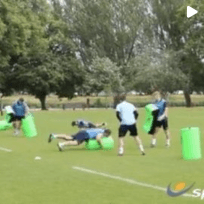
ONE SAMLL GRID (5MX5M) AND A LARGER OUTER GRID (20M X 20M) ATTACKING PLAYERS WITH BALL IN SMALL GRID AND DEFENDERS WITHIN THE LARGER GRID. AIM IS FOR THE DEFENDERS TO BREAKOUT OF THE SMALL GRID AND SCORE OVER THE LINE ON ANY SIDE OF THE GRID WITHOUT BEING TACKLED. ONCE TACKLED THEY ARE OUT OF GAME AND MUST GO BACK TO SMALL GRID BEFORE STARTING AGAIN. IF ATTACKERS SCORES THE START AGAIN BUT MUST ATTACK A DIFFERENT LINE. DEFENDERS AIM TO STOP ATTACKERS SCORING TRY. THEY MUST STAY IN THE LARGER GRID.
FOR ATTACKERS TRY AND FOCUS EVADING THE TACKLER FOR DEFENDERS FOCUS ON A COUPLE OF THE POINTS ON THE TACKLE PROCCESS. PROGRESSION TAKE TWO BALLS AWAY SO THE ATTACKERS HAVE THE OPTION TO PASS/OFFLOAD TO SUPPORT PLAYER
This practice has no coaching points
This practice has no progressions

in more ways than one
 sportplan_rugby

Most line breaks are made by support runners, not ball carriers. Teach the angles, depth and timing that get them there.

The isolated ball carrier is rugby's spookiest turnover. Here is the five-step fix, plus drills that rebuild support lines fast.

Tacklers are aiming lower, so carriers who dip late put heads at risk. Teach footwork, a strong early body height and leg drive to win the collision safely.