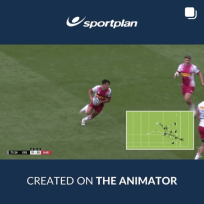
why are they passing it after the skipped man is 'forward' of the ball ? - doesn't that make it obvious at that point that he (skipped man) wouldn't be getting the ball - and hence reduce his effectiveness as a 'decoy' ?
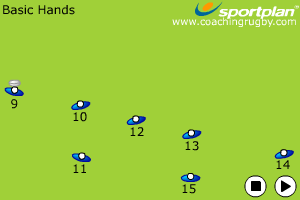
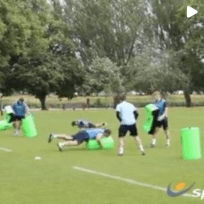
Overline with 2 Dummy Runners
DESCRIPTION
Overline with 2 Dummy Runners
DESCRIPTION

the decoy runner is commiting a defender. If it's done well with good speed and commitment, the decoy runner will confuse and draw a defender away from the target reciever. All kinds of gesturing can be added for effect. e.g dummy pass, decoy calling with hands out etc. Usually works best when you have an extra man (2 on 1) in backline compared to opposition. If you watch top level rugby, this method is used alot.

With this play being run at pace. It's really not that obvious. I think players who have seen this in a match would agree. With the pace of the run and decoy pass, the mind doesn't really have time to associate the miss. This runner also screens the ball from the defense's view for a split second, making the play harder to track with the eyes.

 sportplan_rugby