
There is a rally you see in every gym. Your side reads the attack, the back row digs it clean, and the whole team relaxes for half a second - job done, we saved it. Then the setter pushes a high outside ball, the same tired swing goes into the same waiting block, and the point is lost anyway. The dig was brilliant and completely wasted.
The teams pulling away in 2026 have decided that the dig is not the end of the defensive job, it is the start of the attack. Transition offence - the ball you win off your own defence - is where matches are actually decided, because in a long rally you spend far more time out of serve-receive than in it. Coaches who train transition as a first-tempo weapon, not a survival swing, are turning defensive scrambles into fast, deceptive points.
Why Transition Is Where Matches Are Won
Serve-receive gets the practice time because it feels controllable - you know the serve is coming and you can rehearse the pass. But most rallies do not end on the first swing. They continue, and every continued rally is decided in transition, where the ball is messier, the setter is moving, and the hitters are recovering from defence or blocking duties.
Because transition is harder to rehearse, most teams under-train it and default to a safe high ball. That is exactly why it is an opportunity. A team that can run its middle in transition, or hit at speed off a defensive dig, forces the opposing block to make the same fast decisions on every single contact, not just off the serve. Over a five-set match that pressure compounds.
Building a First-Tempo Transition Attack
The goal is simple to state and hard to drill: the dig should feed a set that lets your quick attackers hit before the opposing block is organised. That means training the whole chain - defence, setter movement, hitter recovery and the call - as one continuous action rather than three separate skills.
Step One - Dig to a Transition Target, Not Just Up: A dig that floats vaguely to the middle kills tempo before the setter even touches it. Coach defenders to dig high and slightly inside the right-front, giving a mobile setter a stable ball to work with. A repeatable dig target is the foundation of everything that follows.
Step Two - Train Setter Footwork Off the Dig: In transition the setter is often coming out of defence or off the net. Drill the release footwork so the setter can get square to a dig arriving from anywhere on court. A setter who arrives late and off-balance can only push a high ball - the exact outcome you are trying to avoid.
Step Three - Keep the Middle Live in Transition: The single biggest change is asking your middle to attack in transition, not just off a perfect first pass. That means the middle blocker peels off the net and re-approaches every time your side digs. It is demanding physically, but a middle who is a live threat in transition freezes the opposing block and opens the pins.
Step Four - Attach a Call to the Dig: As soon as the ball is dug clean, someone - usually the setter or libero - calls the tempo. A clean high dig triggers a quick middle or pipe, a scrambled dig triggers a safe high option. Rehearse the two triggers until the whole team reads the quality of the dig the same way and reacts without hesitation.
Coaching the Mindset Shift
The tactics only work if players stop treating defence and offence as separate phases. The habit to break is the half-second of relief after a good dig. In the best teams, a clean dig is a trigger to accelerate, not to celebrate - hitters are already re-approaching before the setter has the ball.
Expect it to look worse before it looks better. When you first ask a middle to run quick attacks in transition you will get more errors and mistimed sets. Hold your nerve. The teams who push through that ragged phase end up with a transition offence that opponents simply cannot prepare for, because it comes at them fast off every defensive ball.
Key Coaching Points
- Dig to a consistent transition target rather than just keeping the ball alive
- Drill setter release footwork so the setter arrives square off any dig
- Ask the middle to peel and re-approach on every dig, not just off serve-receive
- Attach a clear tempo call to the quality of the dig - clean triggers quick, scrambled triggers safe
- Train defence and attack as one continuous action, never as separate drills
- Track transition kill efficiency separately - it is the truest measure of a complete team
Recommended Drills
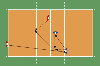
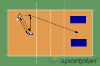
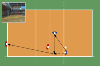

Frequently Asked Questions
Should I really ask my middle to attack in transition at club level?
Start small. You do not need a lightning first tempo - even a middle who re-approaches and offers a quick option once per rally forces the opposing block to respect the middle instead of loading the pins. Build the habit first and let the speed come later.
How do I stop transition reps from just becoming messy free-for-alls?
Constrain them. Initiate the drill with a coach-hit ball into your defence so the dig, setter movement and attack all fire in sequence, and reward clean tempo rather than the kill. A tight constraint keeps the focus on the chain, not on winning the rally at any cost.
What is the difference between transition offence and out-of-system offence?
They overlap but are not the same. Out-of-system is about scoring from a broken pass in any phase. Transition offence is specifically the ball you win off your own defence or block, where the aim is to counter-attack at speed before the opponent recovers. Both reward the same clean, decisive setting.