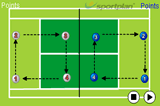
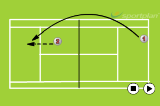
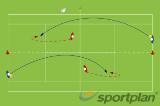
Player 1 is working in the full court and player 2 in half court, starting with the backhand corner.
The coach (or player 3) feeds a very short ball/ dropshot that player 1 must chase down and push back deep into the corner where player 2 is waiting.
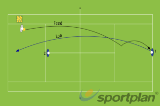
Player 2 must then attempt to hit a winning topspin lob aggressively over player 1 who has moved to the net after playing the dropshot.
Player 1 can try to chase down the lob if it goes over their head or smash/ volley it away into the backhand corner if the lob is not good enough.
Players switch ends before repeating the drill to the other corner.
Player 2 must ensure they get right underneath the ball and hit the lob aggressively with topspin if they can. This helps to bring the ball back into the court and also in a match situation will help to disguise the fact that a lob is being hit.
NOTE: a good reply to a dropshot by player 1 would usually be a dropshot in return. However, for the purpose of the drill it is important that player 1 plays the response to the dropshot deep back into the corner so it is realistic for player 2 to practise the lob from this ball.
Indoor courts give players less time and less room. Help them sharpen their split step, shorten their swing and stay calm, and winter becomes a season of real progress.
A tiebreak is a short sprint where every point is worth the same as a break of serve. The players who win them are rarely the ones who hit hardest. Here is how to coach the patterns, habits and scoreboard thinking that win the big points.
Most club players practise the serve on its own and then have no idea what to do with the ball that comes back. Serve plus one is the pattern that turns a good serve into a won point.


Register for FREE and get coaching tips, top drills, session and more every week!