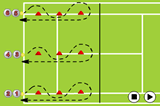
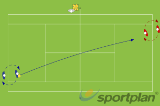
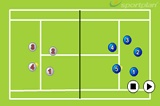
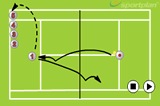
Players play the point out from the hand with each end of the court taking it in turns to feed the first ball in.
If the player wins the point they stay on to play the next one with a maximum of 3 points in a row being played before switching with their partner.
As soon as the point is complete the next ball can be fed in without having to wait for the opposing players to be ready. The drill should be non-stop, and the players are playing as a team with their points counting together. Players can play first to 11 points in this way.
Waiting players must be ready with the next ball to be fed in immediately. They must watch the point in play ready to jump into action as soon as it has finished.
Feeds can be made from anywhere but players must feed from more or less the middle of the court.
This drill can get a bit crazy and intense with balls being fed in so quickly, players should be encouraged to concentrate well in the points and whilst they are resting.
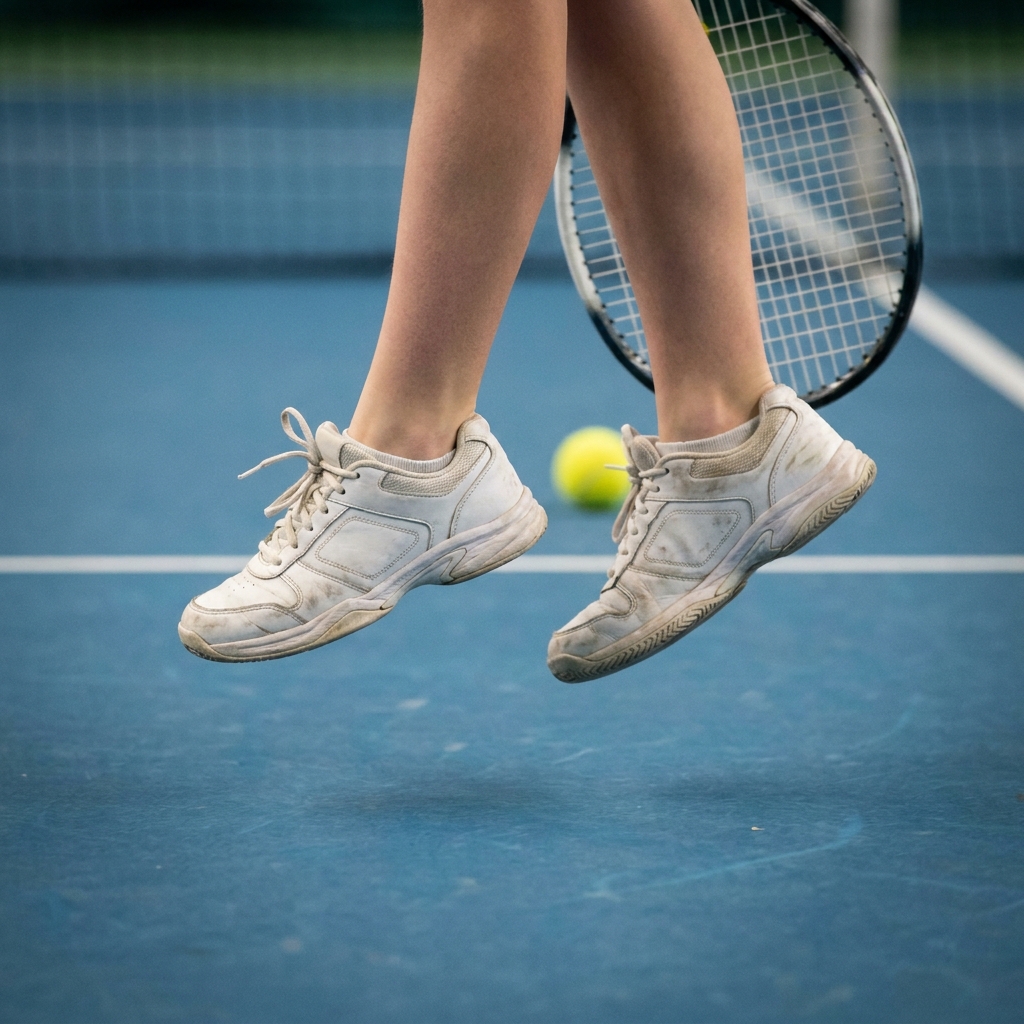
Indoor courts give players less time and less room. Help them sharpen their split step, shorten their swing and stay calm, and winter becomes a season of real progress.

A tiebreak is a short sprint where every point is worth the same as a break of serve. The players who win them are rarely the ones who hit hardest. Here is how to coach the patterns, habits and scoreboard thinking that win the big points.

Most club players practise the serve on its own and then have no idea what to do with the ball that comes back. Serve plus one is the pattern that turns a good serve into a won point.


Register for FREE and get coaching tips, top drills, session and more every week!